Reykjavik Street Art: A Free Self-Guided Mural Route
More than 160 street art works are now mapped across Reykjavik, and every one of them is free to see. This guide lays out a walking route through the densest clusters, the two English-language free tours that pass them, and the practical details that make a mural day work.
Short answer
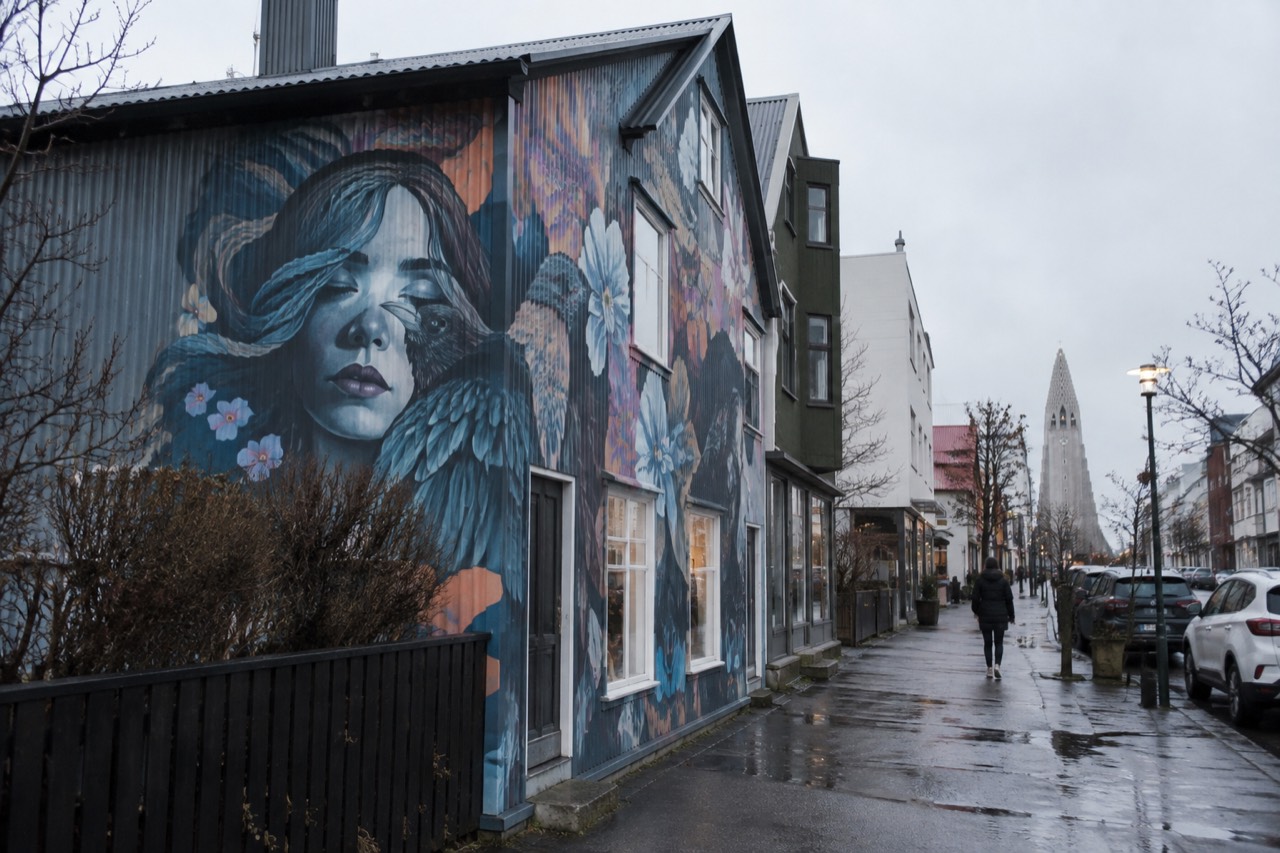
Reykjavik has more than 160 mapped street art works, all free to view, concentrated around Laugavegur, Skolavordustigur, the Grandi harbour district and side streets downtown. Two free, tip-based walking tours cover the same ground in English: CityWalk, rated 9.6 out of 10 across 6,683 freetour.com reviews, and Sweet Streets, rated 4.6 out of 5 across 87 GuruWalk reviews.
Reykjavik is not a city that hides its art indoors. The city itself has mapped more than 160 street art works across its streets, from small stencil pieces tucked behind Laugavegur to building-sized murals facing the harbour, and the city's own street art mapping project states the appeal plainly: you do not have to pay to enjoy street art. That makes it one of the few genuinely free sightseeing activities in a capital where most headline attractions charge admission. This guide walks through where the work is, how to route yourself past it on foot, and which free walking tours cover the same ground if you would rather have a guide pointing at the walls.
Where Can You Find Street Art In Reykjavik?
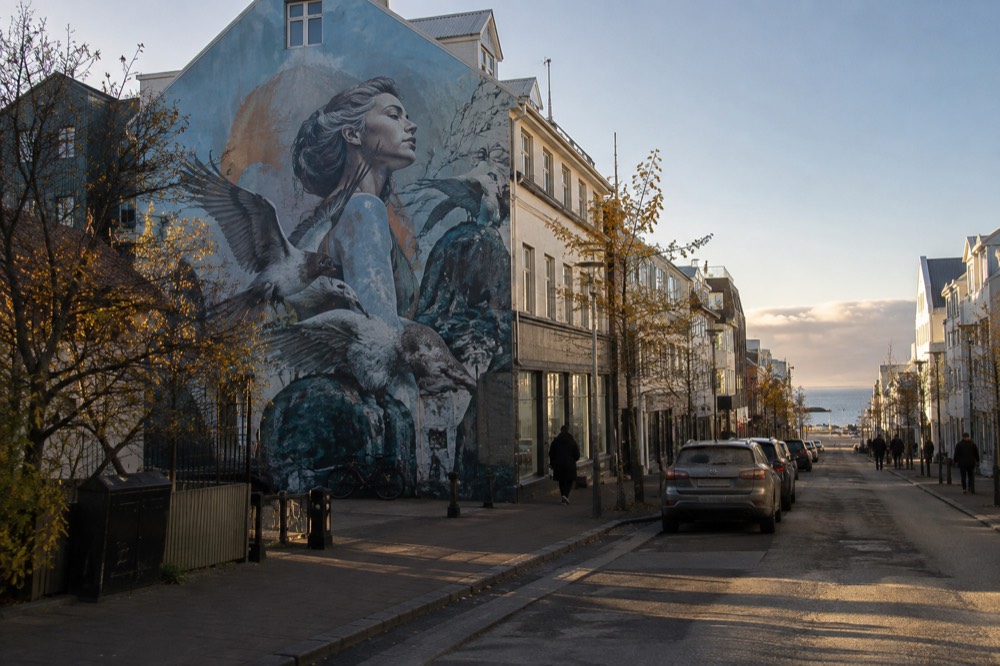
Reykjavik's street art clusters in four zones, all walkable from the city centre and all completely free to view: the Laugavegur shopping street and its side alleys, the Skolavordustigur hill down to Hallgrimsrkirkja, the Grandi harbour district around the Old Harbour, and the blocks around Hlemmur at the top of town. The city has mapped more than 160 individual works across these areas, and new pieces appear each summer as building owners commission fresh walls.
The mapping project matters more than it might sound. Reykjavik's murals exist in a strange legal grey zone historically: strict graffiti enforcement shaped the scene for decades, and the commissioned mural wave that defines the city today grew out of organized events and building-owner agreements rather than outlaw spraying. The city's decision to map and celebrate the works, rather than paint them over, is itself part of the story a guide will tell you on any of the free walks. The map also means you do not need to wander hopefully. The densest concentrations sit within about two kilometres of Austurvollur square, which is roughly a 25 minute walk end to end at a relaxed pace.
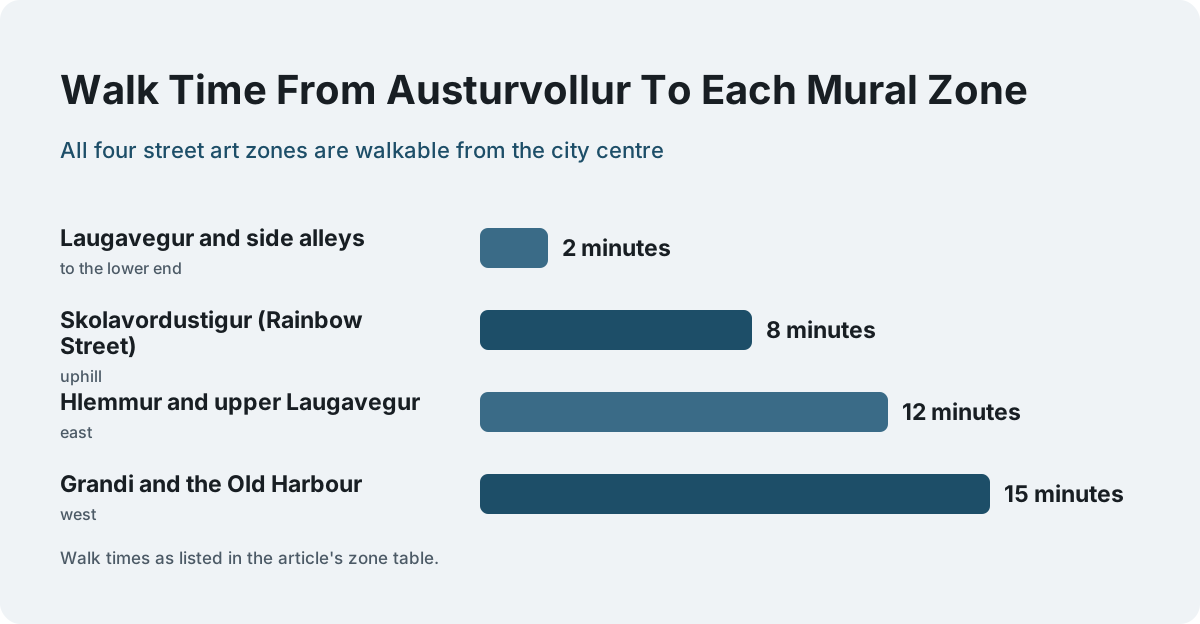
For orientation, the table below is the practical version of that map. Each zone is a distinct walk, and you can do them in any order depending on where your day starts.
| Zone | What you will see | Walk time from Austurvollur |
|---|---|---|
| Laugavegur and side alleys | Large commissioned murals on retail buildings, stencil work in passageways | 2 minutes to the lower end |
| Skolavordustigur (Rainbow Street) | The painted rainbow road itself, plus murals near the church end | 8 minutes uphill |
| Grandi and the Old Harbour | Harbour-facing walls, industrial-scale pieces, and the walk to the Sun Voyager | 15 minutes west |
| Hlemmur and upper Laugavegur | Newer works, quieter walls, food hall at the old bus station | 12 minutes east |
If you want a broader free-things list to fill the rest of the day, the official Visit Reykjavik free activities page is the source this site draws on for most of its attraction records, and it confirms street art among the city's no-cost highlights.
Can You See Reykjavik Street Art On A Free Walking Tour?
Yes, and for an English speaker there are exactly two free, tip-based walks that cover the mural zones: CityWalk's twice-daily city tour, rated 9.6 out of 10 across 6,683 freetour.com reviews, and the smaller Sweet Streets walk, rated 4.6 out of 5 across 87 GuruWalk reviews. Both are pay what you want, both run about two hours, and both pass through the same streets where the murals live. Neither charges a booking fee.
CityWalk is the long-running, dominant free walk in this city, and it is the one most of the mural clusters sit on naturally. It runs every day at 10:30 and 13:30, meets in front of the Parliament building on Austurvollur square, and covers about two kilometres over two hours, finishing at City Hall. The route names Laugavegur, Rainbow Street and the old core explicitly, which are three of the four zones in the table above. It is listed on freetour.com, it is English only, bookings are capped at six people per reservation, and the tip can be paid in cash or by card at the end. If your mural day and your orientation day can be the same day, this is the walk that does both.
One honest caveat about CityWalk's ratings: the 9.6 figure is freetour.com's own number, and freetour.com states that its review layer is syndicated from TripAdvisor. This site did not read TripAdvisor directly, so the figure is attributed to freetour.com and nowhere else. That is still a very large review base for a city this size, and it reflects a walk that has run since 2014.
Which Streets Should A Self-Guided Mural Route Follow?
A workable free route runs Austurvollur to Laugavegur, up Skolavordustigur to Hallgrimsrkirkja, then down through the old core to the Old Harbour and Grandi, roughly 3 to 4 kilometres of walking that fits comfortably in half a day with photo stops. Every street on it is public, nothing on the route charges admission, and the steepest section is the short Rainbow Street hill. Do it in that order and the light is behind you for harbour photos in the afternoon. One of the free walking routes passes through here: Morning Walk From Harpa, Cash Tips.
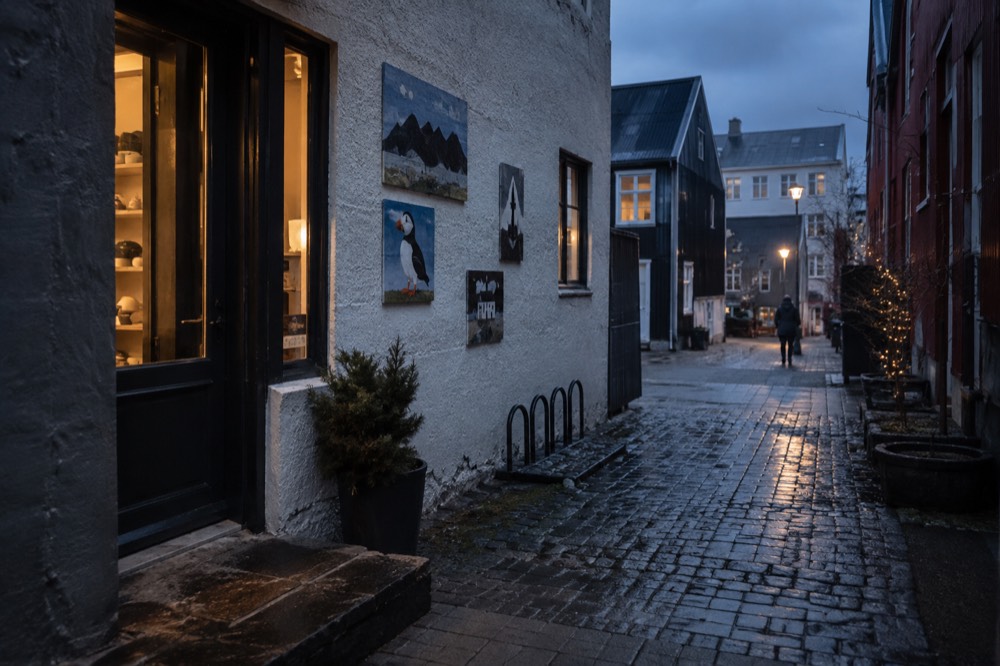
Start at Austurvollur, where CityWalk also starts, and walk one block to Laugavegur. The main shopping street carries the biggest commissioned pieces; the side alleys running off it hold the smaller work that people photograph most, because the scale is human and the walls are close. Laugavegur is covered in detail on this site's Laugavegur walking guide, which pairs the murals with the free stops along the street.
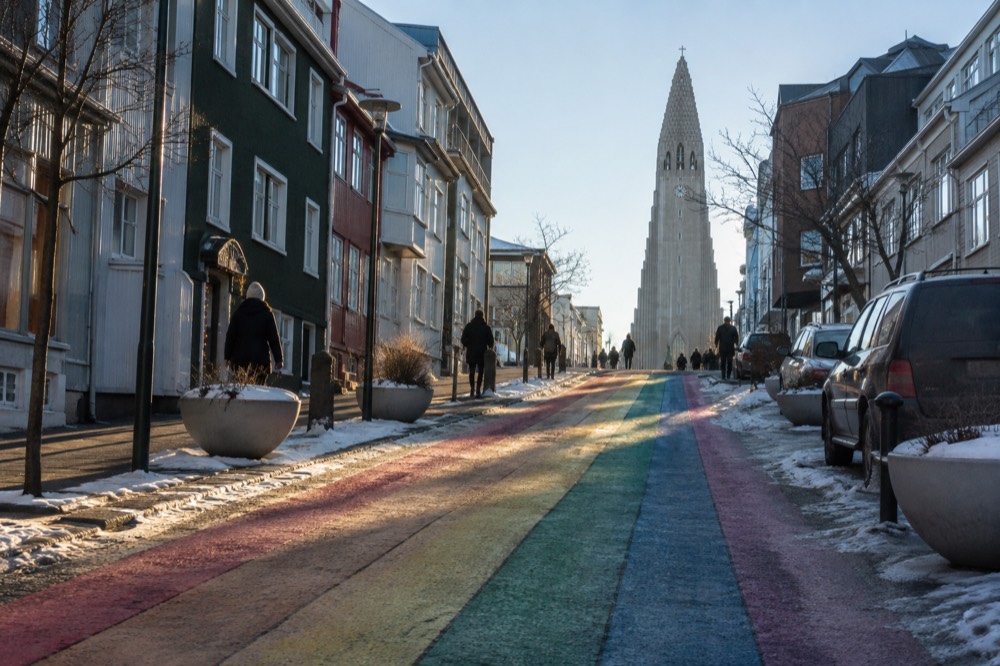
From the top of Laugavegur, Skolavordustigur is the next stop, and it is the one street in the city that is itself a piece of public art. Rainbow Street, as everyone calls it, is repainted in fresh colours each year as a joint city and Reykjavik Pride project, and the repaint is one of the few street art events in Reykjavik with a fixed date logic you can plan around. Walking up it delivers you at Hallgrimsrkirkja, whose tower is paid but whose nave costs nothing, making it a free and sheltered turnaround point before the harbour leg.
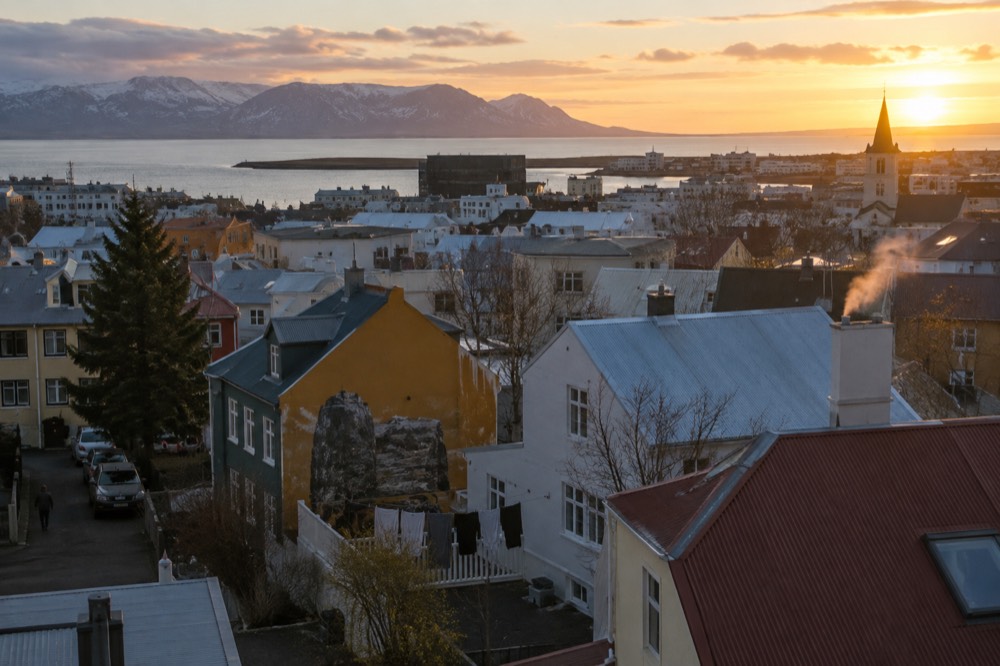
The harbour leg is where the route earns its second half. Cut down through the old core, past Tjornin if you have time, and out to the Grandi district, where the walls get bigger and the industrial buildings give muralists room to work. The Old Harbour and Grandi area is free to wander year-round, the quays are public, and the walk ends naturally at the Sun Voyager sculpture on the waterfront. The full waterfront stretch is described in the Old Harbour and Grandi guide.
If reading a route off a page is not your idea of a holiday, the Sweet Streets walk covers overlapping ground with a guide beside you. It is the smaller of the two English-language free walks, listed on GuruWalk, running Monday, Thursday, Friday, Saturday and Sunday at 11:00 in English. It meets at the Harpa concert hall, and the exact meeting detail is one to check on the guide's own GuruWalk page, because the listing's structured address and the guide's written instruction sit about 300 metres apart and the guide's instructions are the ones to follow. It is cash only, which matters: on a pay-what-you-want walk the tip is the entire payment, so arrive with notes if you plan to join it. It needs a minimum of five bookings to run and takes up to ten, which is worth knowing in the off-season.
What Kind Of Street Art Is Reykjavik Known For?
Reykjavik's scene leans toward large, commissioned, building-scale murals rather than tagging, a shift that came late to a city with historically strict anti-graffiti enforcement. The mapped works include full-wall figurative paintings, abstract pieces, stencil work in passageways, and the annual Rainbow Street repaint, which turns an entire street into public art. The city celebrates rather than erases the work, and the mapped total of more than 160 pieces keeps growing.
The style story is genuinely local. Where some cities inherited a graffiti culture and tolerated it, Reykjavik's pieces were mostly invited: building owners, festivals and city programmes put artists on walls with permission, which is why the big works sit on prominent retail and harbour buildings rather than hidden underpasses. A guide on either free walk will point out the difference between the commissioned walls and the small illegal pieces that survive in the alleys, and how the enforcement history shaped what artists were willing to risk. That context is the kind of detail a self-guided walk misses, and it is a fair reason to spend a morning on a tour even though the walls themselves cost nothing.
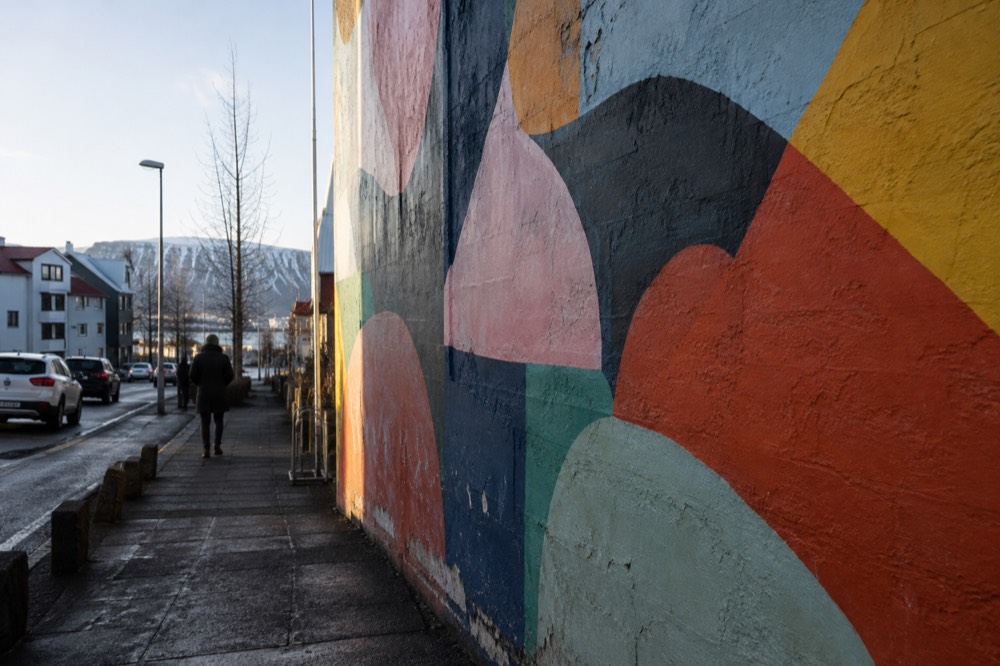
Weather shapes the experience more than most visitors expect. Reykjavik's murals are painted to survive North Atlantic winters, but photographing them is another matter: flat overcast light is common and flatters the colours, while low winter sun creates long shadows across walls and a very short working day. In summer the problem reverses, with near-24-hour daylight around the solstice, so a mural walk at 22:00 in June is entirely reasonable and often emptier. There is no bad season for a free activity, only different light.
Are There Free Indoor Stops Between The Murals?
Yes, and they are worth building into the route: Reykjavik City Library branches are free to enter, Harpa concert hall's foyer and its ground-floor sound installation are free during opening hours, and Hallgrimsrkirkja's nave costs nothing even though the tower is ticketed. All three sit on or near the mural route, giving you sheltered, free stops when the weather turns, which in Reykjavik it does. This stop sits on a free walking route, Spanish-Language Legends Walk.
The city library system is the least glamorous and most useful of these. Entry is free at all branches, the main branch downtown sits within the mural zone, and it is a legitimate warm-up stop with public seating and, usually, free public Wi-Fi, which the research for this site confirms is common in libraries and public buildings across the city. Only borrowing requires a card, which is priced for residents rather than visitors, so simply walking in and reading costs nothing.
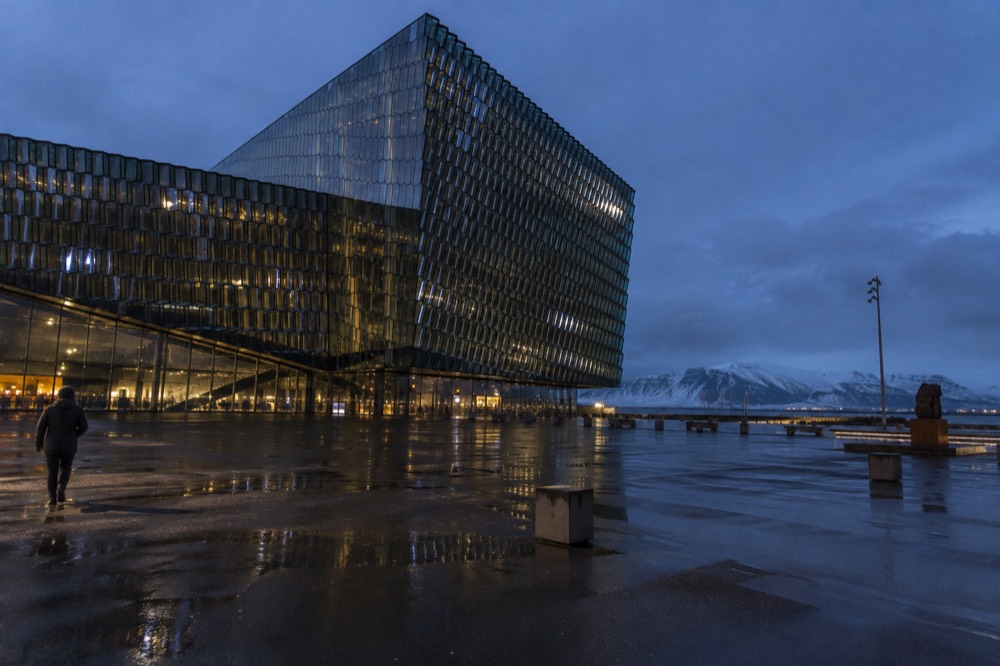
Harpa deserves its slot for a different reason. Admission to the concert hall and to Hljodhimnar, the sound installation on its ground floor, is free, with opening hours running 10:00 to 18:00 Sunday to Tuesday and 10:00 to 20:00 Wednesday to Saturday. The building's glass facade is itself one of the most photographed free sights in the country, and the Sweet Streets walk meets there, so it is a natural anchor for the eastern end of a mural route. The interior details and hours are covered in the Harpa concert hall guide.
Hallgrimsrkirkja is the third sheltered stop, with one trap to flag. The nave is free to enter, but the tower lift is paid, at 1,500 ISK for adults from 1 June 2026, with reduced rates for students, seniors and children. Plenty of listicles blur that line. The church is the free stop; the view is the paid one, and the free alternative for a view over the city is the walk up Oskjuhlid hill, which this site covers separately.
Which Squares And Public Spaces Sit Among The Murals?
Austurvollur square, Tjornin pond and the streets between them form the public-space spine of the mural zone: all free, all open, and all within a few minutes' walk of the densest walls. Austurvollur is where the CityWalk tour meets twice a day, Tjornin's park edges carry their own small works, and the Old Harbour's public quays connect the mural route to the waterfront sculptures. None of these charge anything.
Austurvollur is the practical heart of any mural day. It is a public square and park in front of the Parliament building, it is free, and it is where CityWalk's guides in their branded jackets gather their groups at 10:30 and 13:30 daily. Even if you skip the tour, the square is the natural first stop of a self-guided route: benches, the statue of Jon Sigurdsson, and one-block access to Laugavegur's walls.
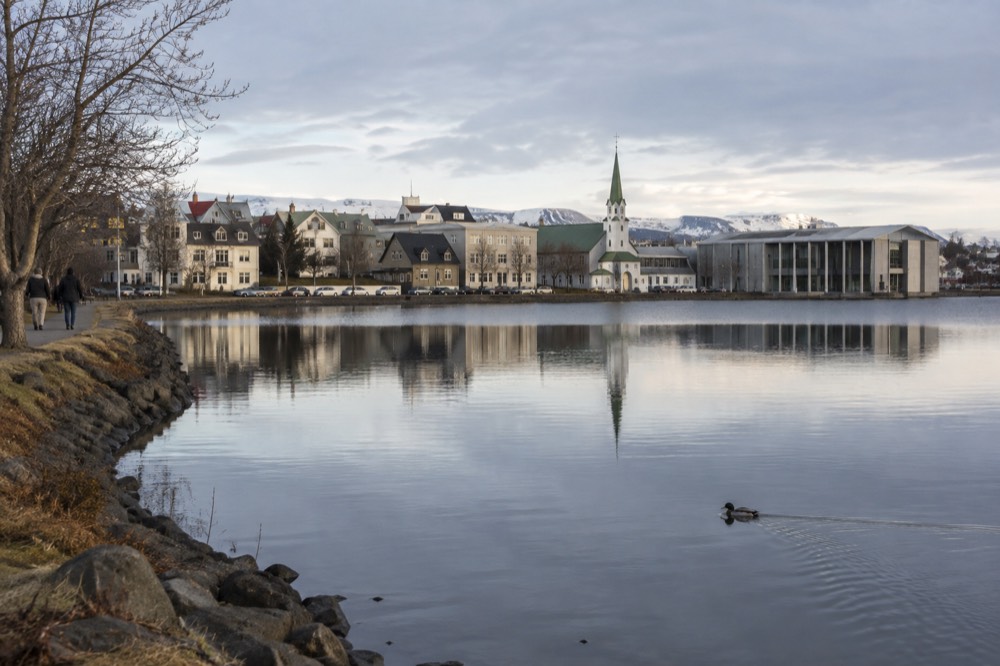
Tjornin, the pond at the south edge of the old core, is the calm counterpoint. The water, the park around it and the walk to City Hall are all free public space, and in winter the pond freezes into an impromptu skating and walking surface when the city declares the ice safe. The pond and its park are covered in full in the Tjornin pond guide, and City Hall at its western end is the official finish point of the CityWalk tour, which tells you how the free-tour geography and the mural geography overlap almost exactly.
The harbour end of the route connects to the Sun Voyager, the steel sculpture on Saebrat waterfront road that is among the most photographed free sights in the country. It is an unfenced public artwork with no hours and no fee, and it sits ten minutes on foot from the Grandi murals, making it the natural terminus of a mural walk. The sculpture's own story is on the Sun Voyager page.
Do Any Free Tours Cover The Murals In A Language Other Than English?
There is exactly one: the Rainbow Tours legends walk, listed on GuruWalk, which runs in Spanish only, Monday to Friday at 17:00 and Saturday and Sunday at 11:00, meeting at the Ingolfur Arnarson statue on Arnarholl. It is a genuinely new listing, created in late August 2026, with no reviews yet on its GuruWalk page. It is the same walk as a listing on freetour.com, not a separate third option.
That dual-listing point matters, because a reader browsing platforms could easily count three or four free Reykjavik walks and think the field is wide. It is not. For an English speaker the real choice is CityWalk or Sweet Streets, and the Spanish-language walk is only relevant if your group is comfortable in Spanish. It is a real, free, two-hour tour covering the city's history, culture and legends from a meeting point at Arnarholl, and the guide carries a rainbow umbrella.
Cancellations on the GuruWalk walks are free, with the guides asking that you cancel through the listing rather than simply not showing, since small walks depend on their booking counts. No deadline and no fee are published for either walk, so the listing itself is the place to check the terms before you book. Sweet Streets also needs that minimum of five people to run, a caveat worth repeating for anyone visiting between October and April when tourist numbers thin out.
When Is The Best Time To Walk The Mural Route?
Summer gives you flexible daylight and the best chance of dry walls, with Culture Night in late August turning the whole city into a free open-air event, while winter offers low golden light on the murals, the Winter Lights Festival in early February, and the possibility of northern lights over the harbour end of the route. Every one of these is free to attend, and the murals themselves are on view all year.
Culture Night, or Menningarnott, is the single best day of the year for this route. The 2026 edition ran on Saturday 22 August, the programme runs from noon to around 22:00, museums and galleries open free or late, street performances fill the centre, and the night ends with fireworks near Arnarholl and the harbour. The city's own Culture Night information page states that the events are free to all, and the free Strætó buses that run after the fireworks are a city service, not a promotion. The next edition falls on 21 August 2027. Walking the mural route that day means walking it alongside the whole city.
| Season | Light and conditions | Free events that pair with the murals |
|---|---|---|
| June to August | Long daylight, murals dry more often, crowds peak | Culture Night, late August |
| September to November | Aurora season begins, quieter streets | New Year bonfires only from late December |
| December to February | Very short days, low sun, frequent snow on walls | Winter Lights Festival and Museum Night, early February |
| March to May | Lengthening days, changeable weather | National Day events, 17 June, mark the season's end |
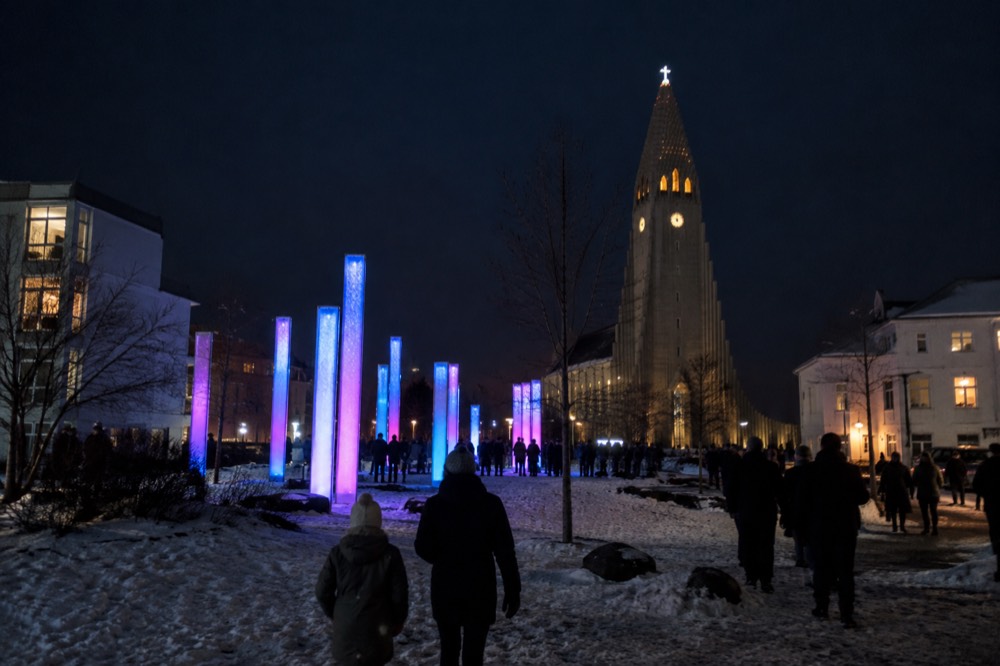
The Winter Lights Festival, held in early February, is the winter counterpart: light installations run from the Hallgrimsrkirkja area down to City Hall, and the festival's Museum Night opens participating museums free. The 2027 festival is scheduled for 4 to 7 February, though which specific nights carry Museum Night and Pool Night was not yet resolved on the official pages when this site's research was done, so treat the dates as the window rather than a per-event timetable.
For a plain mural walk with no festival attached, the practical advice is simple. Check the forecast, because Reykjavik wind will do more to ruin photographs than rain will. Start in the late morning when the side-alley walls have light on them. And if you are pairing the walk with a free tour, CityWalk's 10:30 departure followed by an afternoon on the harbour leg is the sequence that fits the route best.
How Do You Plan A Full Free Mural Day In Reykjavik?
Combine one free walking tour with the self-guided route and you get a full day at zero ticket cost: CityWalk at 10:30 from Austurvollur for orientation, the mural route through Laugavegur and Rainbow Street after lunch, the Grandi and harbour walls in the afternoon, and the Sun Voyager at golden hour. Add up every element, the tours included, and the only money you need spend is the tip you choose to give your guide.
The order matters less than the geography, but the sequence above minimises backtracking. Book the tour the day before, since CityWalk's booking window opens only about five days ahead and slots on good-weather days fill. Bring cash regardless of which walk you choose, because Sweet Streets is cash only and CityWalk, while card-friendly, still runs on tips. Wear shoes that can handle wet pavement. And if the forecast collapses, the indoor free stops, the library, Harpa and the Hallgrimsrkirkja nave, are all on the route already, so a wet day does not delete the plan, it just moves it indoors between walls.
For anyone building a longer free itinerary, this site's homepage, Free Things To Do In Reykjavik, holds the full attraction index, and the question of how the free-walk model actually works, what a tip should be and why the tours stay free, is answered in the free walking tour guide. If you are curious whether the whole country can be done this cheaply, the broader free things to do in Iceland roundup extends the same method beyond the capital.
The table below pulls the free anchors of the route together, so you can see at a glance what pairs with the murals and what each one costs.
| Free stop on the route | Status | Condition to know |
|---|---|---|
| Rainbow Street (Skolavordustigur) | Free | Public street, repainted annually |
| Reykjavik City Library | Free entry | Only borrowing needs a paid card |
| Austurvollur square | Free | Public square, CityWalk meeting point |
| Sun Voyager | Free | Unfenced public sculpture, no hours |
| Tjornin pond and park | Free | Open public space year-round |
| Hallgrimsrkirkja nave | Free | Tower lift is paid, 1,500 ISK adults |
| Old Harbour and Grandi quays | Free | Boat trips and museums separate |
Common Questions About Reykjavik Street Art
Where can you find street art in Reykjavik?
In four main zones, all free and all walkable from the centre: Laugavegur and its side alleys, the Skolavordustigur hill, the Grandi and Old Harbour district, and the blocks around Hlemmur. The city has mapped more than 160 individual works across these areas.
Can you see Reykjavik street art on a free walking tour?
Yes. CityWalk's twice-daily tour, rated 9.6 out of 10 across 6,683 freetour.com reviews, and the Sweet Streets walk on GuruWalk, rated 4.6 out of 5 across 87 reviews, both pass through the mural zones. Both are pay what you want and run about two hours.
Which streets should a self-guided mural route follow?
Austurvollur to Laugavegur, up Rainbow Street to Hallgrimsrkirkja, then down through the old core to the Old Harbour and Grandi. That is roughly 3 to 4 kilometres, half a day with photo stops, and nothing on the route charges admission.
What kind of street art is Reykjavik known for?
Large commissioned building-scale murals rather than illegal tagging, a result of the city's historically strict graffiti enforcement and its later embrace of invited mural projects, plus the annual Rainbow Street repaint. The mapped total exceeds 160 works.
Are there free indoor stops between the murals?
Yes. Reykjavik City Library branches are free to enter, Harpa's foyer and ground-floor sound installation are free during opening hours, and Hallgrimsrkirkja's nave costs nothing, though the tower lift is paid at 1,500 ISK for adults.
When is the best time to walk the mural route?
Summer for long daylight and the free Culture Night in late August, winter for low light, the Winter Lights Festival in early February, and a chance of aurora over the harbour end. The murals are on view all year and cost nothing in every season.