Iceland On A Budget: What A Cheap Trip Actually Costs In 2026
Iceland on a budget is a planning problem, not a fantasy. Here is what things really cost in 2026, what is genuinely free, and where the money leaks.
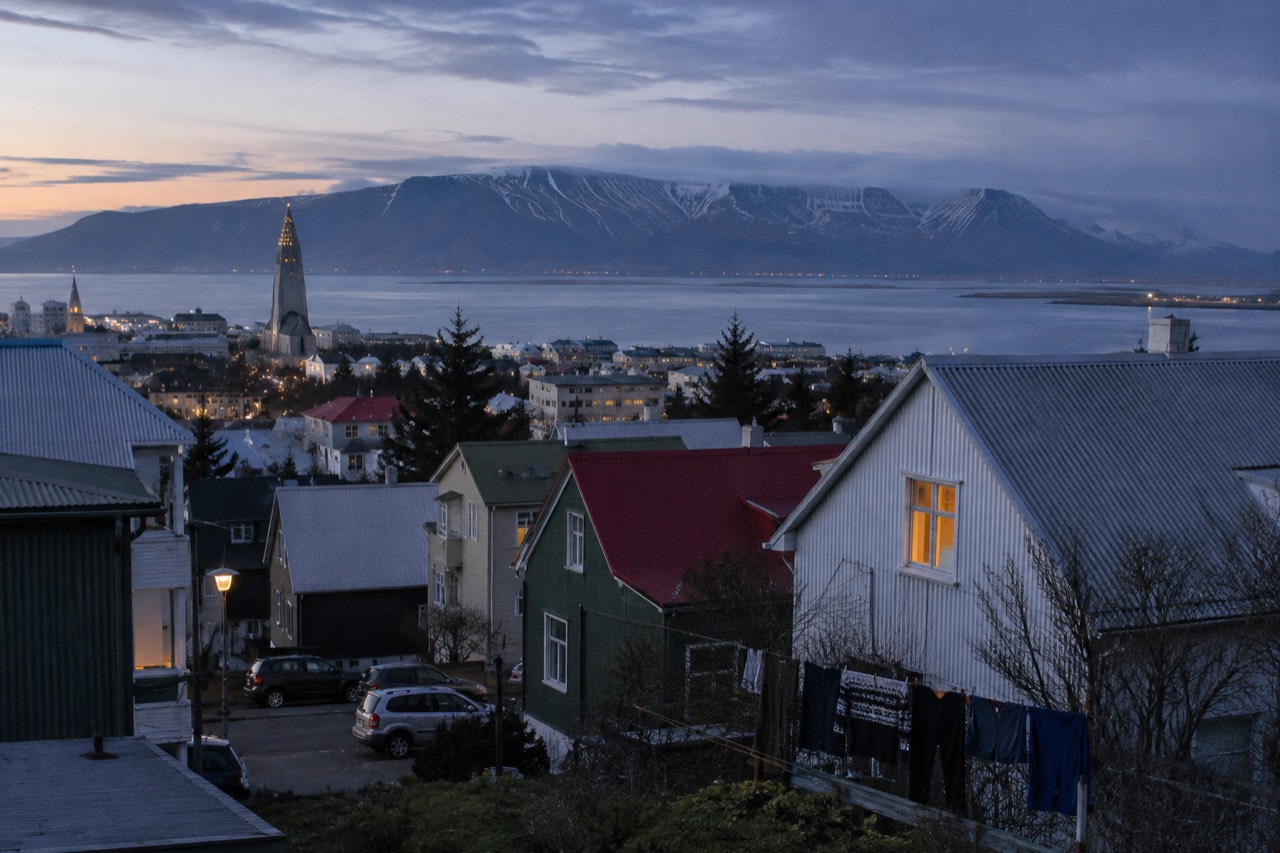
Short answer
A budget day in Reykjavik can run on a few thousand ISK excluding accommodation: a 690 ISK bus fare, a 600 to 820 ISK hot dog, a 1,500 ISK pool entry, and free walking tours, parks and viewpoints in between. The biggest savings come from skipping the rental car, eating from supermarkets, and building days around the many free attractions.
A single Strætó bus ride in the capital area costs 690 ISK as of the fare list that took effect on January 6, 2026, and a hot dog with everything at the harbour stand runs 600 to 820 ISK. Neither of those numbers is small by European standards, yet both sit comfortably inside a workable daily budget. The honest version of planning Iceland on a budget is not about finding secret discounts, it is about knowing which prices are real, which attractions cost nothing at all, and which "free" claims online are quietly wrong.
This guide pulls the current figures together in one place: transport, food, pools, parking, and the attractions that genuinely charge nothing. It also names the traps, because a budget in Iceland breaks on two or three bad decisions, not on dozens of small ones. The starting point is the city itself, where the free walking tour scene and the free attraction list are strong enough to fill days without a ticket booth in sight, as covered in depth on Free Things To Do In Reykjavik.
What Does A Budget Trip To Iceland Actually Cost Per Day?
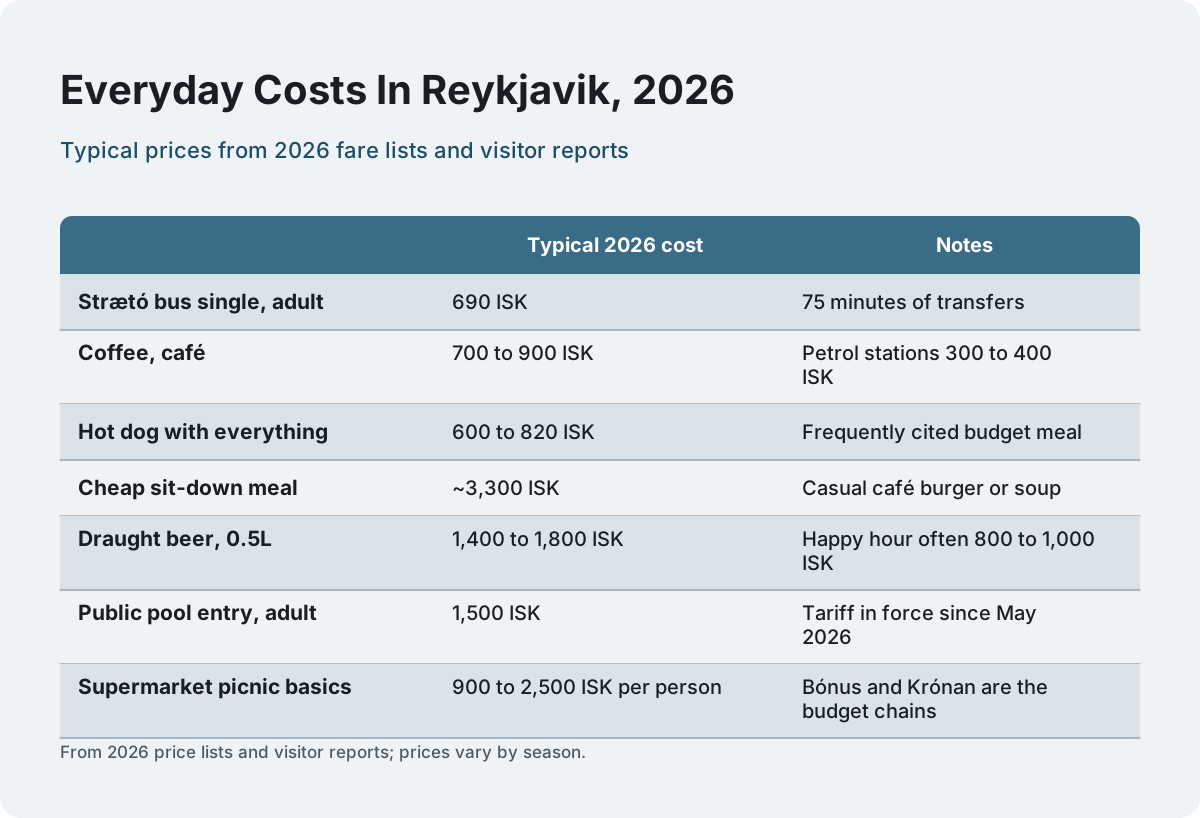
A careful day in Reykjavik can run on a few thousand ISK before accommodation: 690 ISK for a bus ride, 600 to 820 ISK for a hot dog, 700 to 900 ISK for a coffee, and 1,500 ISK for a pool entry, with free walking tours, parks and viewpoints filling the hours between. Lodging is the line that decides the total.
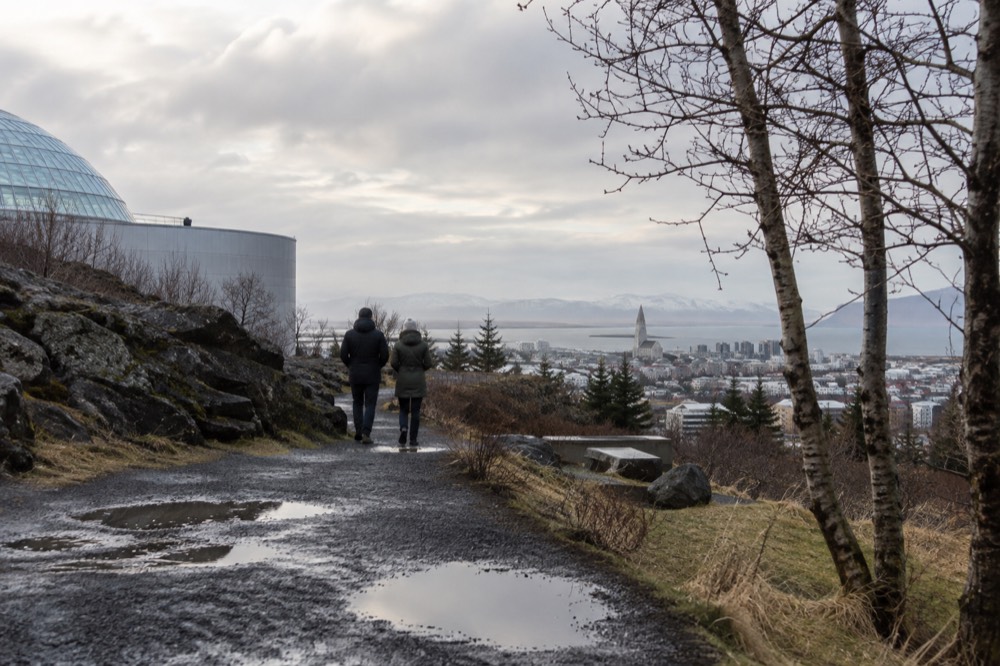
The numbers below come from 2026 price lists and visitor reports, and they move a little with each season, so treat them as planning ranges rather than quotes. What matters for budgeting is the shape of the costs: almost everything in Iceland is either free or 1,500 to 3,300 ISK, with a thin band of big-ticket items, Blue Lagoon, Perlan, FlyOver Iceland, whale trips, sitting far above at 4,000 to 6,000 ISK and up. A budget traveller who simply refuses that top band can live well on the rest.
| Everyday item | Typical 2026 cost | Notes |
|---|---|---|
| Strætó bus single, adult | 690 ISK | Contactless or app, 75 minutes of transfers |
| Coffee, café | 700–900 ISK | Petrol stations 300–400 ISK |
| Hot dog with everything | 600–820 ISK | Frequently cited budget meal |
| Cheap sit-down meal | ~3,300 ISK | Casual café burger or soup |
| Draught beer, 0.5L | 1,400–1,800 ISK | Happy hour often 800–1,000 ISK |
| Public pool entry, adult | 1,500 ISK | Tariff in force since May 2026 |
| Supermarket picnic basics | 900–2,500 ISK per person | Bónus and Krónan are the budget chains |
Two structural facts work in your favour. First, tap water is safe, free and better than the bottled water sold to tourists, so drinks are a cost you can delete entirely. Second, the free attraction layer in Reykjavik is unusually deep, from Harpa's foyer to the Botanic Garden to the whole Old Harbour waterfront, and the city's own visitor board maintains a free-things list that this site's guide to free things to do in Reykjavik expands in full. Build days from that layer first and the budget mostly holds itself.
Accommodation is the one line where the money goes, and it carries a tax: the lodging tax is 800 ISK per night for hotel and guesthouse stays, 400 ISK at campsites. Camping is the classic budget answer and has its own rules and free options, covered in the free camping in Iceland guide. For context on the wider price picture, the blog post is Iceland expensive? works through the same question at country level.
How Do Free Walking Tours Fit A Tight Budget?
Two English-language free walking tours operate in Reykjavik: the long-running CityWalk tour, rated 9.6 out of 10 across 6,683 freetour.com reviews, departing daily at 10:30 and 13:30 from Austurvöllur, and the smaller Sweet Streets walk, rated 4.6 out of 5 across 87 GuruWalk reviews, running Monday, Thursday, Friday, Saturday and Sunday at 11:00 from Harpa. Both are pay-what-you-want, so the upfront cost is zero. One of the free walking routes passes through here: Spanish-Language Legends Walk.
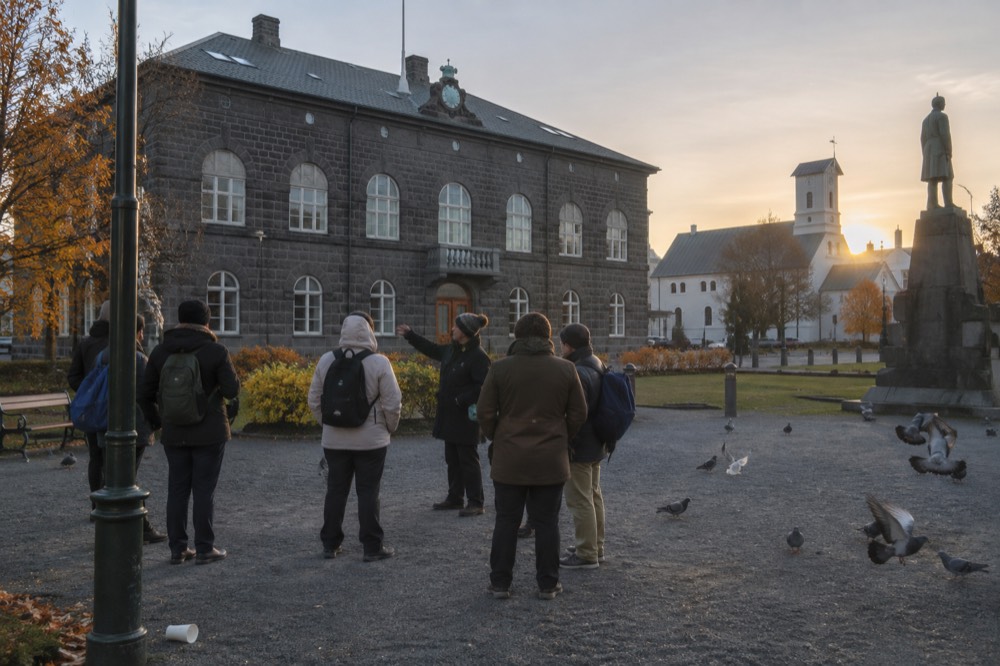
CityWalk is the dominant free walk in this city and has been running since 2014, covering about 2 km from Parliament down to City Hall in two hours. The price model is a donation at the end, in cash or by card, and typical tips reported for Reykjavik free tours land around 2,000 to 5,000 ISK per person. Even at the top of that range, two guided hours for the price of a beer is the best value in the country.
The GuruWalk alternative, Sweet Streets, is the smaller option and it has one hard practical catch: it is cash only. On a pay-what-you-want walk the tip is the entire payment, so a visitor with no kronur cannot pay the guide at all. It also needs a minimum of 5 bookings to run and takes up to 10 people, which makes it a genuine small-group experience but a slight risk in the off-season. Its meeting point has a quirk worth knowing: the structured address and the guide's own written instruction sit about 300 metres apart, so follow the guide's instructions on the GuruWalk listing rather than a map pin.
There is also a third walk, but it is Spanish only. Rainbow Tours runs a two-hour legends walk meeting at the Arnarhóll statue, and it exists on both GuruWalk and freetour.com as the same walk, not two options. Its GuruWalk listing is genuinely new, created in late August 2026, and shows no reviews yet. For an English speaker the real choice is the two walks above, and the free walking tour guide compares them in detail.
Where Should You Sleep, Eat And Drink Cheaply?
Sleep at campsites or guesthouses outside the centre, eat supermarket picnics and hot dogs rather than café meals, and drink tap water instead of anything bought. That trio holds the daily food spend near the cost of a hot dog or two plus a supermarket basket, roughly 1,500 to 3,300 ISK. The stands, Bónus aisles and happy hours are not deprivation, they are how the city itself eats when it is not celebrating.
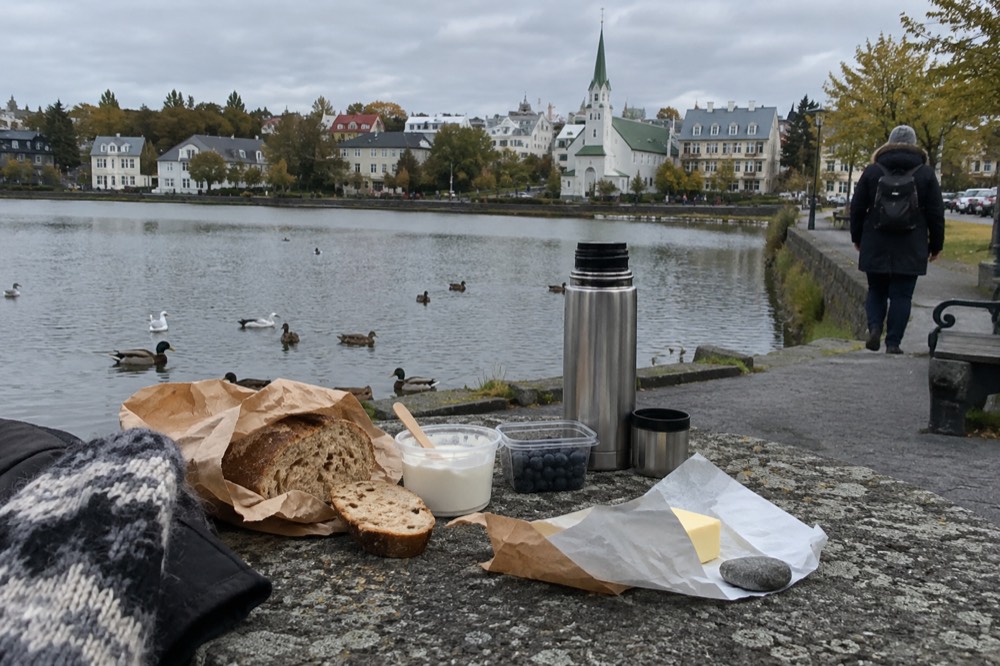
Food is where most budgets quietly fail, because a single sit-down lunch can equal three supermarket dinners. The cheap eats guide lists the specific stands and counters; the short version is that a pylsa with everything at 600 to 820 ISK is the canonical budget meal, soup-and-bread café lunches sit around 3,300 ISK, and a Bónus basket of skyr, bread and deli items for picnic days runs 900 to 2,500 ISK per person. Beer is the one indulgence worth timing: 1,400 to 1,800 ISK at full price, but 800 to 1,000 ISK during happy hour, which most central bars run in late afternoon.
The free walk slots into this routine neatly: the 13:30 CityWalk departure ends at City Hall around 15:30, which is walking distance from the harbour hot dog stands and inside the happy hour window for a drink afterwards. A day built that way, morning museum-free wandering, afternoon walk, evening picnic by Tjörnin, spends almost nothing between breakfast and dinner.
How Do You Get Around Iceland Without A Rental Car?
Skip the car in the capital entirely: Strætó buses cost 690 ISK per adult single with 75-minute transfers, children 11 and under ride free, and a 24-hour pass is 2,750 ISK. For the airport, Flybus is 3,999 ISK one-way to the BSÍ terminal, while public route 55 is roughly 2,400 ISK. A rental car only pays for itself on ring-road or multi-region itineraries.
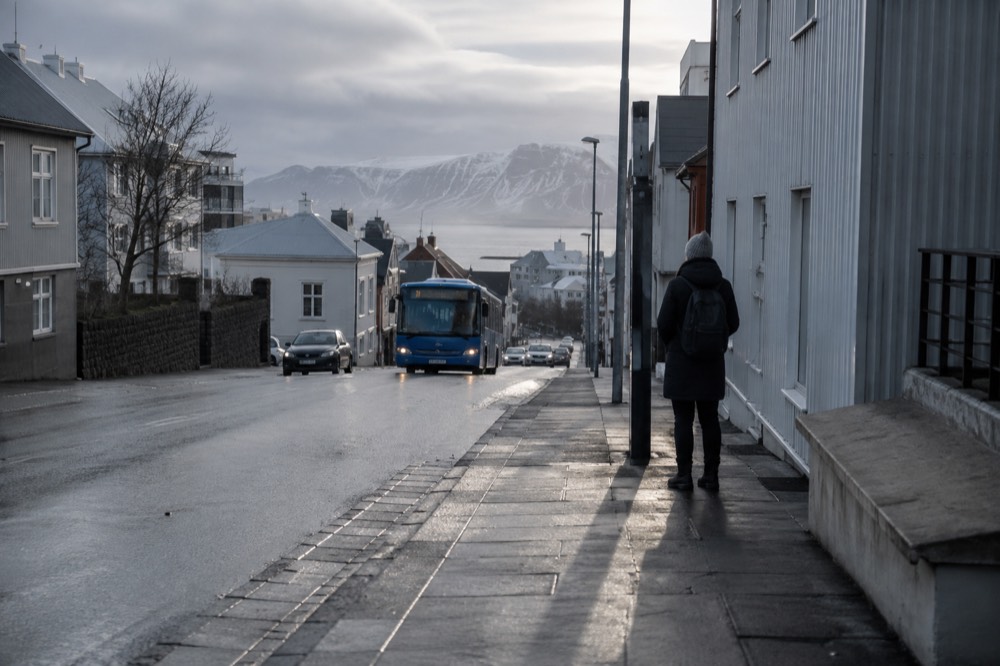
The fare structure is on Strætó's official pricing page: single fares rose about 3 percent in January 2026, day passes are being discontinued, and fare capping means an adult on the same card pays for at most three rides a day. Reykjavik's centre is also genuinely walkable, end to end in under an hour, so many visitors never board a bus at all. The how long does it take to walk around Reykjavik post covers the distances.
If you do drive, two 2026 costs matter. Parking in the centre is zoned and charged, 660 ISK per hour in the P1 core, though P3 and P4 zones are free at weekends and everything is free on listed public holidays, details in the free parking guide. And a per-kilometre road tax introduced on January 1, 2026 adds roughly 6.95 ISK per km to rental costs depending on the operator, which shifts the arithmetic on long self-drive trips.
What Can You Do Outdoors In And Around The City For Free?
The free outdoor layer is the deepest part of an Iceland budget: Mount Esja's trail network, the Öskjuhlíð woods, Elliðaárdalur valley, the Grótta nature reserve and the whole Old Harbour waterfront all charge nothing. The catch is seasonal: Grótta bans all access from May 1 to July 15 for arctic tern nesting, and its causeway floods at high tide. Check tides before any Grótta visit.
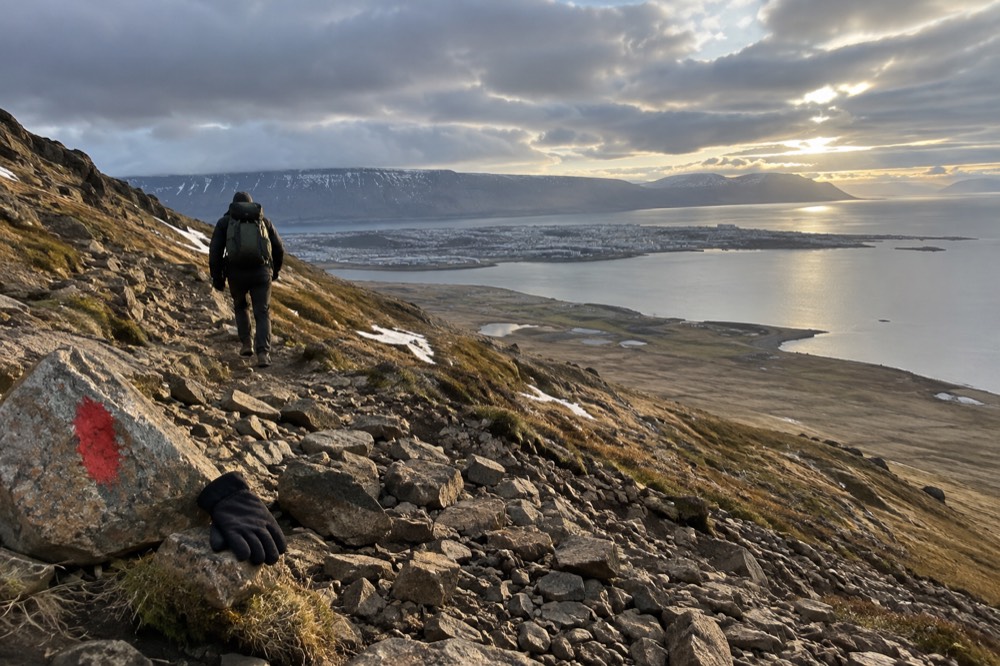
Esja is the big one. The mountain across the fjord from the city centre has free marked trails year-round, and on a clear day the view back over Reykjavik is the best in the region. The trailhead is reachable by public bus, and the hike itself costs nothing, though parking status at the trailhead is unconfirmed, so arriving by bus is the budget-safe choice. One genuine gap in the record: no official page confirms or denies a parking charge at Esja, so do not rely on free parking there.
Closer in, Öskjuhlíð is a wooded hill with free paths and a free viewpoint that most visitors wrongly assume requires a Perlan ticket, and Elliðaárdalur is a paved river valley park that locals treat as the city's backyard. Both are covered with directions in the Öskjuhlíð guide. In the centre, the Sun Voyager sculpture, Tjörnin pond and the 160-plus mapped street-art works across the city form a free self-guided circuit that fills a full day without spending a krona.
Which Day Trips From Reykjavik Stay Free Or Nearly Free?
The two classic free day trips are the Reykjadalur hot river hike above Hveragerði, where the hike and the bathing cost nothing, and Þingvellir National Park, where entry is free but parking is 1,000 ISK per car. Viðey island charges no admission but the Elding ferry is 2,500 ISK adult return. Every one of these carries a condition, so read the fine print before assuming zero.
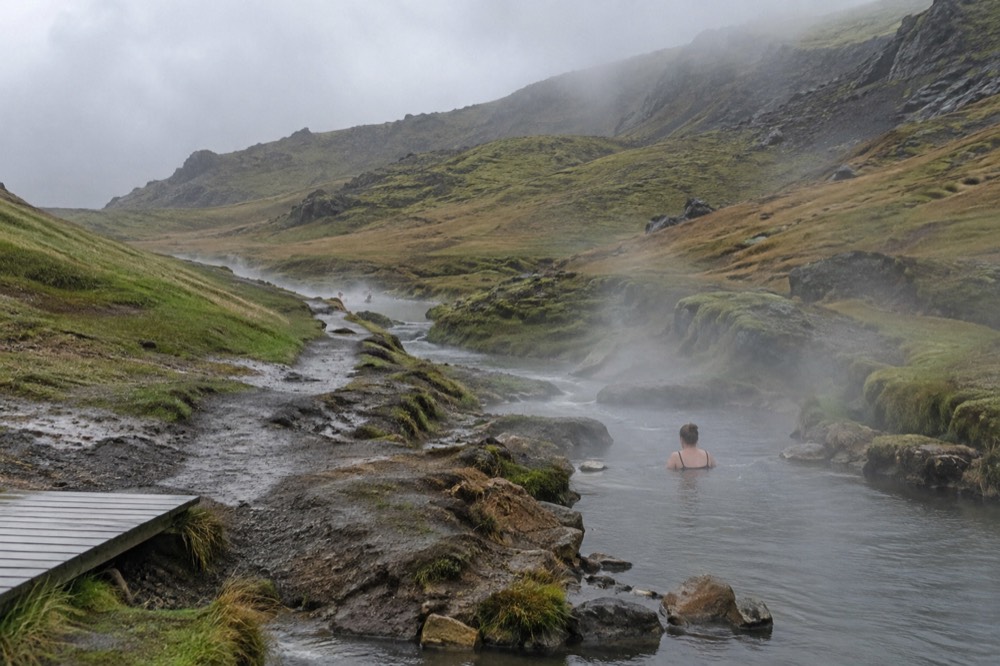
Reykjadalur is the best free hot-spring experience in the country for a visitor without a car budget. The hike up the valley is open, the hot river is free to bathe in, and the only charge is parking at the Árhólmar lot, for which no official tariff exists, so treat parking money as an unknown rather than a published figure. The free hot springs in Iceland guide covers the other no-fee bathing spots, including the Kvika foot bath at Seltjarnarnes, which is free year-round and reachable by bus.
Þingvellir is the site where the Alþingi, the world's oldest surviving parliament, met in the open air, and the park itself charges no admission. The cost is the car: the official parking page lists 1,000 ISK for a car up to five seats, valid all day across the main lots. A visitor without a car avoids it entirely, though reaching Þingvellir by public transport is not practical, so this is one trip where sharing a vehicle or a tour bus changes the math.
For a zero-cost nature day closer to town, Heiðmörk is the answer: a 3,200-hectare nature reserve with free trails and berry picking in late summer, open to everyone with no gate and no fee. It is the local answer to "what do Reykjavik families do outdoors for free", and it costs exactly nothing.
What Is Not Free, Despite What You Have Read?
The traps are specific: Nauthólsvík geothermal beach charges 1,500 ISK adults year-round with no free summer window, the Hallgrímskirkja tower lift is 1,500 ISK, Perlan's deck cannot be bought separately from a full ticket, and the Reykjavík City Card at 6,100 ISK for 24 hours is a paid product, so anything "free with the card" is not free. Every one of these is commonly mislisted as free.
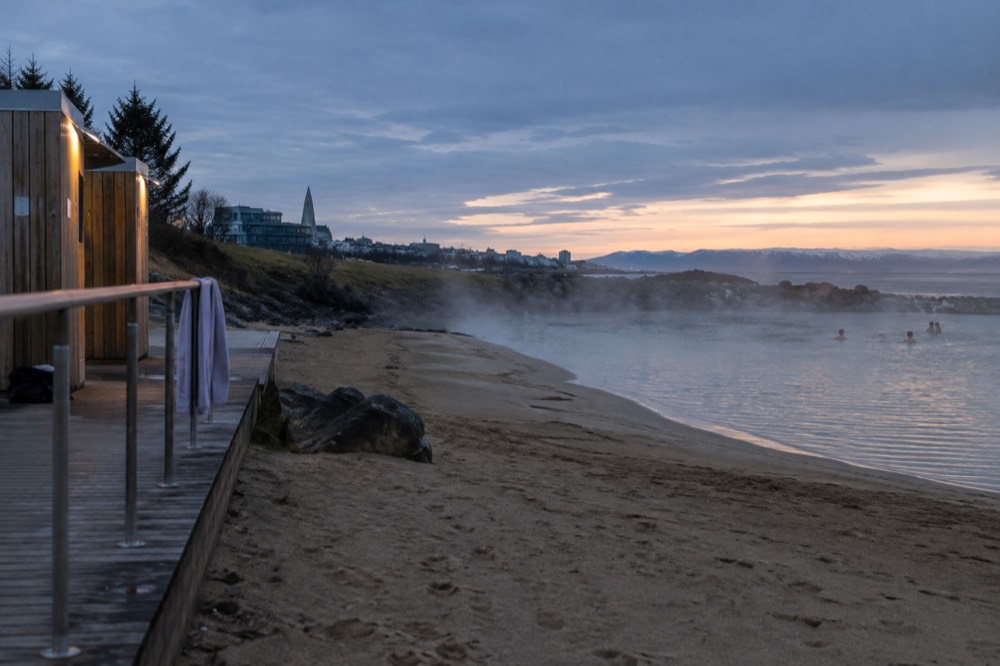
Nauthólsvík is the single biggest trap in the city. The widely repeated claim of a free summer window is contradicted by the beach's own tariff, one flat entrance pass matching the city pool tariff in force since May 2026. Adults pay 1,500 ISK, children up to 9 are free, 10 to 17 pay 400 ISK. It is still excellent value, but it is not free, and this site's Nauthólsvík guide treats it honestly as a paid attraction.
| Commonly claimed free | Actual status | Real price |
|---|---|---|
| Nauthólsvík geothermal beach | Paid year-round | 1,500 ISK adult, 400 ISK ages 10–17 |
| Hallgrímskirkja tower | Paid lift | 1,500 ISK adult since June 2026 |
| Perlan observation deck | Paid, bundled | Included in every ticket, never sold alone |
| Reykjavík Art Museum | Paid, no free day | 2,550 ISK adult, under-18 free |
| National Museum of Iceland | Paid | 3,300 ISK adult, under-18 free |
| "Free with the City Card" | Paid product | Card itself 6,100 ISK for 24 hours |
The museums deserve one honest note: while none of them has a free day, all the major ones, the Art Museum, the National Museum, the National Gallery and the city museum sites, are free for visitors 17 and under and for disabled visitors. A family with children can therefore do museum days at zero admission cost, which reframes the free museums question considerably. The pool tariff itself is published on the city's official rate page, and the Hallgrímskirkja tower prices on the church's own site.
When Is Iceland At Its Cheapest To Visit?
The cheapest months are November, January to March and early April: low lodging rates, empty free attractions, and the northern-lights season running September to April makes the darkness an asset. The most expensive window is June to August, when midnight-sun crowds push prices up. Culture Night, the winter festival and the August National Day are free citywide events that can anchor a cheap trip.
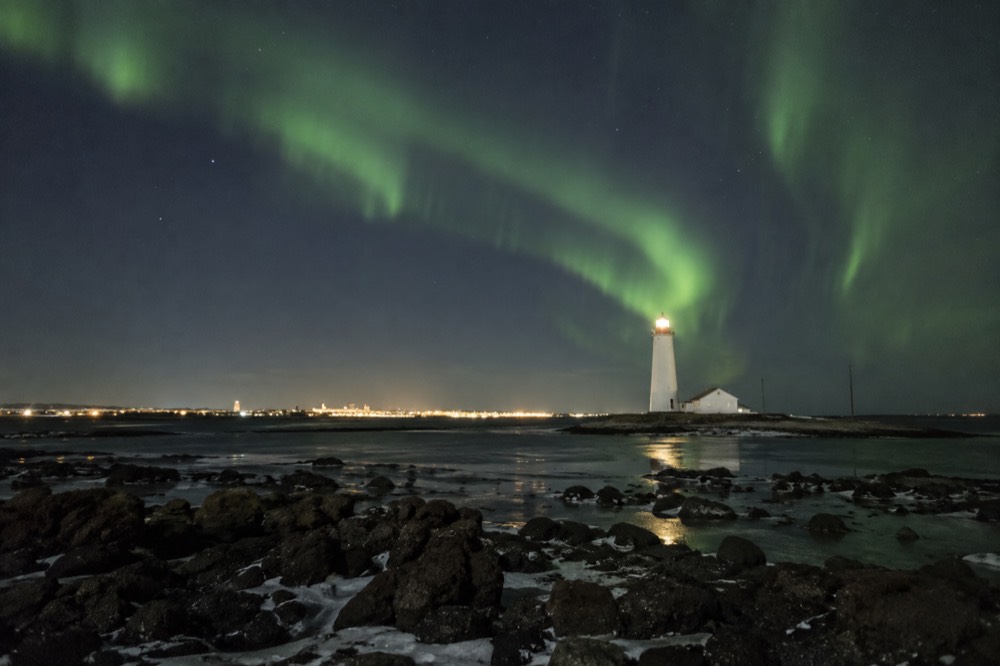
The seasonal logic is simple. Winter in Reykjavik is dark, and everything the city offers for free in winter is built around that darkness: the Winter Lights Festival in early February, with free light installations from Hallgrímskirkja down to City Hall and a Museum Night where participating museums open free, plus a Pool Night with free swimming at participating pools from 17:00 to 21:00. The winter free-things guide lists the full programme. Summer, by contrast, gives you the midnight sun, over 21 hours of daylight at the solstice, but takes it back in accommodation pricing.
| Period | Budget outlook | Free anchors |
|---|---|---|
| November, January–March | Cheapest lodging, aurora season | Winter Lights Festival, Museum Night, Pool Night, northern lights viewpoints |
| April–May | Shoulder prices, longer days | Grótta reopens after July 15 closure ends, Botanic Garden greenhouse hours extend |
| June–August | Peak prices, midnight sun | Culture Night in August, National Day on June 17, Þúfa and harbour walks |
| September–October | Prices fall, aurora returns | Free walking tours run daily, Heiðmörk berry season to mid-September |
One planning caution: the free event calendar rolls forward year to year, and the exact festival dates for any given season are published by the city only weeks ahead. The events themselves are reliably free, the dates are not reliably predictable, so build the trip around the free attractions and treat any festival that lands during your dates as a bonus.
What Could A Three-Day Reykjavik Budget Itinerary Look Like?
A workable three-day plan spends almost nothing on attractions: day one, the CityWalk tour plus the free centre circuit of Harpa, Tjörnin and Rainbow Street; day two, a bus trip to Seltjarnarnes for the Kvika foot bath and Grótta views, then the Old Harbour; day three, a hike at Esja or Öskjuhlíð plus a paid pool visit at 1,500 ISK. Total attraction spend over three days can stay under 3,000 ISK per person. This stop sits on a free walking route, Morning Walk From Harpa, Cash Tips.
The itinerary works because the free layer is not thin. Harpa's foyer and its ground-floor sound installation are free during opening hours. The Botanic Garden is always open. The street art is mapped, more than 160 works, and costs nothing to hunt. The Sun Voyager sits on the waterfront walk between Harpa and the harbour, and Þúfa, the artificial mound at the Grandi end, gives a 360-degree view of the whole bay for free. Two paid items earn their place: a public pool session at 1,500 ISK, which is the essential Icelandic experience, and the hot dogs, which are food rather than an attraction but do the same job.
Day three's hike choice depends on weather and legs. Esja is the real mountain, half a day for the lower viewpoints, while Öskjuhlíð is a gentle wooded hill an hour's loop from the city centre. Heiðmörk sits between them in effort, and in late summer it adds free berries to the walk.
The two walks above are the spine of day one, and both cost nothing up front. CityWalk runs daily at 10:30 and 13:30 and takes bookings up to six people; Sweet Streets runs five days a week at 11:00 in English and needs cash for the tip. A Spanish-speaking visitor also has the Rainbow Tours legends walk, Monday to Friday at 17:00 and weekends at 11:00, which is new on GuruWalk with no reviews yet.
Beyond the city, the same budget logic scales up, and the free things to do in Iceland guide extends this framework to the whole country. The principles do not change: free or cheap outdoor layer, supermarket food, tap water, one paid pool visit as the daily treat, and a hard refusal of the top-price ticket band.
A few closing anchors round out the plan. Northern lights viewing from the public spots around the city is free in season, September to April, with Klambratún, Öskjuhlíð and Grótta among the named viewpoints. The Reykjavík City Card is a paid product at 6,100 ISK for 24 hours, worth it only if your days are museum-heavy, never as a way to make things "free". And the City Library charges nothing to walk in and read, with a borrowing card at 3,300 ISK a year, free for under-18s and over-67s.
Common Questions About Iceland On A Budget
How much does a budget day in Reykjavik cost?
Excluding accommodation, a careful day runs on a few thousand ISK: 690 ISK bus fares, a 600 to 820 ISK hot dog, supermarket picnic food at 900 to 2,500 ISK, and a 1,500 ISK pool entry. Lodging is the line that decides the total, and it carries an 800 ISK per-night tax at hotels and guesthouses.
Is Iceland on a budget actually possible?
Yes, but it is a planning discipline rather than a discount hunt. The free attraction layer in and around Reykjavik is deep, walking tours are pay-what-you-want, tap water is free and safe, and the main budget breakers are rental cars, restaurant meals and top-price tickets such as the Blue Lagoon.
Are the free walking tours in Reykjavik really free?
There is no upfront price on either English-language walk. CityWalk runs on donations paid in cash or by card at the end, and Sweet Streets is cash only. Typical tips reported for Reykjavik free tours run 2,000 to 5,000 ISK per person, so budget the tip as the real cost.
What is the biggest "free" trap in Reykjavik?
Nauthólsvík geothermal beach. It is widely claimed to be free in summer, but the official tariff charges 1,500 ISK for adults year-round with no seasonal free window. The Perlan observation deck and the Hallgrímskirkja tower are the other two commonly mislisted items.
Do I need a rental car for a budget Iceland trip?
Not for a Reykjavik-based trip. Strætó buses cost 690 ISK per single with transfers, the centre is fully walkable, and the airport can be reached by Flybus at 3,999 ISK or public route 55 for roughly 2,400 ISK. A car only pays for itself on multi-region itineraries, and the 2026 per-kilometre road tax adds to its cost.
When is the cheapest time to visit Iceland?
November and January to March: the lowest lodging rates of the year, the northern lights season from September to April, and free winter events including the Winter Lights Festival and its free Museum Night. June to August is the most expensive window.