How Long Does It Take To Walk Around Reykjavík?
A practical answer to how long it takes to walk around Reykjavik, with the real route distances, guided walk timings, bus alternatives and seasonal factors that change your pace.
How Long Does It Take To Walk Around Reykjavík?
Walking the historic core of Reykjavik takes about two hours at a steady pace, and that figure is not an estimate: the long-running CityWalk free tour covers its full downtown route, Parliament to City Hall, in two hours over roughly 2 km. A visitor who stops at the harbour, the pond, Rainbow Street and the sculptures along the waterfront should budget four to six hours, and a loop that includes the Grandi district on foot pushes past half a day. The city rewards slow walking far more than fast walking.
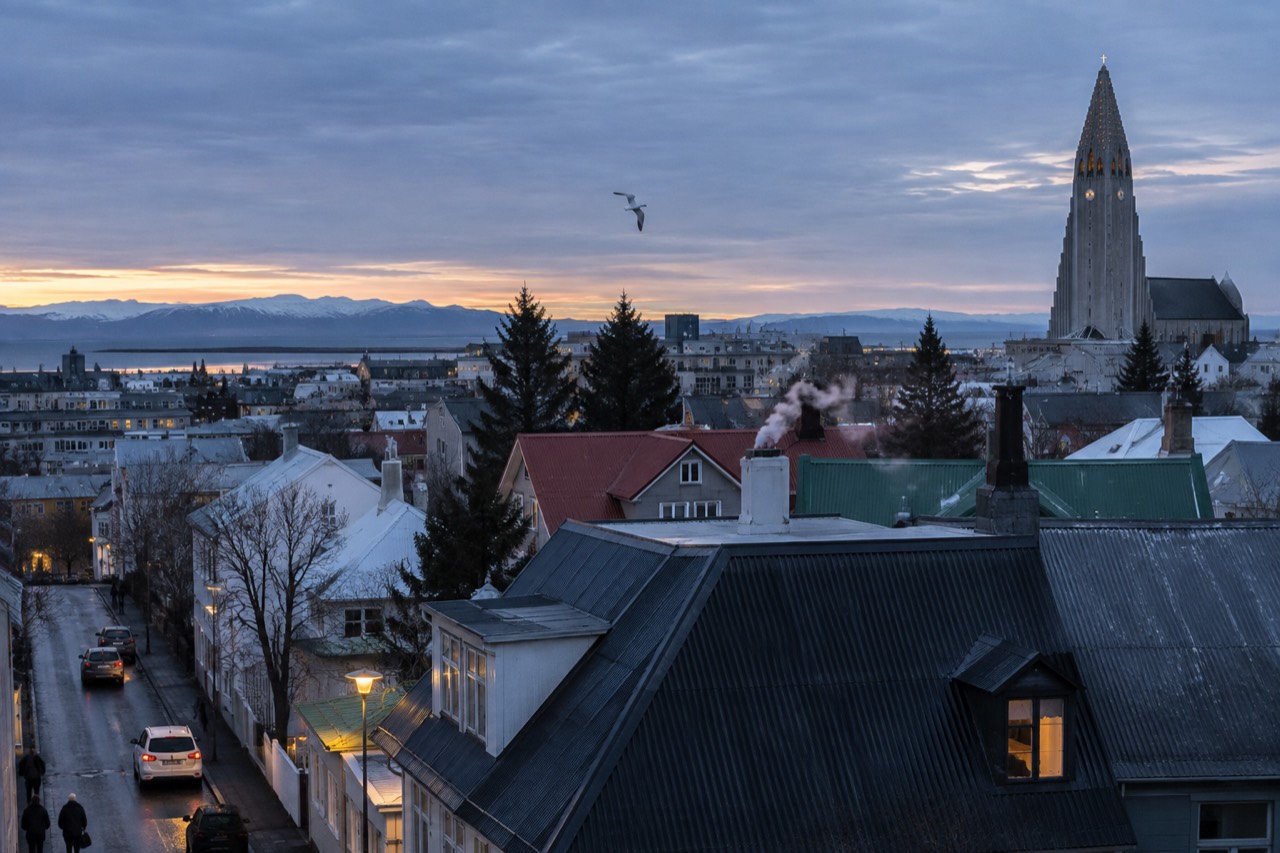
The honest answer depends on what you mean by "around." Reykjavik the municipality sprawls into residential suburbs most visitors never enter, and nobody walks those. What people mean in practice is the 101 postcode and the strip of harbour in front of it, and that zone is genuinely compact. You can stand at the Parliament building in Austurvöllur, see the Hallgrímskirkja tower at one end of the skyline and the Old Harbour at the other, and realize both are a short stroll away.
That compactness is why the free walking tour model works so well here. A guide can cover the founding story, the Alþingi, the oldest timber houses in Grjótaþorp, the pond and the modern waterfront in a single two-hour loop without rushing anyone. It also explains why so many visitors end up walking the city twice: once with a guide for the narrative, and once alone at their own pace for the photographs, the cafés and the detours a group cannot take.
If you want a feel for the city with a local explaining it, the two guided walks below are the standard starting points, both free and tip-based. They are not the only way to see Reykjavik, but they are the fastest way to learn the geography, which pays off for every walk you take afterward on your own.
The CityWalk tour, listed on freetour.com and rated 9.6 out of 10 across 6,683 reviews, is the dominant free walk in the city and has run since 2014. The Sweet Streets walk on GuruWalk, rated 4.6 out of 5 across 87 GuruWalk reviews, is the smaller English-and-Spanish alternative that meets inside Harpa. For a Spanish-speaking visitor there is exactly one further option, the Rainbow Tours legends walk, which is the same walk listed on both GuruWalk and freetour.com rather than two separate tours.
What Does A Guided Route Through Central Reykjavik Actually Cover?
CityWalk's route runs about 2 km, roughly 1.3 miles, from Austurvöllur square in front of the Parliament building to City Hall on the northern edge of the pond, and it takes two hours with a guide talking at every stop. The named stops on the operator's own page are the Parliament, Laugavegur, Lake Tjörnin, the Grjótaþorp old-house quarter, Rainbow Street and City Hall. The tour explicitly sees Harpa and Hallgrímskirkja only from a distance, which tells you how much ground it deliberately skips to stay inside two hours. This stop sits on a free walking route, Spanish-Language Legends Walk.
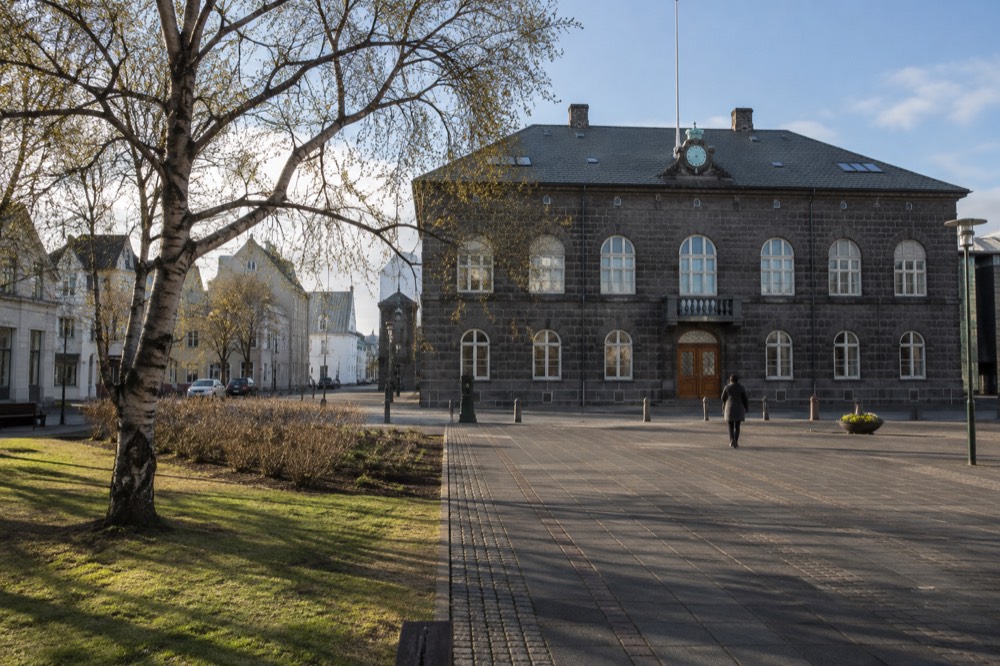
The meeting point is the Jón Sigurðsson statue in Austurvöllur, and departures run every day at 10:30 and 13:30, with bookings opening roughly five days ahead and a maximum of six people per booking. The tour is tip-based: it costs nothing up front and you pay what you feel at the end, in cash or by card. The operator's own page explains the model and the route in detail at citywalk.is.
Two hours with a guide is also a useful calibration for walking it alone. A local guide moves at talking pace, pauses at every stop and still finishes in two hours, which means an independent walker doing the same loop without commentary would finish in well under an hour. The reason most visitors take far longer is that the loop is lined with things worth stopping for, and every stop adds time that no distance calculation captures.
Grjótaþorp, the cluster of restored timber houses near the top of the route, is a good example. It is a five-minute walk through it and nothing more, yet most people linger far longer than five minutes, because the corrugated iron and painted wood of old Reykjavik is concentrated there more densely than anywhere else in the center. The pond at the other end works the same way: you can cross Hljómskálagarður park in ten minutes, or spend half an hour watching the swans and the city hall rising out of the water.
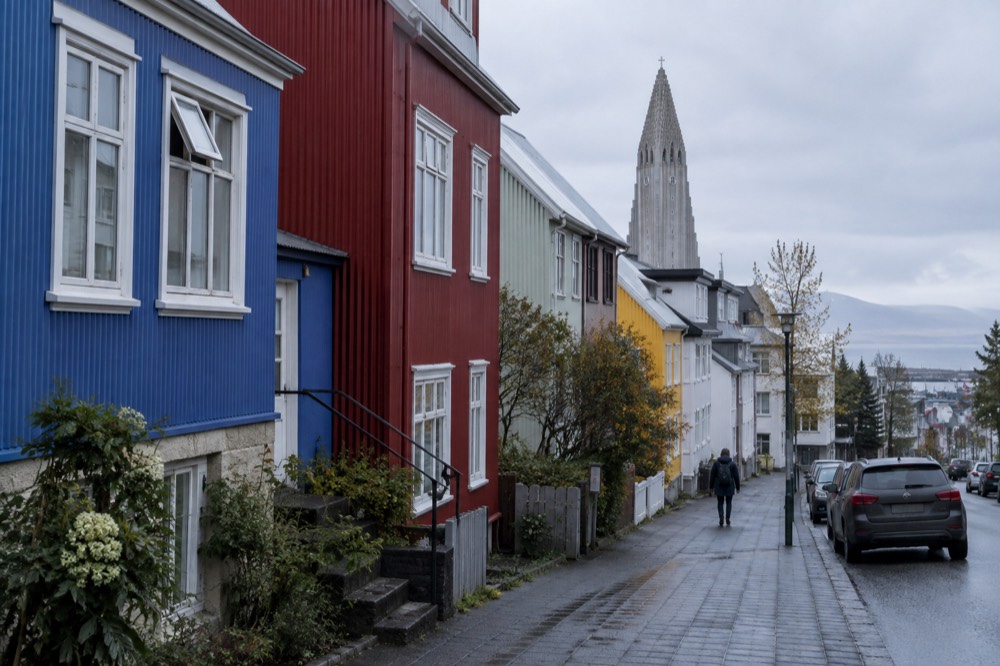
Hallgrímskirkja sits at the top of the route's view corridor even though the tour only points at it. The nave is the part you can walk into without a ticket, while the tower lift is paid, 1,500 ISK for adults since June 2026, with no advance booking. Walking up Skólavörðustígur to the church and back adds a worthwhile detour to any self-guided version of the loop, and the view down the rainbow-painted street toward the harbour is the single best orientation shot in the city.
Which Free Walks Run In Reykjavik, And How Do Their Timings Differ?
There are three free, tip-based walks in Reykjavik: CityWalk daily at 10:30 and 13:30 in English, Sweet Streets five days a week at 11:00 in English, and the Rainbow Tours legends walk in Spanish once a day, each lasting about two hours. All three are pay-what-you-want, so the walk itself costs nothing and the tip is the whole payment. Here is how they compare.
| Walk | Platform | Rating | Language | Schedule | Meeting point |
|---|---|---|---|---|---|
| Free Tour in Reykjavik (CityWalk) | freetour.com | 9.6 out of 10, 6,683 reviews | English only | Daily, 10:30 and 13:30 | Austurvöllur, by the Parliament |
| Sweet Streets of Reykjavik | GuruWalk | 4.6 out of 5, 87 reviews | English and Spanish | Mon, Thu, Fri, Sat, Sun at 11:00 | Inside Harpa, by the Rammagerdin store |
| Reykjavik History, Culture and Legends | GuruWalk and freetour.com, same walk | No published review figure | Spanish only | Mon-Fri 17:00, Sat-Sun 11:00 | Arnarhóll, by the Ingólfur Arnarson statue |
The schedules above are the current booking-calendar pattern rather than a permanent timetable, so check the listing before you plan a day around one. Two practical caveats matter for the smaller walks: Sweet Streets takes cash tips only, so a visitor with no cash cannot pay the guide, and both GuruWalk walks need a minimum of five people to run, which is a real consideration in the off-season. Cancellation is free on both, with the guides asking that you cancel rather than no-show.
Sweet Streets meets inside Harpa, the concert hall on the waterfront, which makes Harpa the natural first or last stop of any walking day in the center. The building's foyer and the Hljóðhimnar sound installation on the ground floor are free to enter during opening hours, Sunday to Tuesday 10:00 to 18:00 and Wednesday to Saturday 10:00 to 20:00. Even from outside, the glass facade facing the harbour is one of the city's most photographed free sights, and on a winter afternoon the angled panes catch whatever light there is.
How Much Time Should You Set Aside For The Old Harbour And Grandi?
The Old Harbour and the Grandi district sit directly west of the center, and walking out along the quays to the Þúfa art mound and back adds roughly an hour to a downtown loop, more if you linger over the boats and the murals. The waterfront paths are free to walk year-round, and the city's own visitor site lists the whole district among its free things to do at visitreykjavik.is. This is the part of "walking around Reykjavik" that most first-time itineraries underestimate.

Grandi repays the extra time because it is where the city's working character survives. The museums and boat trips along the quays are ticketed separately, but the walk itself, the Þúfa mound's 360-degree view and the district's murals all cost nothing. Reykjavik maps more than 160 street-art works across the city, a large share of them in this stretch, and the city is explicit that you do not have to pay to enjoy them. Give the district a full hour and a half if murals are a priority, since finding the best ones means doubling back along side streets. One of the free walking routes passes through here: Morning Walk From Harpa, Cash Tips.
If your loop takes in Rainbow Street, note that it is a public street rather than an attraction with hours. The painted stretch of Skólavörðustígur runs up toward Hallgrímskirkja and doubles as the natural spine for a self-guided walk, since nearly everything in the center lies within a few blocks of it. Walking it bottom to top takes ten minutes; photographing it without a crowd in the frame takes considerably longer, which is why early morning is the local trick.
When Does Walking Stop Being The Right Answer?
Once your plan leaves the center for Esja, Heiðmörk or the pools, walking stops being practical, and the city bus takes over: a single adult fare on Strætó is 690 ISK, valid 75 minutes with transfers, and children 11 and under ride free. The center is a walking city, but the wider municipality is not, and mixing the two without a plan is where visitors lose hours of a short day. The official fare detail is at straeto.is.
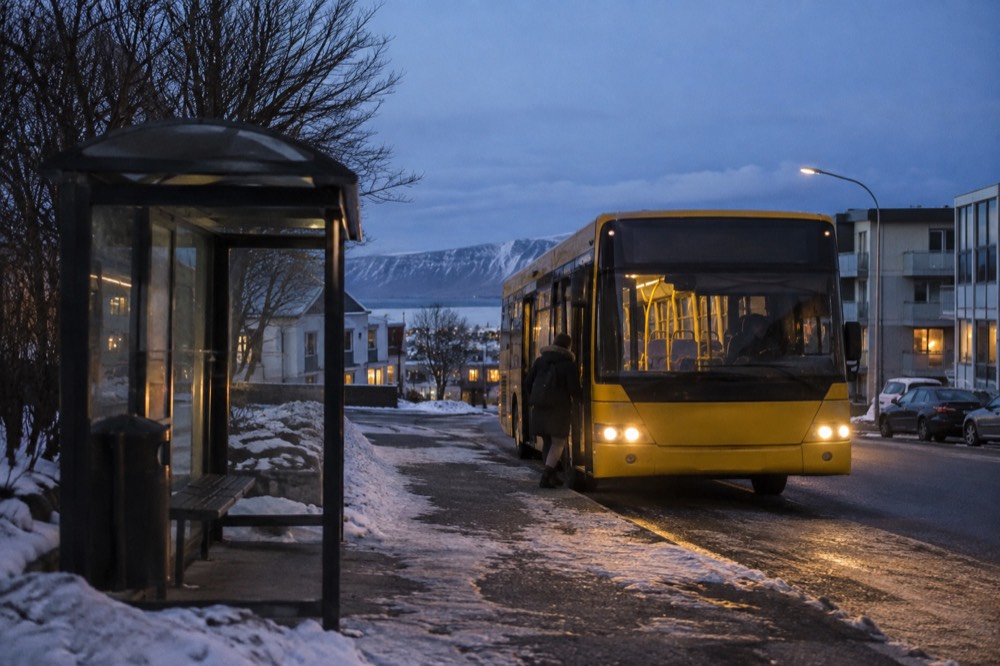
The bus is also the fallback when weather turns, which it does quickly. A two-hour walking plan in horizontal sleet becomes a forty-minute dash, and no schedule survives that. The free walking tours run year-round regardless, but a wet afternoon is the moment to swap the Grandi leg for the bus and save the waterfront for a clearer day. The same applies to the Seltjarnarnes peninsula at the end of the headland: it is a fine long walk on a calm evening, and a poor one in wind.
A rough time budget for a full walking day looks like this, built from the route distances above rather than guesswork.
| Part of the day | On foot | Realistic time with stops |
|---|---|---|
| Guided free walk, Austurvöllur to City Hall | 2 km | 2 hours |
| City Hall to Hallgrímskirkja via Rainbow Street | 1 km | 45-60 minutes |
| Center out to Grandi, Þúfa and back | 3 km round trip | 1.5 hours |
| Pond, parks and Grjótaþorp wander | 1.5 km | 1 hour |
| Full loop at visitor pace | 7-8 km total | 5-6 hours |
What Actually Slows Walkers Down In Reykjavik?
Most walkers in Reykjavik lose time to three things: stops at free sights, weather changes, and the seasonal swing in daylight, not to distance, since the core is only a couple of kilometers across and flat for the most part. In summer the daylight barely ends, with 21 hours 23 minutes of it on the June 21 solstice, so an evening walk is as viable as a morning one. In winter the window compresses hard, and the northern-lights season from September to April pulls evening walkers toward dark viewpoints such as Öskjuhlíð and Grótta instead of the lit center.
Footwear matters more than most packing guides admit. The streets are steep in places, pavements ice over in winter, and the harbour paths are exposed to wind funnelling off the water. Comfortable waterproof shoes are the difference between a leisurely loop and a truncated one, and they are the single most common regret among visitors who dressed for photographs rather than pavement. An icy morning can also close the steep Skólavörðustígur climb to all but the well-shod.
Daylight arithmetic changes the plan more than any other single factor. A December visitor has a handful of usable hours, so the two-hour guided walk plus one compact loop is a full day, while a June visitor can split the center and Grandi across a long evening without hurrying. Planning the same route for both seasons is the most common scheduling mistake in the city.
One more factor works in your favor: the city keeps narrowing the space where cars compete with you. Beyond the Austurstræti change, the city's pedestrian-street programme is documented at reykjavik.is, and it has made several central blocks calmer to walk than they were a few years ago. For a fuller rundown of what to fill your walking hours with, see our free things to do in Reykjavik guide and the Reykjavik attractions map for plotting a route. The site itself, Free Things To Do In Reykjavik, exists because the city is unusually generous with free sights once you are on foot.
Put it all together and a sensible plan looks like this: a morning free walk for orientation, two to three free hours in the center and Grandi afterward, and a bus only when the day reaches beyond the 101 postcode. Walked that way, "around Reykjavik" is a comfortable half-day, and the two-hour guided version tells you exactly how compact the heart of it really is. For winter visitors the same logic applies with shorter daylight, which the winter free things guide covers in detail.
Common Questions About Walking Around Reykjavik
How Long Does It Take To Walk Around Reykjavík?
About two hours covers the historic core at a steady pace, the same distance and time the CityWalk free tour uses with a guide. Budget four to six hours if you stop at the free sights along the way, and add roughly an hour for the Old Harbour and Grandi loop.
Is Reykjavik walkable without a car?
Yes. The 101 postcode, the pond, the harbour and Grandi are all within comfortable walking distance of each other, and the free walking tours cover the core in two hours on foot. A car only becomes useful for day trips outside the city.
How long does the free walking tour take?
Every free walk in the city runs about two hours. CityWalk's route is about 2 km from Austurvöllur to City Hall, and both GuruWalk walks are listed at two hours as well.
Do you need to book the free walking tours in advance?
Yes, book ahead. CityWalk opens bookings roughly five days in advance and caps each booking at six people, and both GuruWalk walks need a minimum of five participants to run, so a reservation matters most in the off-season.
Is it worth walking out to Grótta lighthouse?
The Seltjarnarnes peninsula where Grótta sits is a longer walk beyond the center, better suited to a bus ride or a dedicated outing. The reserve is free, but all access is banned from May 1 to July 15 for arctic tern nesting, and the causeway floods at high tide.
What should I wear for walking around Reykjavik?
Waterproof, comfortable shoes and layers. Winter pavements ice over, harbour paths are wind-exposed, and weather can change within a single two-hour walk. Dress for pavement rather than for photographs.