Reykjavik Attractions Map: Every Free Sight, Plotted And Walkable
Reykjavik's free sights pack into a walkable core: this guide plots them by cluster, walking time and public transport link, and separates the genuinely free from the ones that only sound free.
Short answer
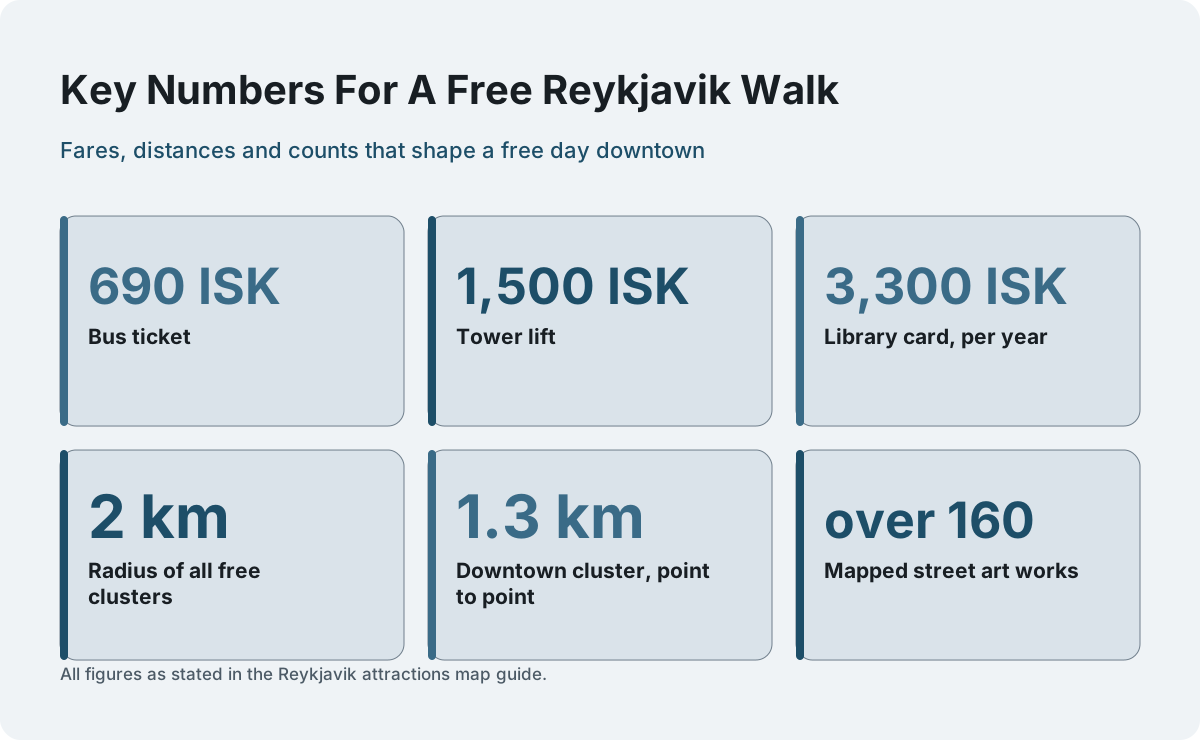
Most free attractions in Reykjavik sit within a 2 km walk of Austurvollur square: the waterfront sculptures, Harpa's foyer, Rainbow Street, Tjornin pond and the Old Harbour. Buses cost 690 ISK a single ride, children 11 and under ride free, and the biggest traps, Nautholsvik beach and the Hallgrimskirkja tower, are paid.
Reykjavik is one of the few capitals where the attraction map and the free-attraction map are almost the same document. The city center is roughly a kilometer wide, the coastline does the orienting for you, and nearly everything worth photographing between Austurvollur and the Old Harbour costs nothing to stand in front of. What the standard tourist map does not tell you is which pins involve a ticket, which involve a tide table, and which cluster together so tightly that walking between them takes less time than finding your gloves.
This guide walks the map cluster by cluster, the way you would actually use it: downtown first, then the waterfront, then the pond and parks, then the sights that need a bus or a causeway. Real fares and real distances come with each section, because the difference between a free day and a cheap day in Reykjavik is usually a 690 ISK bus ticket or a 1,500 ISK tower lift you did not plan for.
How Walkable Is Reykjavik, Really?
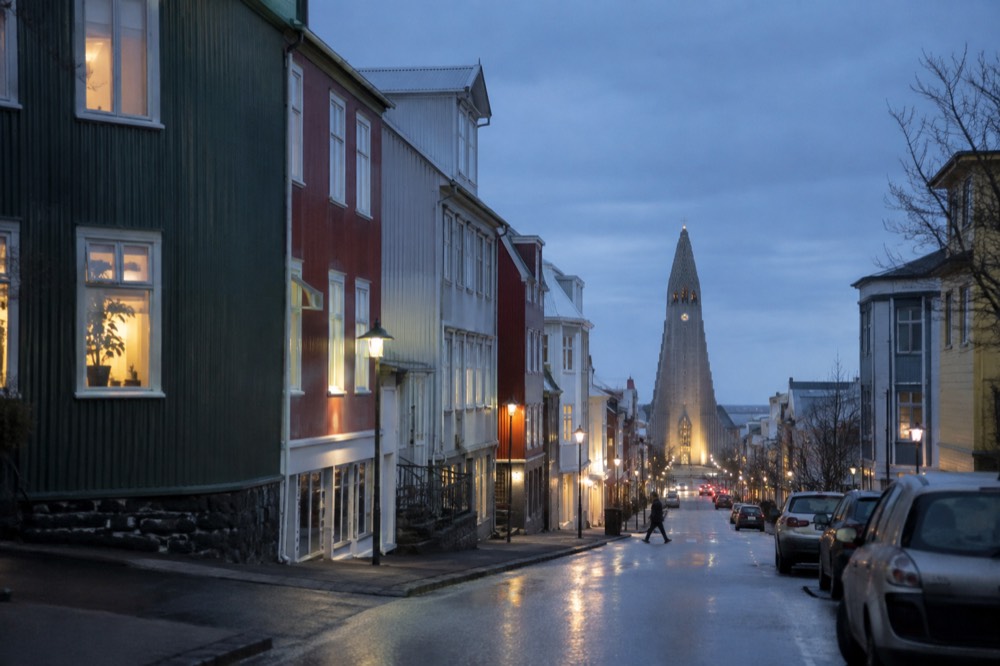
Reykjavik's free attractions fall into five clusters, all inside a 2 km radius of Austurvollur square, and a fit walker covers the entire downtown set in well under an hour of actual walking. The city has no metro or tram, so the map is a walking map by default: buses only matter for Grótta, Viðey island and the outer valleys. Downtown is compact, flat and strung along a north-facing coastline that keeps you oriented without a compass.
That compactness is the single most useful fact on the map. Laugavegur, the main shopping street, runs barely a kilometer end to end. Tjornin pond sits four minutes on foot from the Parliament building. The Sun Voyager sculpture is a ten-minute coastal stroll from Harpa concert hall, and the Old Harbour quays continue directly from there. You can plot a loop, Harpa to Sun Voyager to the harbour, then cut inland to Rainbow Street and finish at Tjornin, and the whole thing fits between a coffee and lunch. This stop sits on a free walking route, Morning Walk From Harpa, Cash Tips.
The city also helps you walk it. Austurstraeti became a pedestrian street in September 2025, joining a small but growing car-free zone in the oldest part of town, and the city's official free things to do listing confirms most of the downtown pins on this map carry no admission at all. Winter changes the equation only slightly: ice on the coastal path is the main hazard, and daylight, not distance, is what shrinks your loop between November and January.
What Does The Downtown Cluster On The Map Include?
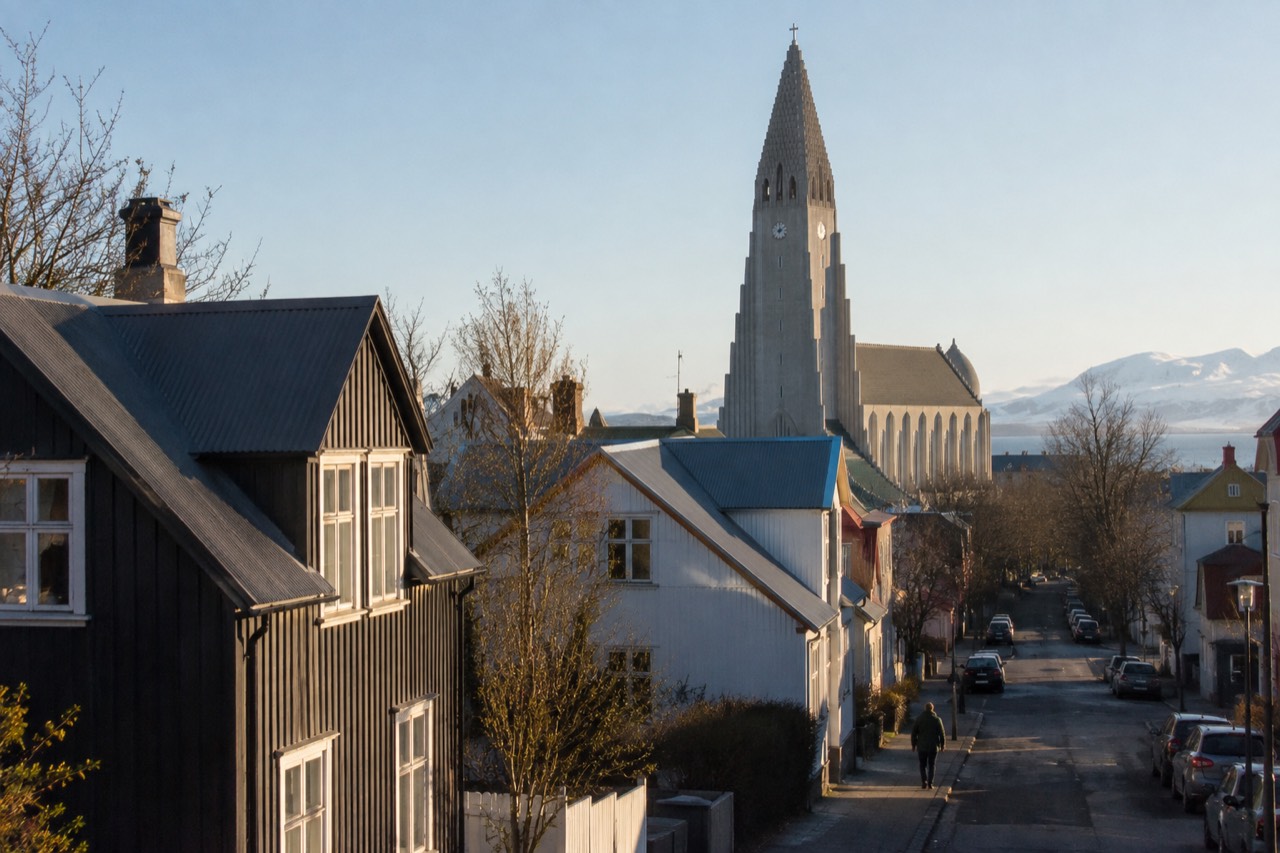
The downtown cluster runs from Austurvollur square up Laugavegur to the Hallgrimskirkja end of Rainbow Street, about 1.3 km point to point, and every outdoor pin in it is free: the square, the Parliament exterior, the cemetery-free stretch of Laugavegur, the rainbow-painted Skolavoroustigur itself, and the Einar Jonsson sculpture garden behind the church. Only two things in this cluster cost money, the church tower lift and the sculpture museum interior.
Austurvollur is the natural anchor, and not only because it is a pleasant public square and park. It is where the free CityWalk tour meets, in front of the Parliament building by the Jon Sigurdsson statue, and it sits at the intersection of the old town, the shopping street and the pond. The square itself is free public space with a small park, a cafe with history, and the Althingi building on its east side. Note that claims of free public gallery access inside Parliament are unverified, so treat the exterior as the sight.
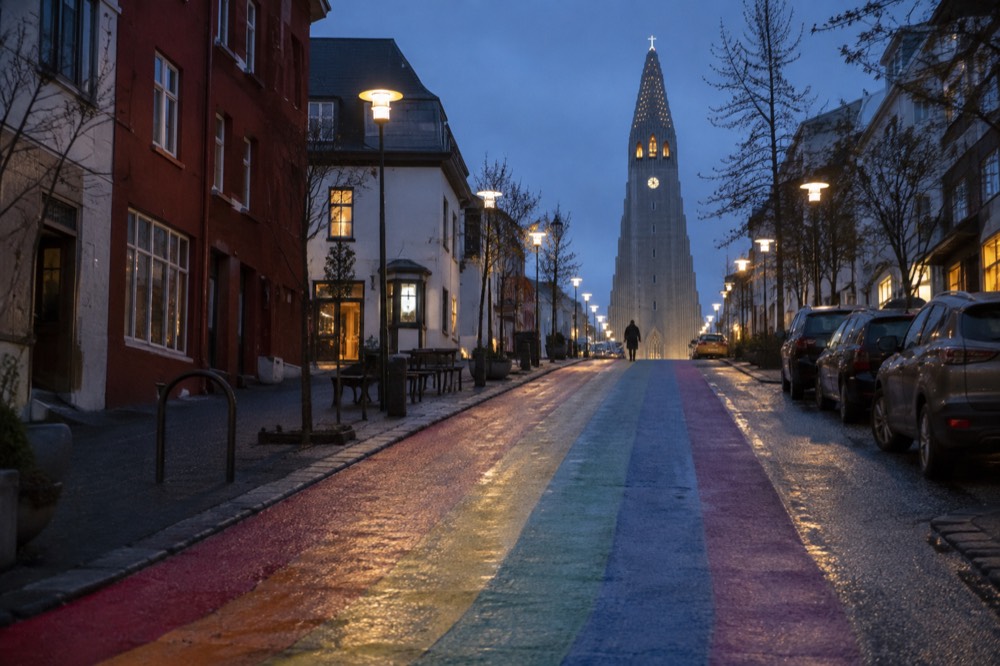
From Austurvollur, the map climbs gently north-east up Laugavegur, Reykjavik's main retail street, to Skolavoroustigur, the rainbow-striped street that runs up to Hallgrimskirkja. The paint job is a city and Pride initiative, repainted regularly, and photographing it costs nothing. The church's nave is generally free to enter, though the official site only publishes prices for the tower, so the nave's status is inferred rather than stated; the tower lift is firmly paid, 1,500 ISK for adults since June 2026 per the church's own opening times and price page.
Behind the church, and missed by most visitors, sits the Einar Jonsson sculpture garden, free year-round, with the museum interior beside it paid. Two blocks east, the Reykjavik City Library offers free entry to everyone, with a borrowing card at 3,300 ISK a year if you want to take books out; under-18s and over-67s get the card free. It is the best rainy-day pin in the cluster.
Which Free Sights Line The Waterfront?
The waterfront cluster strings Harpa concert hall, the Sun Voyager sculpture, the Old Harbour quays and the Thufa mound along a short, flat coastal path of roughly a kilometer and a half, all free, with Harpa's foyer open to walk into during building hours and the quays open around the clock. Harpa's opening hours run 10:00 to 18:00 Sunday to Tuesday and 10:00 to 20:00 Wednesday to Saturday, and admission to the building and its ground-floor sound installation is free. A free walk covers this ground: Spanish-Language Legends Walk.
Start at Harpa, the glass-faceted concert hall at the old harbour's edge. The exterior alone is the most photographed structure in the city, but the foyer is the real free sight: a vast, light-filled interior with the Hljodhimnar sound installation on the ground floor, free to experience whenever the building is open. It is also the indoor meeting point for the smaller of the city's two English free walks, which matters if you are using the walks to orient yourself on day one.
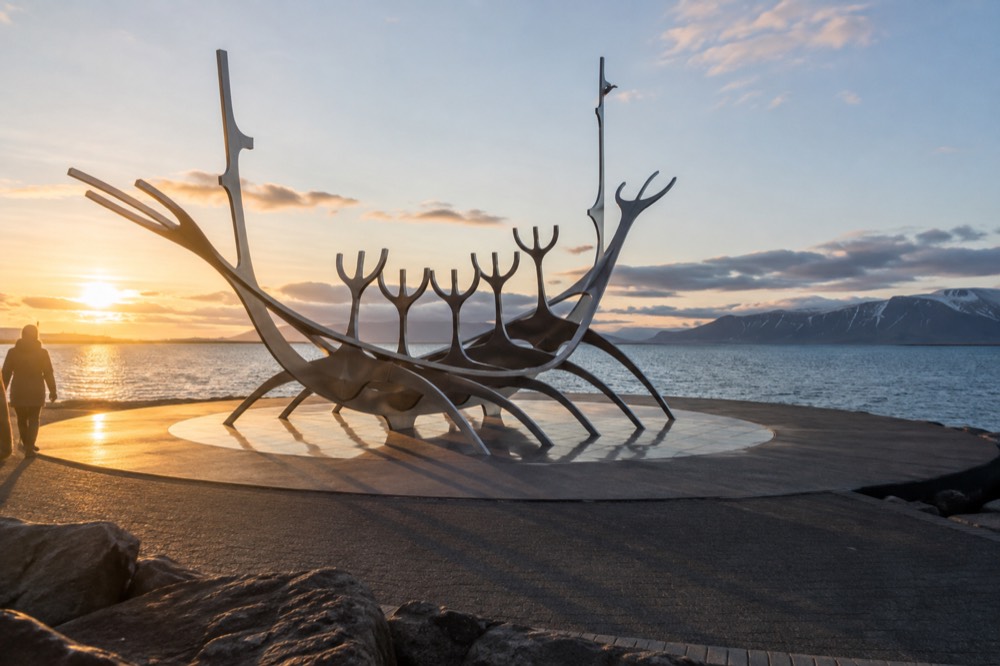
From Harpa the coastal path bends west along Sæbraut to the Sun Voyager, the stainless steel dream-boat sculpture that has become the city's silhouette. It is an unfenced public artwork on the seafront, free at any hour, and the Visit Reykjavik service record for it lists "opening hours" only as a database quirk; ignore them. The best light on it is early morning or late evening in summer, when the midnight sun sits low over Faxa Bay.
Continue west and the path delivers you into the Old Harbour and Grandi district: working quays, fishing boats, the flat-topped Thufa art mound with its 360-degree view, and a stretch of waterfront walking that Visit Reykjavik lists as free year-round. The museums and boat trips along Grandi are paid and separate, but the quays, the mound and the sea air are not. Our Old Harbour and Grandi district guide covers this cluster in detail if you want to linger.
Where Do The Pond And The Green Spaces Sit On The Map?
Tjornin pond and Hljomskalagardur park sit just four minutes' walk west of Austurvollur, placing them at the heart of the city's free green layer. Together with the Botanic Garden in Laugardalur and the Oskjuhlid hill woods, these spaces spread across the map of Reykjavik, and every outdoor part of them costs nothing to enjoy. The pond is open park space in the very center of town, the Botanic Garden is always open with free entry, and Oskjuhlid's trails are free while the Perlan building on top is ticketed. Only the indoor and uphill attractions on this layer charge, and the layer itself is the largest free zone on the map.
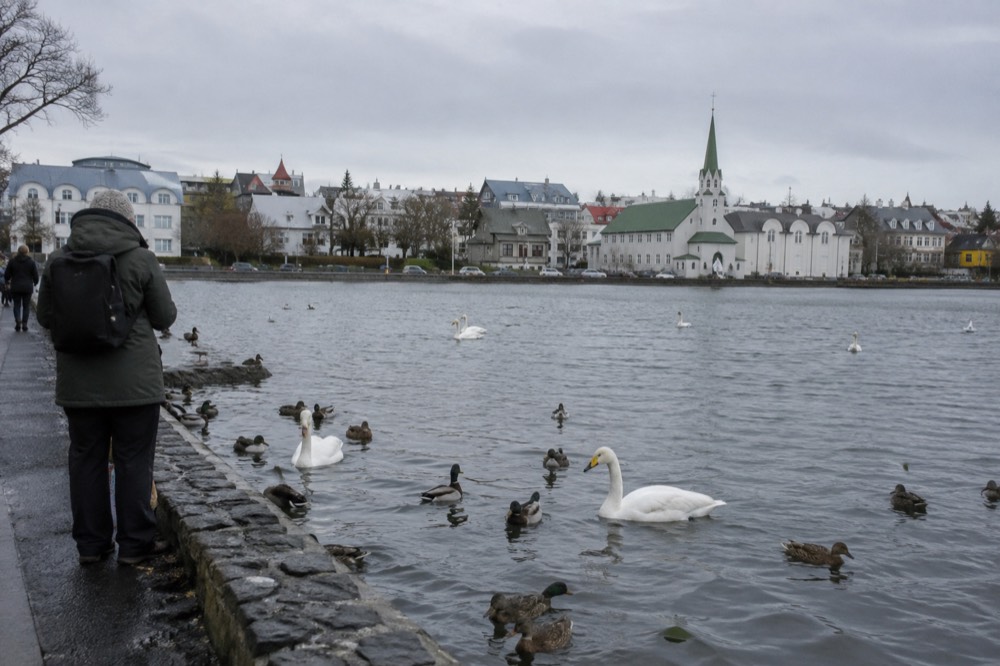
Tjornin is the easiest pin on the whole map to use. It is a shallow city pond with an island bird sanctuary, swans and eider ducks, wrapped by a park that hosts the free June 17th National Day concerts and the Culture Night crowds each August. A full loop of the water takes about fifteen minutes at a stroll. In winter it freezes and becomes a skating patch, weather permitting, still free.
The pond is also where the free CityWalk tour finishes, after its roughly 2 km route from Austurvollur past Parliament, Laugavegur, the old turf cottages of Grjotathorp and Rainbow Street. If you want the map walked for you on your first morning, that tour is the practical way to do it.
East of the center, two further green pins need a bus ride but no ticket. The Reykjavik Botanic Garden in Laugardalur is always open, free, with a greenhouse open 10:00 to 18:00 in summer and shorter winter hours. Oskjuhlid, the wooded hill beside Perlan, offers free trails and what Visit Reykjavik calls an equally stunning free view of the city; the Perlan observation deck on top is paid and cannot be bought separately from a full Perlan ticket, so the hill trail is the free alternative by design.
How Does Street Art Change The Route Between The Pins?
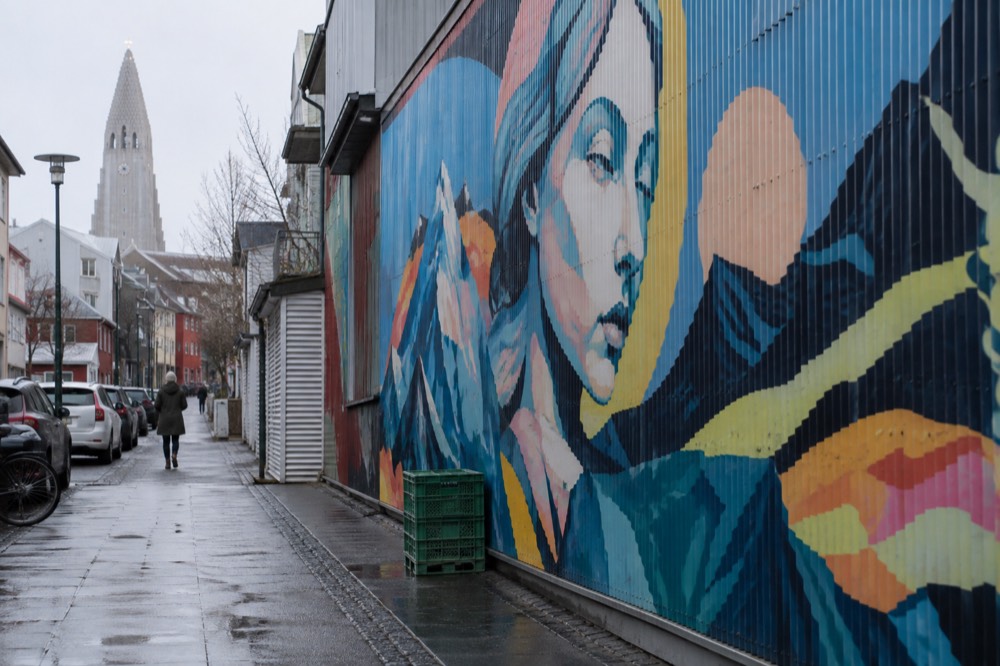
More than 160 mapped street art works sit on the walls between the downtown pins, mostly in the Grandi harbour district and the back streets off Laugavegur, and the city itself publishes a mapped collection you can follow free of charge. The murals turn the dead stretches between clusters into the walk itself, and the densest concentration sits within the same waterfront-to-Laugavegur loop you are already walking.
The city's mapping is the useful part. Reykjavik's own announcement of the collection, over 160 works and counting, states plainly that you do not have to pay to enjoy street art, and the mapped set gives you a ready-made scavenger route through Grandi's corrugated-iron walls. Because the harbour district and the downtown cluster share a boundary, you can fold the murals into the waterfront walk without adding much more than twenty minutes. The full index of guides sits on Free Things To Do In Reykjavik.
This is also where a guided walk earns its keep on a short visit. The twice-daily English CityWalk, rated 9.6 out of 10 across 6,683 freetour.com reviews, follows the downtown pins and points out works you would walk past alone, and the smaller GuruWalk walk rated 4.6 out of 5 across 87 GuruWalk reviews starts from Harpa and works the same streets in English and Spanish. Both are pay-what-you-want, so the map and the mural route stay free either way.
How Far Is Each Free Attraction From The Center?
Measured from Austurvollur square, the downtown pins are all within a 15-minute walk, the waterfront set adds 5 to 20 minutes, and only Grótta, Viðey, Esja and the outer valleys need a bus or car, at 690 ISK per adult single on Strætó with children 11 and under free. The table below is the map in numbers, and the chart beneath it shows how the free clusters stack up by walking time.
| Attraction | Walk from Austurvollur | Cluster | Free status |
|---|---|---|---|
| Austurvollur square | 0 min | Downtown | Free |
| Rainbow Street | 8 min | Downtown | Free |
| Hallgrimskirkja nave | 9 min | Downtown | Free (tower paid, 1,500 ISK) |
| Einar Jonsson sculpture garden | 9 min | Downtown | Free |
| Tjornin pond | 4 min | Parks | Free |
| Harpa foyer | 7 min | Waterfront | Free, building hours |
| Sun Voyager | 15 min | Waterfront | Free |
| Old Harbour and Thufa | 20 min | Waterfront | Free |
| Oskjuhlid hill trails | 35 min | Parks | Free |
| Botanic Garden | bus or 50 min | Parks | Free |
| Grótta lighthouse | bus to Seltjarnarnes | Outer | Free, tide and closure rules |
| Mount Esja trails | bus to Esjavik | Outer | Free trails |
Two caveats belong on any honest version of this map. Grótta's causeway floods at high tide and the whole reserve is closed to visitors from May 1 to July 15 for Arctic tern nesting, so that pin needs a tide check before you commit. And the Hallgrimskirkja nave's free status is inferred from the church publishing prices only for the tower, so if a rope or a donation box appears at the nave door, the tower price list is the reason.
What Lies Beyond The Center On The Map?
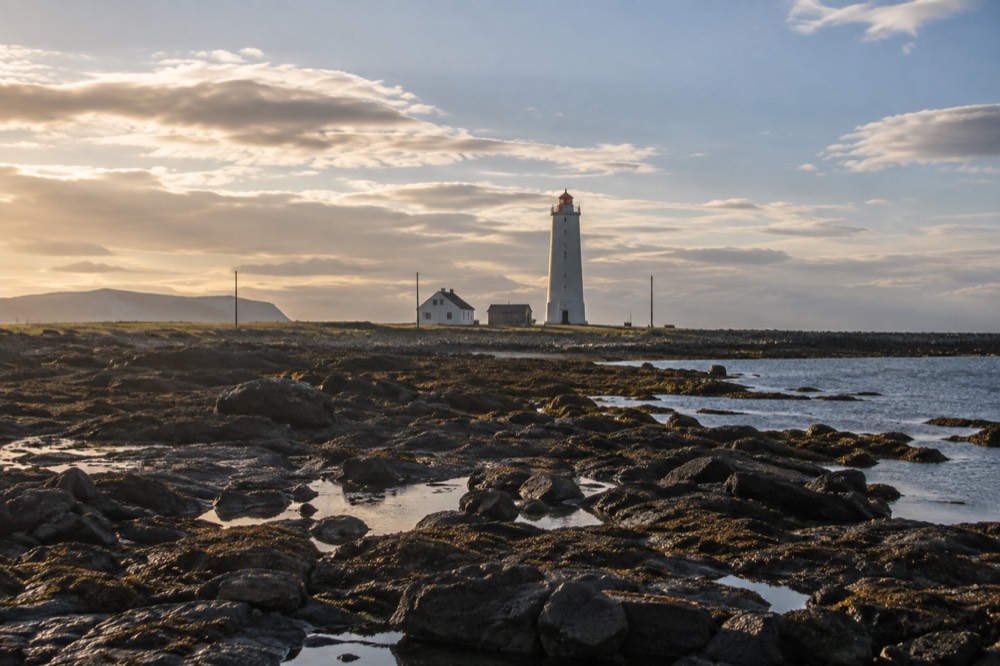
Four worthwhile pins sit outside the walking core: Grótta lighthouse on the Seltjarnarnes peninsula, Viðey island in the bay, the Elliðaárdalur valley and Heiðmörk reserve on the eastern edge, and the Mount Esja trailhead across the bay. The outdoor parts of all four are free, but two carry conditions: Grótta's summer closure and tide-flooded causeway, and Viðey's ferry, which charges 2,500 ISK per adult even though the island itself has no admission.
Grótta is the most rewarding of the outer pins and the one that punishes poor planning. At low tide you walk the causeway to the lighthouse and the nature reserve; at high tide you watch from the mainland. Between May 1 and July 15 you watch from the mainland regardless, because the reserve closes for nesting terns, an aggressive bird that defends its ground. The reserve actually expanded in July 2026 to include the Seltjörn area, which strengthens rather than changes those rules. In aurora season, September to April, Grótta is the city's best dark-horizon viewing point.
Viðey is the opposite trade: a five-minute ferry ride to an island with no admission fee, walking paths and the Imagine Peace Tower, but the Elding ferry itself is 2,500 ISK for an adult, half price for 7 to 17s, free for under-7s, daily in summer and weekends only in winter. Conditionally free is the honest label, and the condition is the boat. Closer to home, Elliðaárdalur is a free city valley with paved riverside paths, and Heiðmörk, 3,200 hectares of reserve, is free to everyone with trails and berry-picking ground in late summer.
If you are mapping a Spanish-language visit, note the newest walk on the city's small roster: a GuruWalk legends tour in Spanish only, meeting at the Ingólfur Arnarson statue on Arnarhóll, running Monday to Friday at 17:00 and weekends at 11:00, with no reviews yet on its new listing. It covers the same downtown pins in a language the two English walks do not.
How Do You Get Between The Map's Clusters Cheaply?
Strætó buses cost 690 ISK per adult single, valid 75 minutes with transfers, with children 11 and under free, and a 24-hour pass at 2,750 ISK, but for the downtown and waterfront clusters you should simply walk, because no bus route beats the 20 minutes on foot. Buses matter only for Seltjarnarnes, Laugardalur, Elliðaárdalur and Esja. The fares come from the Strætó price list effective January 6, 2026, a roughly 3 percent rise on the previous 670 ISK single.
| Ticket | Price | Notes |
|---|---|---|
| Adult single | 690 ISK | Contactless or app, 75 min with transfers |
| Youth 12–17 / senior 67+ | 345 ISK | Half fare |
| Children 11 and under | Free | With adult |
| 24-hour pass | 2,750 ISK | Day passes otherwise discontinued |
| 72-hour pass | 6,000 ISK | |
| Night bus | 690 ISK | Weekend nights |
Drivers face a different map. Center parking is zoned: P1, the core around Austurvollur, charges 660 ISK per hour with a three-hour maximum and pay hours 9:00 to 21:00 weekdays, while P3 and P4 zones are free on weekends. The city's official parking page carries the current zone map, and our free parking in Reykjavik guide translates it into plain directions. If your hotel sits in P1, the map's advice is simple: park once, then walk everything.
For the morning-shaped version of the map, the smaller GuruWalk walk is worth plotting around. Sweet Streets of Reykjavik runs Monday, Thursday, Friday, Saturday and Sunday at 11:00 in English, meeting inside Harpa, cash tips only, with groups capped at 10 and a five-person minimum to run. Bring notes in kronur, because on a pay-what-you-want walk the tip is the entire payment, and a card reader is not always part of it.
Which Pins On The Map Are Traps That Only Look Free?
Four pins regularly marked free on tourist maps are paid: Nauthólsvík geothermal beach at 1,500 ISK year-round with no summer free window, the Hallgrimskirkja tower at 1,500 ISK, the Perlan deck, which cannot be bought separately from a full ticket, and everything marketed as free with the Reykjavik City Card, which itself costs 6,100 ISK for 24 hours. The table below separates them from the genuinely free set.
| Pin | Common claim | Reality | Free alternative |
|---|---|---|---|
| Nauthólsvík geothermal beach | "Free in summer" | 1,500 ISK adults, year-round | Kvika foot bath, free |
| Hallgrimskirkja tower | "The church is free" | Nave free, tower 1,500 ISK | Oskjuhlid hill view |
| Perlan observation deck | "Free viewpoint" | Paid, bundled with tickets | Oskjuhlid trails |
| City Card attractions | "Free museums" | Card costs 6,100 ISK per 24h | Free museums on Museum Night |
| Reykjavik Art Museum | "Has a free day" | 2,550 ISK, no free day | Under-18s free |
The beach is the one worth dwelling on, because the "free from May 15 to August 15" claim circulates widely and the official tariff contradicts it: one flat entrance pass, no seasonal split, aligned with the city pool tariff that took effect May 5, 2026. The free substitute is genuine and nearby, the Kvika foot bath on the Seltjarnarnes seawall, which Visit Reykjavik confirms has no entrance fee. Our geothermal beach guide covers the paid reality in full.
The City Card deserves its own honest sentence: it is a paid product, 6,100 ISK for 24 hours, 8,500 for 48, 10,500 for 72, and anything the card unlocks is not free by any definition this site uses. Where the card genuinely pays off, and where the free layer beats it, is laid out in our Reykjavik City Card guide. The free layer of the museum world is real but narrow: under-18s enter the Art Museum, National Museum, National Gallery and Settlement Exhibition free, and one night a year, Safnanótt during the Winter Lights Festival, the museums open free to everyone.
How Do You Turn The Map Into A One-Day Plan?
A realistic free day plots as one loop and one detour: the downtown-waterfront loop from Austurvollur to Tjornin via Harpa, the Sun Voyager and the harbour, roughly 5 km on foot with every pin free, plus one outer detour by bus, Grótta at low tide, the Botanic Garden, or Elliðaárdalur, at 690 ISK each way. Add a free walking tour at 10:30 or 13:30 and the day costs a bus fare and a tip.
The order matters more than the pins. Do the waterfront in the morning light, when the Sun Voyager faces the low sun over Faxa Bay and the harbour boats are working. Save Rainbow Street and Hallgrimskirkja's exterior for midday, when the paint reads brightest. Give Tjornin the late afternoon, when the birds gather and the swans come to the east bank. In September to April, swap the evening segment for an aurora attempt at Grótta, Oskjuhlid or the Elliðaárdalur valley, all free, all on the map, all dark enough.
Season reshapes the same map rather than changing it. Summer adds the midnight sun, 21 hours 23 minutes of daylight at the June solstice, which stretches the loop into the night at no extra cost. Winter adds the Winter Lights Festival in early February, the bonfires on New Year's Eve, ten of them citywide and free, and the ice on Tjornin. The festivals are on the map too: Culture Night in August, when the whole programme is free and the buses run free for an hour after the fireworks, and June 17th, when the parade steps off from Hallgrimskirkja at 13:00.
The map, in the end, is the point of this site: a directory of everything in Reykjavik that costs nothing, plotted and walked. For the deeper write-ups of individual pins, start with the free things to do in Reykjavik overview and the Sun Voyager guide, and carry the loop above as your working map.
Common Questions About The Reykjavik Attractions Map
Is Reykjavik walkable enough to skip the attractions map?
Mostly yes. The downtown and waterfront clusters sit within a 20-minute walk of Austurvollur, and a full free loop covers about 5 km. You only need a map and a bus for the outer pins: Grótta, Viðey, the Botanic Garden, Elliðaárdalur and Esja.
What is the best free attraction in Reykjavik?
The Harpa foyer and the Sun Voyager are the standout free sights, one indoor and free during building hours, the other an unfenced seafront sculpture you can visit at any hour. The Tjornin pond loop and the Einar Jonsson sculpture garden are close behind.
Can you see Reykjavik in one day for free?
Yes. The downtown-waterfront loop hits Austurvollur, Rainbow Street, Hallgrimskirkja's exterior, the sculpture garden, Tjornin, Harpa, the Sun Voyager and the Old Harbour, all free, in about five walking kilometers. A free walking tour at 10:30 or 13:30 adds context at a price you choose.
How much is the bus in Reykjavik?
A single adult fare on Strætó is 690 ISK, valid 75 minutes with transfers, since the January 6, 2026 price list. Children 11 and under ride free, and a 24-hour pass is 2,750 ISK.
Is Nauthólsvík beach free?
No. The geothermal beach charges 1,500 ISK for adults year-round, and the widely repeated summer free window is contradicted by the official tariff. The free alternative nearby is the Kvika foot bath on the Seltjarnarnes seawall.
Is Hallgrímskirkja free to visit?
The nave is generally free to enter, though the church only publishes prices for the tower. The tower lift costs 1,500 ISK for adults. The exterior and the sculpture garden behind the church are free at any time.