What's Actually Free In Reykjavik In Winter
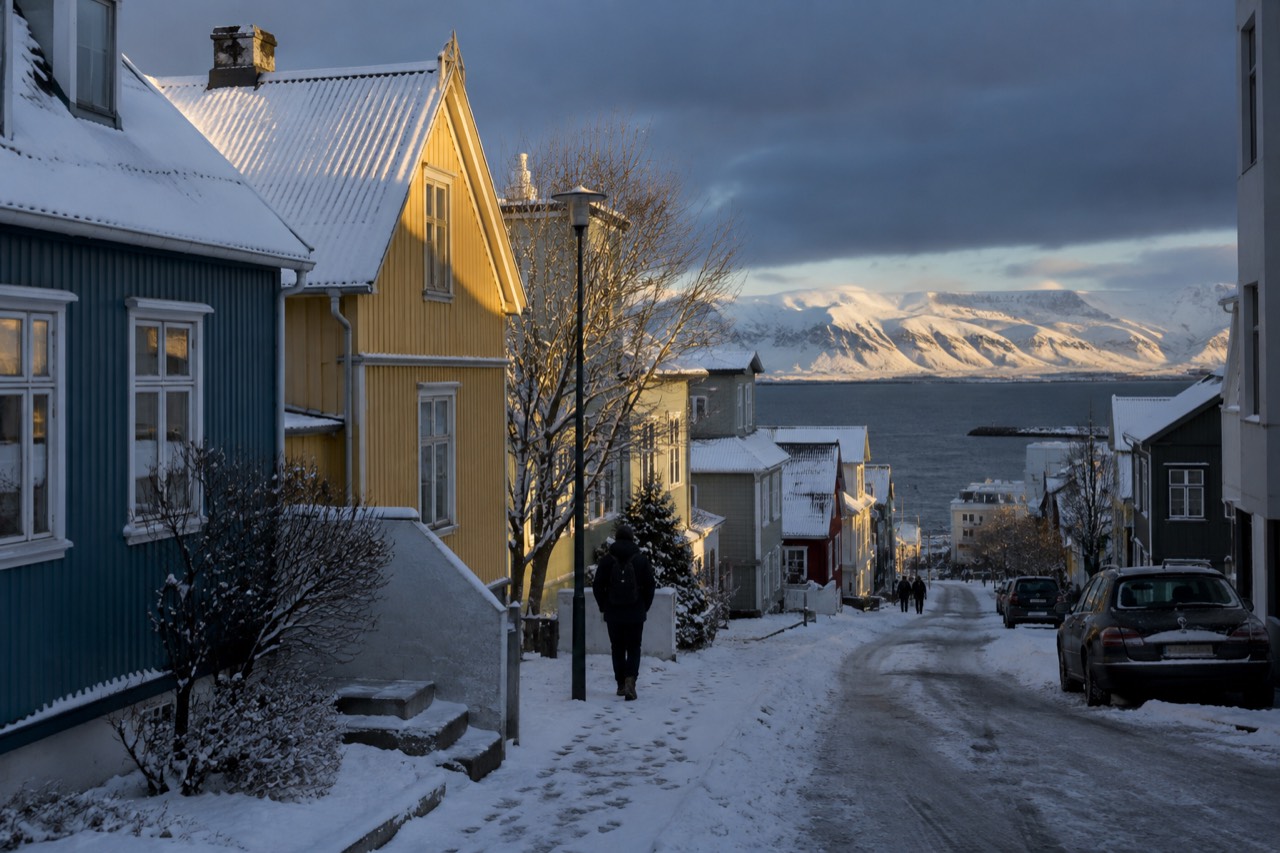
Winter is the season when Reykjavik gives away the most: free festival nights, free aurora viewpoints on the city's doorstep, and two free walking tours that run straight through the dark months. Here is what costs nothing, what only looks free, and how to plan the days.
Short answer
Reykjavik in winter offers genuinely free walking tours (CityWalk runs daily at 10:30 and 13:30), northern lights viewing from public parks September to April, free Museum Night and Pool Night during the Winter Lights Festival in early February, ten free New Year's Eve bonfires, and free entry to Harpa's foyer, Hallgrímskirkja's nave and the Botanic Garden.
Winter strips Reykjavik down to its essentials. Daylight shrinks to a handful of hours, the tourist crowds thin out, and the city responds by giving away more of itself than it does in summer: free museum nights, free pool nights, ten free community bonfires on New Year's Eve, and a dark sky close enough to town that the northern lights are a regular free show. The catch is that winter is also when the "free Iceland" myths do the most damage, because several attractions that get labelled free, like the Nauthólsvík geothermal beach, charge the same fee in January as in July. This guide separates the two, season by season and krona by krona.
What Is Genuinely Free In Reykjavik In Winter?
Reykjavik in winter gives you free walking tours that run daily, free northern lights viewing from public parks and hills September through April, free entry to Harpa's foyer and the Hljóðhimnar sound installation, and free access to Hallgrímskirkja's nave, the Tjörnin pond, the Botanic Garden and the 160-plus mapped street art works, plus free festival nights in February and on New Year's Eve. None require a ticket or a booking fee.
The winter list is longer than most visitors expect because the city's biggest free assets are either outdoors or publicly owned. The Free Things To Do In Reykjavik directory covers the year-round core, but winter adds a seasonal layer on top: the Winter Lights Festival in early February turns museums, pools and dark streets into free venues, and the aurora season runs right through the cold half of the year.
What winter also changes is access. Some free spots become better (dark skies arrive early enough to hunt the lights before dinner), some become harder (a few trails get icy), and a handful of summer claims quietly stop being true. The table below is the honest winter baseline.
| Free thing | Winter status | What to know |
|---|---|---|
| CityWalk free walking tour | Runs daily, 10:30 and 13:30 | Tip-based, meets at Austurvöllur |
| Northern lights from public spots | Season runs September to April | Klambratún, Öskjuhlíð, Grótta and others |
| Harpa foyer and Hljóðhimnar | Free all year | Sun–Tue 10:00–18:00, Wed–Sat 10:00–20:00 |
| Hallgrímskirkja nave | Free, tower is paid | Tower lift costs extra, nave costs nothing |
| Tjörnin pond and Hljómskálagarður | Free, often partly frozen | The bird life concentrates at the open water |
| Reykjavík Botanic Garden | Garden always open | Greenhouse hours are shorter in winter |
| Street art (160+ mapped works) | Free year-round | Best combined with Laugavegur and Grandi |
| Winter Lights Festival events | Free in early February | Museum Night and Pool Night are the anchors |
One structural point worth knowing: Reykjavik's museums are mostly paid, but under-18s get in free at the Reykjavík Art Museum, the National Museum, the National Gallery, the Settlement Exhibition and Árbæjarsafn, and disabled visitors are also admitted free at those sites. That makes a family winter city break dramatically cheaper than the headline prices suggest. The free museums in Reykjavik guide breaks down every under-18 and free-entry rule, and the Reykjavik City Card guide explains why the card itself is a paid product, not a free pass.
Do The Free Walking Tours Run In Winter?
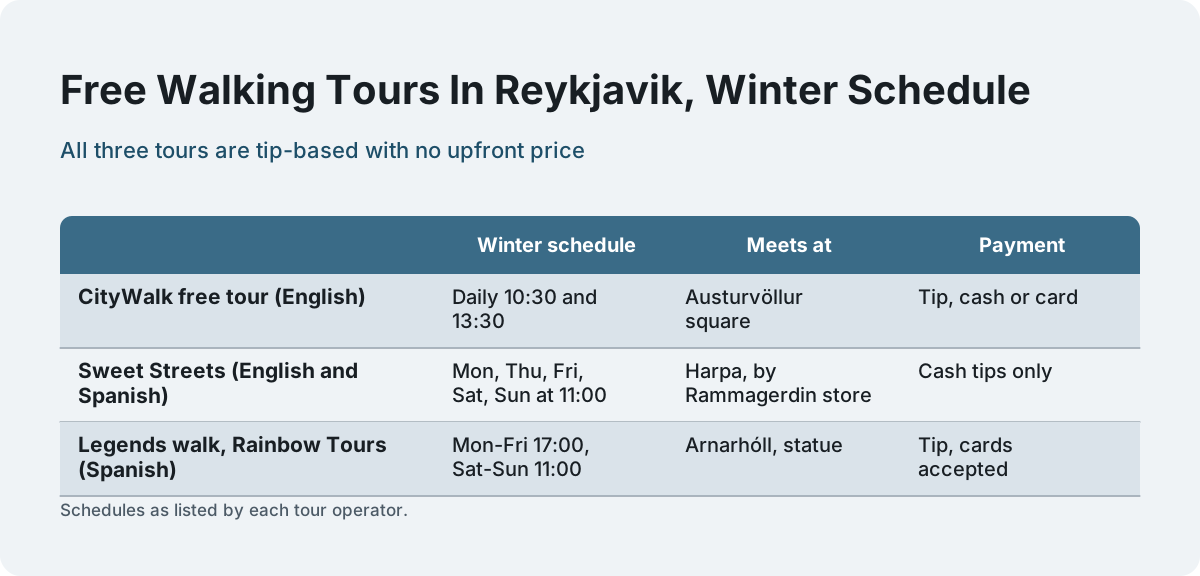
Yes, all of them. CityWalk's free tour runs every day of the winter at 10:30 and 13:30 from Austurvöllur square, and it has run year-round since 2014. Sweet Streets runs Monday, Thursday, Friday, Saturday and Sunday at 11:00 in English. The Spanish-language legends walk runs Monday to Friday at 17:00 and on weekends at 11:00. None charges an upfront price; you tip what you choose at the end.
Winter is arguably the best season for these walks. Groups are smaller, the guides have more time for questions, and a two-hour walk that would be pleasant in July becomes the difference between understanding the city and just seeing it. CityWalk is the long-running, dominant free walk in this city, rated 9.6 out of 10 across 6,683 freetour.com reviews, and its route covers the Parliament, Laugavegur, Tjörnin, Grjótaþorp, Rainbow Street and City Hall over about 2 km. The listing notes that Harpa and Hallgrímskirkja are seen from a distance rather than visited. One of the free walking routes passes through here: Morning Walk From Harpa, Cash Tips.
The smaller GuruWalk option is Sweet Streets, rated 4.6 out of 5 across 87 GuruWalk reviews, running in English and Spanish from Harpa. Two practical warnings matter more in winter than in summer: it is cash only, so bring notes for the tip, and it needs a minimum of five bookings to run, which is a genuine risk on a quiet Tuesday in February. Its meeting point also has a quirk: the structured address and the guide's own written instruction sit about 300 metres apart, so follow the guide's instructions on the GuruWalk listing rather than a map pin.
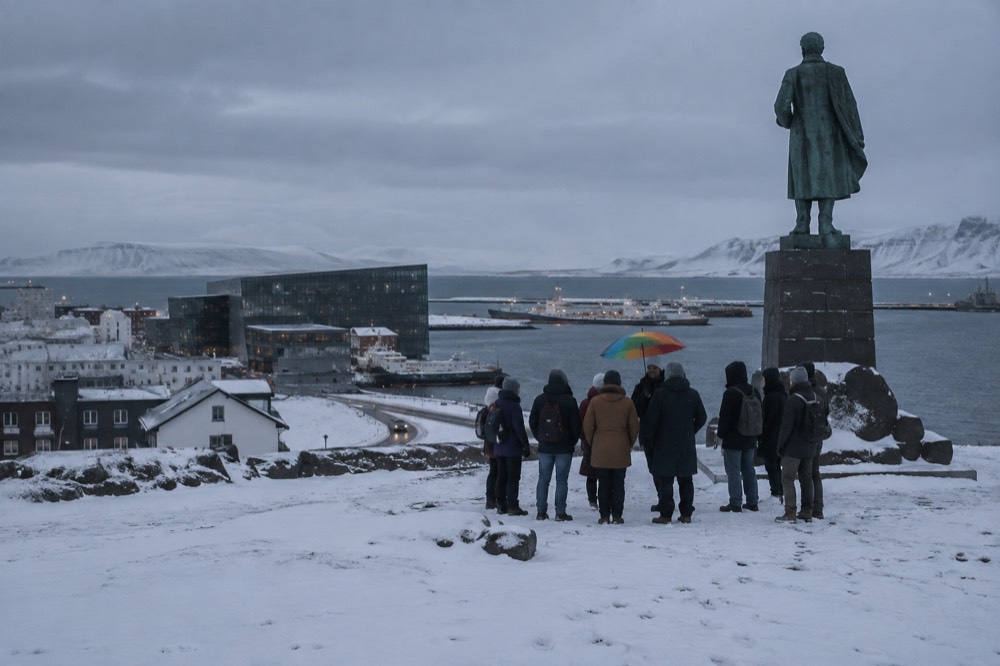
For Spanish speakers there is a third walk, the legends tour by Rainbow Tours, which is Spanish only. It is genuinely new on GuruWalk, created in late August 2026, with no reviews yet on that listing. It meets at the Ingólfur Arnarson statue on Arnarhóll, where the guide carries a rainbow umbrella, which is a sensible marker on a dark winter afternoon. Note that freetour.com lists what looks like a second Spanish tour; it is the same walk by the same operator at the same meeting point, not a separate option.
| Walk | Language | Winter schedule | Meets at | Payment |
|---|---|---|---|---|
| CityWalk free tour | English | Daily 10:30 and 13:30 | Austurvöllur, by the Parliament | Tip, cash or card |
| Sweet Streets | English and Spanish | Mon, Thu, Fri, Sat, Sun at 11:00 | Harpa, by the Rammagerdin store | Cash tips only |
| Legends walk (Rainbow Tours) | Spanish only | Mon–Fri 17:00, Sat–Sun 11:00 | Arnarhóll, Ingólfur Arnarson statue | Tip, cards accepted |
Booking calendars roll and schedules can shift with the season, so treat these times as the current pattern rather than a permanent timetable, and check the listing before you set out. Cancellation is free on both GuruWalk walks, and the guides ask that you cancel rather than no-show, since a minimum of five people is needed for the walk to run at all.
Where Can You See The Northern Lights For Free In Winter?
The aurora season in Reykjavik runs from September to April, and every recommended viewing spot is public and free: Klambratún, Öskjuhlíð hill, Grótta at Seltjarnarnes, Elliðaárdalur, the Rauðhólar pseudo-craters and Lake Elliðavatn among them. You need a clear, dark sky and a bit of patience, not a tour bus. Winter helps because darkness arrives in the mid-afternoon.
This is the single biggest free winter prize, and the city's own tourism office publishes the spot list. The logic is simple: get away from the brightest streetlights, face a dark horizon, and check the forecast. Öskjuhlíð is the easiest walk from the centre, a wooded hill with open sky at the top, while Grótta on the Seltjarnarnes peninsula has the darkest horizon of all and doubles as a lighthouse viewpoint. One winter advantage: the causeway to Grótta floods at high tide, but in winter you are not competing with the nesting closure that bans all access from May 1 to July 15. Check the tide before you walk out.
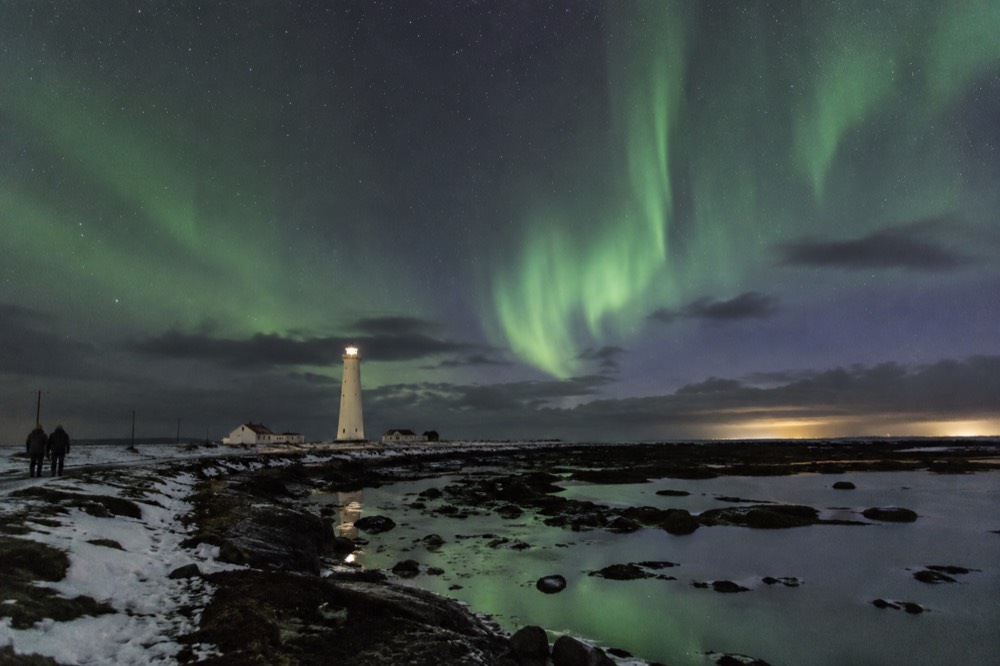
The official guidance on where to look is published by Visit Reykjavík's northern lights page, which names the darker parks and viewpoints around the city. A practical winter routine: check the cloud cover and the aurora forecast in the late afternoon, pick the nearest dark spot on that list, and be ready to move. Clear skies matter far more than the activity number; a weak display under clear skies beats a strong one under cloud.
The northern lights in Reykjavik guide covers forecasting tools, the best months and what each viewpoint looks like in detail. The short version for winter visitors: you do not need to leave the city, and you do not need to pay anyone. You need a clear night and a 20-minute walk.
Which Winter Festivals And Events Are Free?
Reykjavik's winter calendar is unusually generous. The Winter Lights Festival in early February includes Safnanótt (Museum Night), when participating museums open free, and Sundlauganótt (Pool Night), with free swimming at participating pools from 17:00 to 21:00. New Year's Eve brings ten free community bonfires across the city, typically lit around 20:30. All of these cost nothing to attend.
Safnanótt is the standout. On one winter evening, museums that charge the rest of the year, including Reykjavík City Museum branches, National Gallery sites and Reykjavík Art Museum sites, open their doors at no cost. It sits inside Vetrarhátíð, the Winter Lights Festival, whose 2027 edition is scheduled for 4 to 7 February; the festival also strings light installations along a trail from the Hallgrímskirkja area down to City Hall. The city publishes the programme each winter, and the free entry is genuine: no paid pass, no catch.
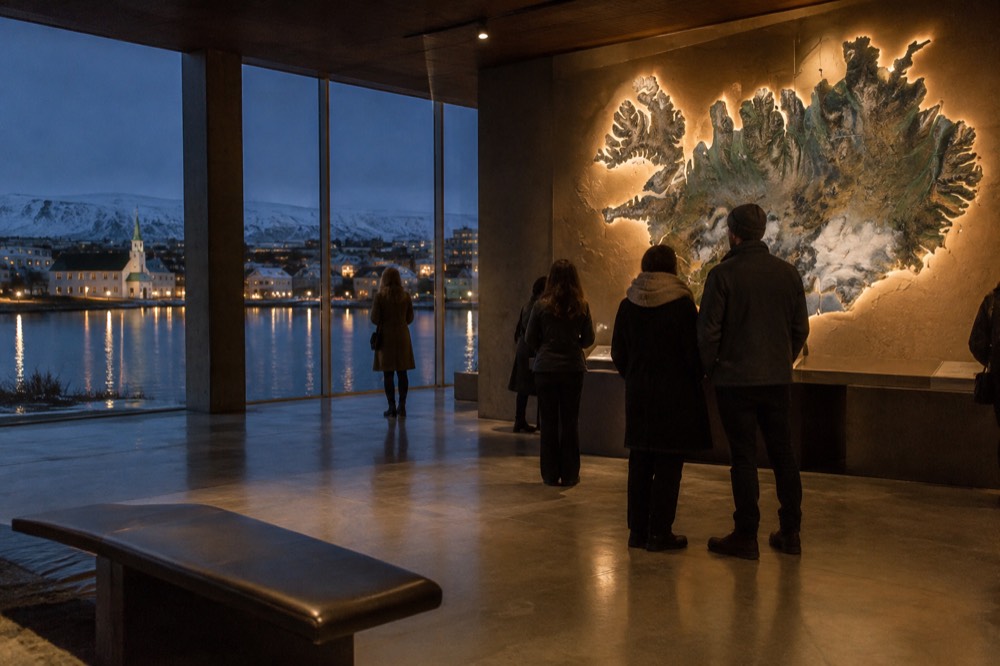
Sundlauganótt works the same way but with hot water: participating pools let everyone in free from 17:00 to 21:00 on the designated night. This matters more than it sounds, because Reykjavik's pools are otherwise paid, 1,500 ISK for an adult under the tariff in force since May 2026. Pool Night is the one moment in winter when the city's most beloved institution costs nothing, and the pool is where winter Iceland actually lives. The condition to remember is that only participating pools take part, so check the festival programme for the list.
New Year's Eve is the other free peak. The city's tradition of áramótabrennur puts ten public bonfires across Reykjavik, from Ægisíða by the seafront to the larger fires at Geirsnef and Gufunes, typically lit around 20:30 and weather permitting. Personal fireworks are banned at the bonfire sites themselves, which makes them calmer and more communal than the midnight chaos downtown. The locations are published by the City of Reykjavík each December, and the fires are free to attend, free to warm yourself at, and open to everyone.
| Winter event | When | Cost | The catch |
|---|---|---|---|
| Safnanótt (Museum Night) | Early February, inside Winter Lights Festival | Free | Only participating museums, one evening |
| Sundlauganótt (Pool Night) | Early February, same festival | Free 17:00–21:00 | Only participating pools |
| Winter Lights Festival installations | Early February | Free | Outdoor, weather dependent |
| New Year's Eve bonfires | New Year's Eve, ~20:30 | Free | No personal fireworks at the sites |
| Iceland Airwaves (November) | Early November | Paid | Festival pass 16,900 ISK, no verified free off-venue programme |
One November warning: Iceland Airwaves is often described as a citywide party with free shows. The official site states you must have a festival pass or day pass, and nothing on the current site confirms a free off-venue programme. Treat it as a paid music festival that happens to fill the bars with sound, not as a free event.
Are Hallgrímskirkja And Harpa Free In Winter?
Hallgrímskirkja's nave costs nothing to enter; only the tower lift is paid, at 1,500 ISK for an adult under the prices in force since June 2026. Harpa's foyer and the Hljóðhimnar sound installation on the ground floor are free, with the building open Sunday to Tuesday 10:00–18:00 and Wednesday to Saturday 10:00–20:00. Both are at their best in winter. This stop sits on a free walking route, Spanish-Language Legends Walk.
The distinction at Hallgrímskirkja trips people up because the tower is what most photos are taken from. The church itself states its price list in terms of tower tickets, and nothing on the official site charges for the nave, so walking in costs nothing. In winter, occasional free organ and choir events fill the nave, and the acoustics of a stone church in a quiet city are worth the visit alone. The Hallgrímskirkja guide covers the tower pricing, the organ and the sculpture garden behind the church, which is free year-round.
Harpa needs no ticket at all for its best asset. The glass facade on the harbour side was designed to catch the low northern sun, and in winter the effect is doubled by darkness: the building glows from inside like a lantern. The Hljóðhimnar sound installation is free, the foyer is free, and the Harpa guide explains the opening hours and what you can see without a concert ticket. Walking from Harpa along the Old Harbour is the natural free winter route, since the waterfront path is public and the Þúfa mound gives a 360-degree view for nothing.
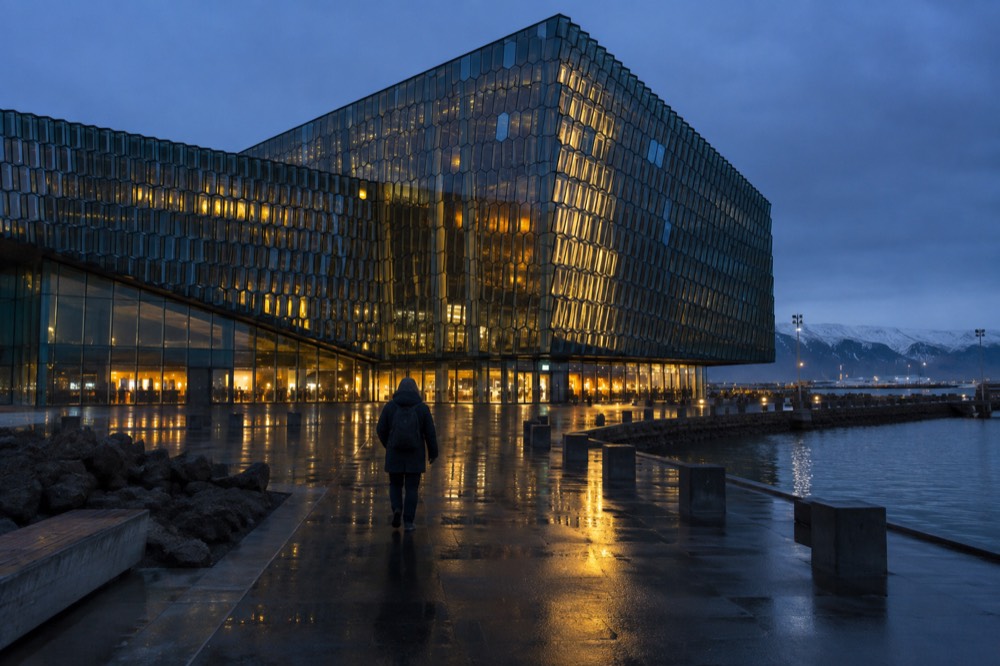
A word on Sweet Streets here, because its meeting point is inside Harpa by the Rammagerdin store: if you book the 11:00 English walk, arrive early and the free foyer and sound installation are effectively a free warm-up act. Remember the cash-only rule for the tip, and that the walk needs five bookings to run.
What Free Outdoor Spots Work Best In Winter?
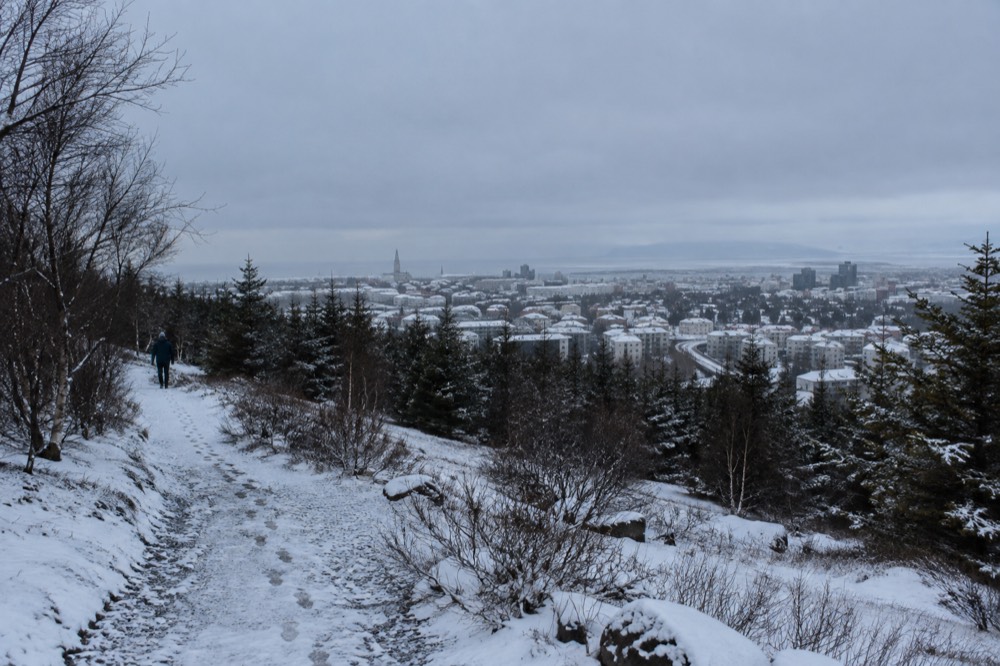
Tjörnin pond, Öskjuhlíð hill, the Elliðaárdalur valley, the Old Harbour waterfront and the 160-plus mapped street art works are all free and all functional in winter. Tjörnin concentrates its bird life at the small patch of water the city keeps unfrozen, Öskjuhlíð's wooded trails are walkable with decent shoes, and street art hunting doubles as a way to warm up indoors between murals.
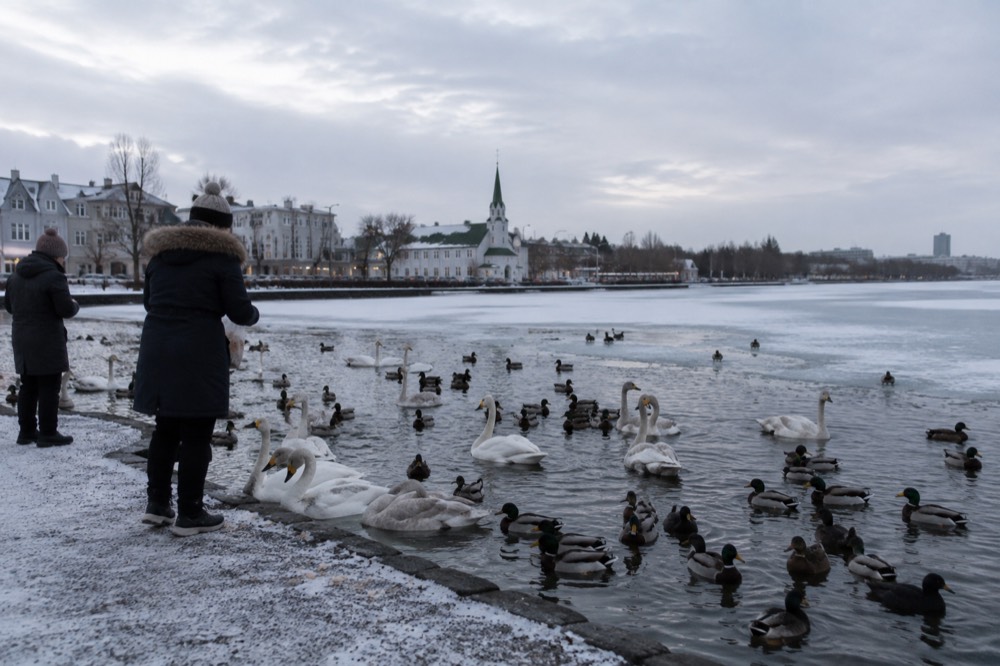
Winter changes these places rather than closing them. Tjörnin in January is a frozen sheet with a heated patch of open water where the ducks and swans crowd together, which is a better wildlife view than the summer version. The Tjörnin pond guide explains the winter feeding tradition and the paths around Hljómskálagarður. Öskjuhlíð is the free substitute for the Perlan observation deck, which is paid and cannot be bought separately from a Perlan ticket; the hill gives you a comparable view for the cost of a walk. The Öskjuhlíð guide maps the trails.
Street art is the winter activity people forget. The city has mapped more than 160 works, mostly in the centre and Grandi, and the hunt is self-paced, free and easy to break off whenever a café gets tempting. The street art guide lists the clusters worth targeting on a short, cold day.
For Spanish-speaking visitors planning a fully free winter day, the legends walk fits neatly here: its 17:00 weekday slot lands after dark, so an afternoon of murals and a free Harpa visit lead straight into an evening tour. It is new on GuruWalk with no reviews yet there, and its freetour.com twin is the same walk, not a second option.
What Only Looks Free In Reykjavik In Winter?
The Nauthólsvík geothermal beach charges year-round, 1,500 ISK for an adult, despite the widely repeated claim that it is free in summer. The Perlan observation deck cannot be bought separately from a Perlan ticket. The Reykjavík City Card is a paid product at 6,100 ISK for 24 hours, so anything described as "free with the City Card" is not free. The public pools are cheap but not free.
The beach is the big one. The "free from 15 May to 15 August" story has been repeated so often that it shows up in current guidebooks, but the official tariff is one flat entrance pass with no seasonal split, matching the city pool tariff in force since May 2026. In winter you pay exactly what you pay in July: 1,500 ISK adult, 400 ISK for ages 10 to 17, free for under-10s. The Nauthólsvík guide covers what the fee includes and when the beach is worth it anyway.
| Claimed free | Reality | Adult price | Free alternative |
|---|---|---|---|
| Nauthólsvík geothermal beach | Paid year-round | 1,500 ISK | Kvika foot bath, genuinely free |
| Perlan observation deck | Only with a full Perlan ticket | Not sold separately | Öskjuhlíð hill above it |
| Reykjavík Art Museum | Paid, no free day | 2,550 ISK | Safnanótt in February, under-18s always |
| Public swimming pools | Cheap, not free | 1,500 ISK | Sundlauganótt pool night |
| Hallgrímskirkja tower | Paid lift | 1,500 ISK | The nave, free |
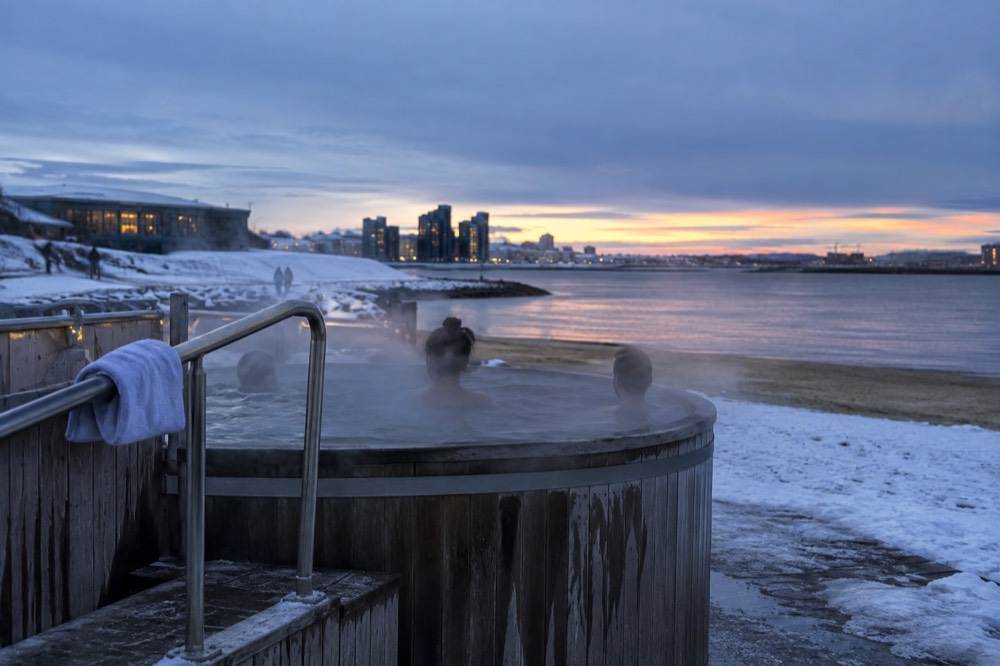
The pattern to notice is that the genuinely free alternatives are usually within sight of the paid thing. Kvika, the free geothermal foot bath at Seltjarnarnes, is a short walk from Grótta and costs nothing, year-round, with no seasonal window at all. Öskjuhlíð is the hill Perlan sits on. The nave is the part of Hallgrímskirkja you actually feel. Winter sharpens this: every 1,500 ISK you don't spend on a view is another hot drink, and the Iceland on a budget guide puts those savings in the context of a full trip.
How Do You Plan A Free Winter Day In Reykjavik?
Start with CityWalk at 10:30 from Austurvöllur, which covers the old centre on foot in two hours. Spend the early afternoon on Harpa's free foyer and the harbour walk to Þúfa, then hunt street art or Tjörnin as the light fades by mid-afternoon. From September to April, the evening is aurora time from Öskjuhlíð or Grótta. Time a February visit to catch Museum Night and Pool Night.
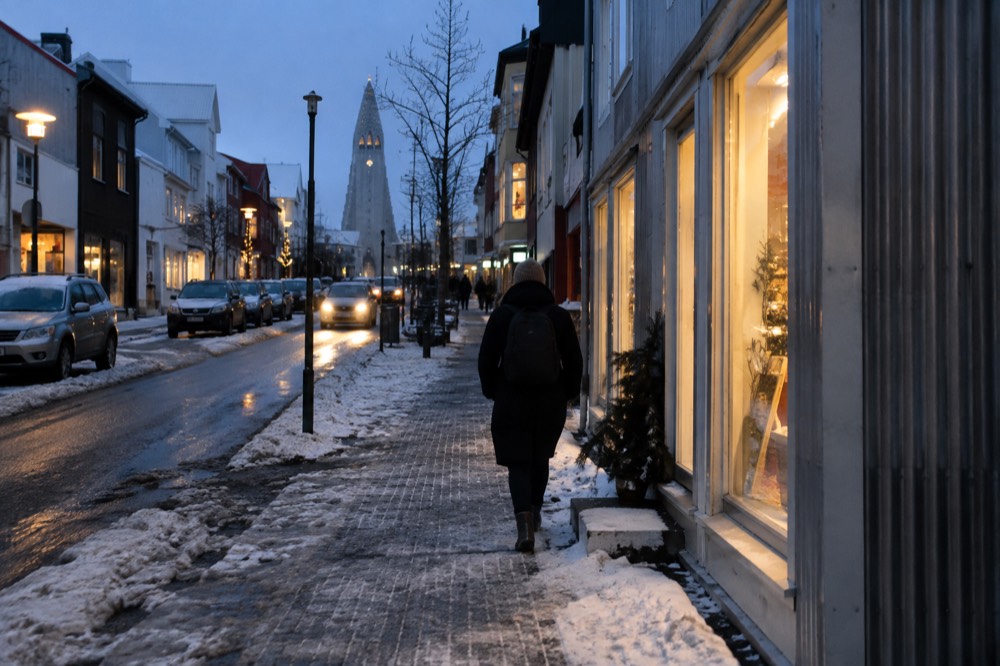
The reason this works is daylight economics. Around the winter solstice Reykjavik gets only a few hours of proper light, which sounds like a problem but actually compresses the city into a walkable, concentrated experience: the walking tour, the waterfront and one viewpoint all fit inside the daylight window, and the aurora takes over exactly when the museums close. The infographic below shows how the pieces fit across a short winter day.
Two practical winter notes. First, tap water in Reykjavik is safe, free and better than the bottled water for sale, sourced from protected groundwater; use the cold tap and ignore the faint sulfur smell, which is normal and harmless. Second, if you are driving in from elsewhere, the free parking in Reykjavik guide explains which zones are free on weekends and evenings, which matters when the P1 city core charges 660 ISK an hour on winter weekdays.
If the day plan above appeals, the two English-language walks are the natural anchor, and both are listed live now.
Beyond the walks, three free attractions carry the season: the Tjörnin pond, which never closes and never charges; the museums that open free to under-18s all year and to everyone on Museum Night; and Menningarnótt, the Culture Night festival whose next edition falls in August 2027, a good reason to plan a return trip once winter has shown you what the city gives away.
Common Questions About Free Things To Do In Reykjavik In Winter
Are the free walking tours still running in winter?
Yes. CityWalk runs daily at 10:30 and 13:30 year-round, Sweet Streets runs Monday, Thursday, Friday, Saturday and Sunday at 11:00 in English, and the Spanish-language legends walk runs Monday to Friday at 17:00 and weekends at 11:00. All are tip-based with no upfront price.
Can you see the northern lights in Reykjavik for free?
Yes. The season runs September to April, and the recommended viewing spots, including Klambratún, Öskjuhlíð, Grótta and Elliðaárdalur, are all public and free. You need a clear, dark sky more than a tour.
Is Museum Night in Reykjavik really free?
Yes. Safnanótt, inside the Winter Lights Festival in early February, opens participating museums at no cost, with no paid pass. The 2027 festival is scheduled for 4 to 7 February, though which nights carry Museum Night and Pool Night is confirmed in the annual programme.
Is the Nauthólsvík geothermal beach free in winter?
No. It charges year-round: 1,500 ISK for an adult, 400 ISK for ages 10 to 17, free for under-10s. The widely repeated free summer window is contradicted by the official tariff, which has no seasonal split.
What should you not miss for free on New Year's Eve?
The áramótabrennur, ten free community bonfires across the city, typically lit around 20:30 weather permitting. Personal fireworks are banned at the sites, and locations are published by the City of Reykjavík each December.
Do you need the Reykjavik City Card for free museums in winter?
No, and the card is not free itself: 6,100 ISK for 24 hours. Under-18s enter the major museums free without any card, disabled visitors are admitted free, and Museum Night in February opens the same museums to everyone at no cost.