How Much Does A Typical Trip To Iceland Cost?
A realistic cost breakdown for a typical Iceland trip: airport transfers, buses, food, pools, museums and the charges nobody warns you about, built from verified prices.
A typical Iceland trip has no single number, but its pieces are fixed and checkable: the Flybus from Keflavik Airport is 3,999 ISK one-way, a Strætó city bus ride is 690 ISK, a public pool entry is 1,500 ISK, and a hot dog with everything runs 600 to 820 ISK. Add an 800 ISK lodging tax per night and paid museum entries from 2,500 ISK, and the total becomes something you can build line by line rather than guess at.
That framing matters because the two biggest variables, where you sleep and whether you rent a car, swing the total more than everything else combined. What does not swing is the small stuff, and the small stuff is what most budgets are actually made of. A coffee, a bus ride, a swim, a museum, dinner: each of those has a published price, and together they define what a day costs once you have arrived.
The useful exercise is to build the day from the bottom up. Start with the items below, subtract the ones you can replace with free alternatives, and the total stops being a guess. This site exists because Reykjavik in particular has an unusually deep bench of genuinely free things, from the Harpa foyer to the Sun Voyager to a twice-daily pay-what-you-want walking tour, and every one of them removes a line from the budget without removing the experience. One of the free walking routes passes through here: Spanish-Language Legends Walk.
Before the item-by-item breakdown, one orientation point: for an English speaker there are exactly two free walking tours in Reykjavik, the long-running CityWalk tour and the smaller Sweet Streets walk on GuruWalk. Both cost nothing upfront, and both are covered in detail further down this page.
What Does Transport Add To The Total?
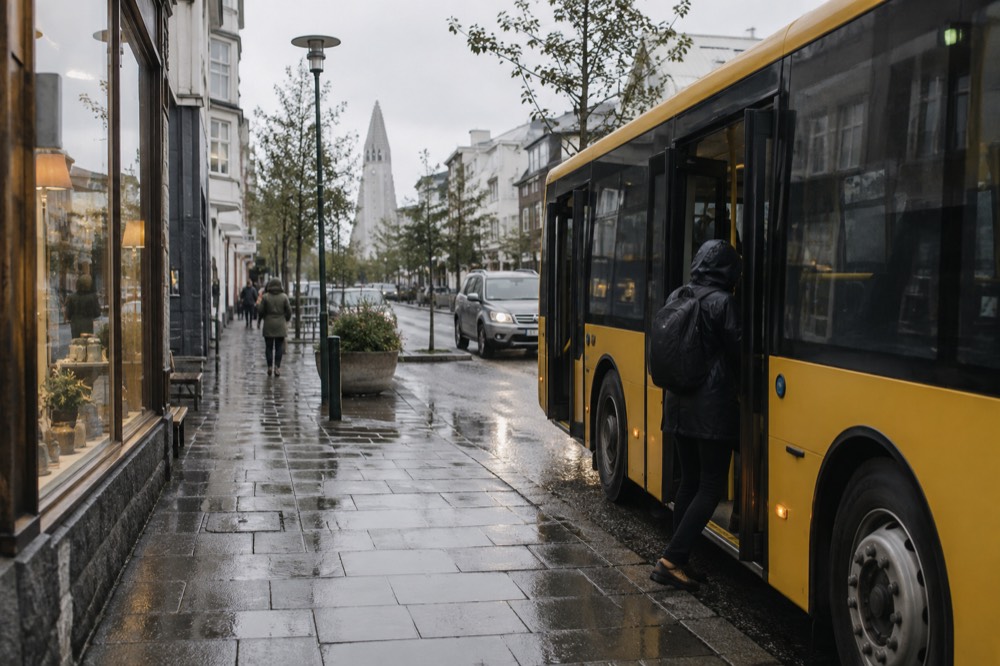
Getting from Keflavik Airport to the city is 3,999 ISK each way on the Flybus, or 5,299 ISK with a hotel drop-off, and children aged 1 to 5 ride free. In the capital a single Strætó bus ticket is 690 ISK, valid 75 minutes with transfers, and children 11 and under ride free. A rental car adds a per-kilometre road tax of roughly 6.95 ISK on top of the hire itself.
The airport transfer is the one cost almost nobody escapes. The Flybus run by Reykjavík Excursions costs 3,999 ISK per adult one-way to the BSÍ terminal, with the hotel-stop version at 5,299 ISK, and youth tickets roughly half price. The budget alternative is Strætó route 55, reported at around 2,400 ISK to the city, though it runs far less often. The official fare tables are published on the Strætó pricing page and the Flybus price page, and both are worth checking before you commit, because the single fare rose about 3 percent in January 2026 and day passes have been discontinued.
Inside Reykjavik, the honest answer is that you may barely need the bus. The centre is compact enough that most visitors walk everywhere, and the question of how long it takes to walk around Reykjavik has a short answer: the whole historic core is a couple of kilometres end to end. When you do ride, contactless payment or the app buys you 75 minutes of travel including transfers, and fare capping limits an adult to three charged rides a day on the same card.
Drivers should budget for a change that arrived in 2026: Iceland replaced much of its fuel tax with a per-kilometre road tax, at a statutory rate of about 6.95 ISK per kilometre for cars and SUVs, collected through the rental operator. For a classic Ring Road or Golden Circle itinerary that is a real, predictable line item, not a rounding error. Parking in Reykjavik itself runs 660 ISK per hour in the P1 city-centre zone, charged 9 a.m. to 9 p.m. on weekdays, with a three-hour maximum, though P3 and P4 zones are free at weekends and outside charged hours.
The single cheapest way to see the city centre, transport-wise, is to not use transport at all. The CityWalk free tour starts at Austurvöllur square in front of the Parliament building, runs daily at 10:30 and 13:30, covers about 2 kilometres in 2 hours, and ends at City Hall, all on foot and all for whatever you choose to tip the guide. It is rated 9.6 out of 10 across 6,683 freetour.com reviews, which makes it not just the cheapest guided option in the city but the most-reviewed one of any kind.
What Does Food And Drink Cost Per Day?
Reported prices put a cheap sit-down meal at around 3,300 ISK, a café coffee at 700 to 900 ISK, a half-litre draught beer at 1,400 to 1,800 ISK, and the classic hot dog with everything at 600 to 820 ISK. A supermarket picnic of basics runs roughly 900 to 2,500 ISK per person, which is the biggest single lever a budget has.
Eating out is where Iceland's reputation comes from, and the numbers mostly justify it. But the budget version of the food question has a clear hierarchy, and it starts at the harbour. The pylsa, the Icelandic hot dog, remains the reference point for cheap eating: at the famous Bæjarins Beztu Pylsur stand by the harbour, a hot dog with everything costs in the 600 to 820 ISK range, and it is the meal most locals will name first when asked what to eat cheaply.
| Item | Typical price (ISK) | Notes |
|---|---|---|
| Hot dog with everything | 600–820 | Harbour stands, the classic budget meal |
| Café coffee or cappuccino | 700–900 | Petrol stations run 300–400 |
| Cheap sit-down meal | ~3,300 | Casual café burger, soup or fast-casual |
| Draught beer, 0.5L | 1,400–1,800 | Happy hour often 800–1,000 |
| Supermarket picnic basics | 900–2,500 per person | Skyr, bread, deli items from Bónus or Krónan |
The gap between the top and bottom of that table is the entire food strategy. A traveller who eats one restaurant meal a day and picnics the rest saves several thousand krónur daily against one who eats every meal out, and the supermarkets, especially Bónus, make that easy rather than punishing. Happy hour, typically 800 to 1,000 ISK a beer, is the one reliable discount in Icelandic drinking culture.
One food-adjacent cost that surprises people is tap water, and here the news is entirely good: Reykjavik's water is safe, free, and drawn from protected groundwater, and refilling a bottle is the normal local thing to do. The occasional faint sulfur smell from geothermal sources is harmless. Anyone curious about the wider cost picture can read the breakdown in is Iceland expensive, which tackles the question from the other direction.
What Do Attractions And Activities Cost?
The headline paid attractions cluster between 1,500 and 4,000 ISK: the Hallgrímskirkja tower is 1,500 ISK for adults, Reykjavik Art Museum is 2,550 ISK, the National Museum is 3,300 ISK, and the Nauthólsvík geothermal beach is 1,500 ISK with no free summer window. Against that, the city's parks, trails, sculptures and viewpoints cost nothing, and public pools at 1,500 ISK are the best value paid item in the country.
Start with the traps, because they are well documented. Nauthólsvík, the geothermal beach, is often described as free in summer, and it is not: the official tariff is one flat 1,500 ISK entrance pass, matching the city pool tariff that took effect in May 2026, with children under 10 free and ages 10 to 17 at 400 ISK. The Perlan observation deck cannot be bought separately at all, since it is included with every Perlan ticket and only every Perlan ticket. The Hallgrímskirkja tower lift costs 1,500 ISK for adults, per the church's own opening-hours and price page, though the nave itself costs nothing to enter.
The pool is the one paid activity worth defending. At 1,500 ISK for an adult, with the geothermal water, the hot pots and the outdoor lanes that locals treat as a second living room, it is cheaper than a single beer and a coffee combined. The May 2026 tariff update also made pools and the geothermal beach free for children and youth 17 and under who are legal residents of Reykjavik, so visiting families still pay for kids, but local ones do not.
Then there is the free tier, and it is deeper than most guidebooks admit. Mount Esja, the mountain that dominates the skyline north of the city, has free hiking trails year-round, and the view from the top is the best in the capital region at any price. The trails themselves cost nothing, though parking arrangements at the trailhead are not officially confirmed either way, so check before driving out.
Þingvellir National Park, the first stop of most Golden Circle runs, is free to enter on foot, with one condition that must travel with the claim: parking is charged, at 1,000 ISK for a standard car, valid all day across the park's main lots. Arrive by bus or in a shared vehicle and the site itself costs nothing, which makes it one of the few national-park experiences in Europe with no admission fee at all.
For families, there is a genuine structural discount worth planning around: every major paid museum in Reykjavik, including the Reykjavik Art Museum, the National Museum, the National Gallery, the Settlement Exhibition and the Árbær open-air museum, admits visitors under 18 free, and disabled visitors free as well. The adult tickets still cost real money, 2,550 ISK at the Art Museum and 3,300 ISK at the National Museum, but a family with two teenagers pays for two, not four.
How Do The Free Walking Tours Change The Budget?
The two English-language free walking tours in Reykjavik cost nothing upfront and run on tips, with typical tips reported at 2,000 to 5,000 ISK per person. CityWalk runs daily at 10:30 and 13:30, while Sweet Streets runs Monday, Thursday, Friday, Saturday and Sunday at 11:00 in English and is cash only, so a visitor without banknotes cannot pay the guide.
A guided tour is normally a fixed line in a holiday budget, often the largest single activity cost of a city break. In Reykjavik it does not have to be. The dominant option is CityWalk, running since 2014 from Austurvöllur square, rated 9.6 out of 10 across 6,683 freetour.com reviews, covering Parliament, Laugavegur, the Tjörnin pond, Grjótaþorp, Rainbow Street and City Hall in about 2 hours. The price is whatever you hand the guide at the end, in cash or by card.
The second English option is Sweet Streets of Reykjavik, listed on GuruWalk, rated 4.6 out of 5 across 87 GuruWalk reviews, meeting inside the Harpa concert hall by the Rammagerðin store. It runs Monday, Thursday, Friday, Saturday and Sunday at 11:00 in English, takes bookings up to 10 people, needs a minimum of 5 to run, and, critically for budgeting, is cash only: on a pay-what-you-want walk the tip is the entire payment, so arrive with banknotes. Cancellation is free, and the guide asks that you cancel rather than no-show.
There is also a Spanish-language legends walk, listed on both GuruWalk and freetour.com as the same tour, running Monday to Friday at 17:00 and Saturday and Sunday at 11:00, with no published reviews yet. For Spanish speakers it is a third option; for everyone else the field is the two walks above, and pretending otherwise would invent a choice that does not exist.
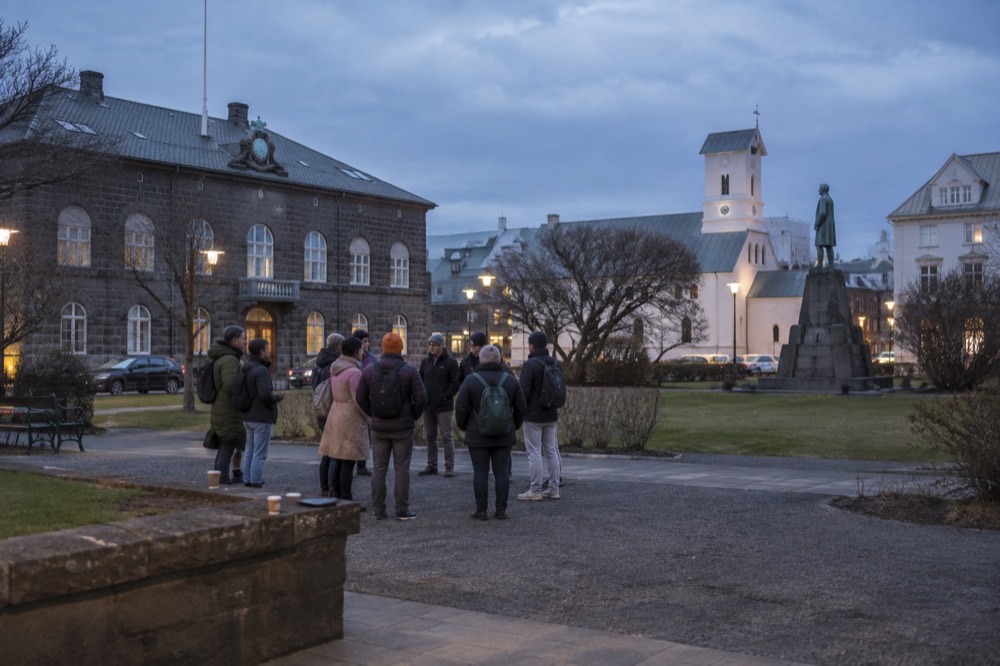
The budget effect is real. A conventional paid city tour charges a fixed per-head price before you know whether the guide is any good; the free model charges you afterwards, at the reported local norm of 2,000 to 5,000 ISK per person, and leaves the amount to the walker. On a thin day a couple can pay their guides a modest sum with a clear conscience, because the model genuinely works that way. The wider picture of what costs nothing in this city is laid out across Free Things To Do In Reykjavik, and the seasonal angle, winter bonfires, Museum Night, summer midnight sun, is covered in free things to do in Reykjavik in winter.
What Are The Hidden Charges Nobody Warns You About?
Four quiet costs sit outside every headline price: an 800 ISK lodging tax per night per room in hotels and guesthouses, 400 ISK at campsites, around 200 ISK at many standalone public toilets, and paid city-centre parking at 660 ISK per hour in the P1 zone. None appear in advertised rates, and together they can add several thousand krónur to a week.
The lodging tax, gistináttaskattur, is the least known and the most unavoidable. It is 800 ISK per night per accommodation unit in licensed hotels and guesthouses, and 400 ISK for campsites and motorhome spots, collected on the sale, in effect since the 2025 adjustments and confirmed ongoing. It is small per night and material over a fortnight, and because it is added at the point of sale rather than shown in headline rates, most travellers only meet it on the final invoice. Campers should note that the free camping picture in Iceland is complicated, and free camping in Iceland covers where overnighting actually costs nothing.
Toilets are the other small leak. Many public toilets in libraries, City Hall, shopping centres and Harpa are free, but standalone and high-traffic tourist-adjacent ones commonly charge around 200 ISK, coin or card. Petrol stations are typically free with a purchase. None of this is ruinous, but a family of four moving through a day of tourist spots can spend more on toilets than on a hot dog each.
Parking rounds it out. The P1 centre zone charges 660 ISK per hour, 9 a.m. to 9 p.m. weekdays and from 10 a.m. on weekends, with a three-hour cap, and paid hours are suspended on listed public holidays including New Year's, Easter, May 1, June 17 and Christmas. P3 and P4 zones are free at weekends. The full zone map and rules are on the city's official parking page. The cheapest strategy of all is to skip the car inside the city, which the walking-scale of the centre makes easy.
What Does A Realistic Daily Budget Look Like?
A frugal day, picnic food from the supermarket, one 1,500 ISK pool entry, free attractions and a free walking tour with a fair tip, costs a fraction of a mid-range day built on a restaurant meal, a museum ticket and a beer. Every line below the accommodation line has a free substitute, and the free tier is what moves you between the two versions of the day.
The point of building the day from real prices rather than a headline total is that you control the mix. The bus becomes a walk, the restaurant meal becomes a supermarket picnic at 900 to 2,500 ISK per person, the paid viewpoint becomes Öskjuhlíð hill, and the paid city tour becomes CityWalk or Sweet Streets. None of the substitutes is a consolation prize; several of them are the things visitors remember.
Timing matters too. The question of what is the cheapest month to go to Iceland changes flight and room prices far more than any in-country saving, and the seasonal free events, Culture Night in August, the Winter Lights Festival in February, the June 17 National Day celebrations, cost nothing and fill a day completely. A trip planned around one of them inherits a free programme as a bonus.
The honest summary is that Iceland rewards travellers who know the fixed prices and refuse to pay the optional ones. The airport bus, the lodging tax and the pool entry are what they are. Everything else has a lever, and in Reykjavik more of those levers are marked free than in almost any other capital in Europe.
Common Questions About How Much A Typical Trip To Iceland Costs
How Much Does A Typical Trip To Iceland Cost?
Counting fixed pieces: 3,999 ISK each way for the airport bus, 690 ISK city bus fares, 1,500 ISK pool or beach entries, meals from 600 ISK for a hot dog to about 3,300 ISK for a cheap sit-down dinner, plus an 800 ISK nightly lodging tax. Build your total from those lines plus accommodation and flights, since no single verified figure covers every travel style.
How much should I budget per day in Iceland?
Beyond accommodation, anchor your day on the verified prices: a 600 to 820 ISK hot dog, 700 to 900 ISK coffee, 900 to 2,500 ISK supermarket picnic, 1,500 ISK pool entry and 2,550 to 3,300 ISK museum tickets. A picnic-and-free-attractions day costs a fraction of a day with a restaurant meal, a museum and drinks.
Are the free walking tours in Reykjavik really free?
Yes. CityWalk and the GuruWalk-listed Sweet Streets walk charge nothing upfront and pay the guide from tips, with typical tips reported at 2,000 to 5,000 ISK per person. Sweet Streets is cash only, so bring banknotes; CityWalk accepts cash or card at the end of the walk.
What hidden costs should I expect?
An 800 ISK lodging tax per night in hotels and guesthouses, 400 ISK at campsites, around 200 ISK at many standalone public toilets, 660 ISK per hour for central parking, and a per-kilometre road tax of roughly 6.95 ISK if you rent a car. None appear in advertised headline rates.
Is the Reykjavik City Card worth it?
The card is a paid product, 6,100 ISK for 24 hours, 8,500 for 48 and 10,500 for 72, so anything it unlocks is not free. It can pay off for a museum-heavy itinerary, since the Art Museum, National Museum and several city museums are included, but a plan built on the genuinely free attractions costs nothing at all.
What is the cheapest way to eat in Iceland?
Supermarket picnics from Bónus or Krónan at roughly 900 to 2,500 ISK per person for basics, and harbour hot dogs at 600 to 820 ISK. A cheap sit-down meal runs about 3,300 ISK and a draught beer 1,400 to 1,800 ISK, with happy hour often dropping that to 800 to 1,000 ISK.