Why Is Iceland So Expensive?
The real reasons behind Iceland's prices, from imported food and a small currency to geothermal energy and tourism taxes, with the current figures and what you can still do for free.
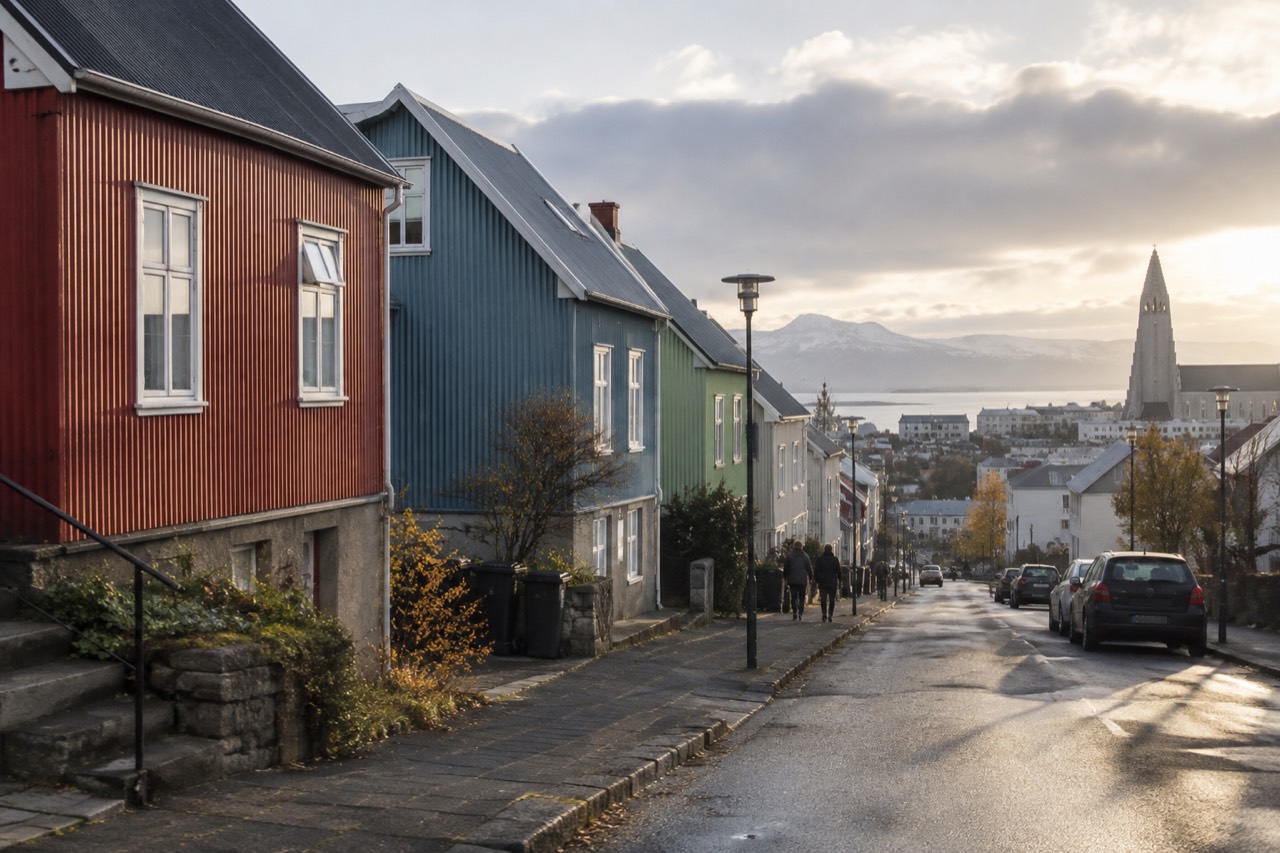
A single adult bus fare in the Reykjavik capital area is 690 ISK, and that fare rose roughly 3 percent when the new price list took effect on January 6, 2026. A cappuccino in a cafe runs 700 to 900 ISK, and the famous harbor hot dog stand charges about 600 to 820 ISK for a pylsa with everything on it. Visitors notice these numbers within an hour of landing, and the question follows quickly: why is Iceland so expensive?
The short answer is that a small, remote island with its own currency, heavy import dependence, high wages and a tourism sector that grew faster than its infrastructure ended up with prices to match. The longer answer is more interesting, because several of the causes cut in both directions, and a surprising amount of the country, including the walks and sights this site is built around, costs nothing at all.
Why Is Iceland So Expensive?
Iceland is expensive because almost everything physical has to be imported across the North Atlantic, the domestic market is too small for economies of scale, wages are high, the krona is a small and volatile currency, and a layer of tourism taxes sits on top of every visitor purchase. The result is not price gouging: it is the arithmetic of a small island economy at the end of its own supply chain.
Start with geography. Iceland sits in the North Atlantic, roughly a thousand kilometres from the nearest major supply base in Europe. Nearly all consumer goods, most building materials and a large share of food arrive by ship or air, and every one of those items carries the freight cost of the crossing. A country of well under half a million people cannot buy in the volumes that pull prices down elsewhere, so the fixed costs of importing spread across a tiny market.
Wages form the second layer. Iceland has a strong labour market, high participation rates and collective bargaining agreements that keep the wage floor high. The cafe charging 900 ISK for a cappuccino is paying Reykjavik rents and Reykjavik wages, not rural-European ones. Energy is the one input that is genuinely cheap and abundant, geothermal and hydroelectric power supply the grid at low cost, which is why aluminium smelting and data centres cluster here, but cheap electricity does not make an imported tomato cheaper at the supermarket.
The currency is the third layer. The Icelandic krona is a small currency that swings hard with tourism flows and fish export earnings, and a weak krona during a strong travel season raises the price of every import further. Visitors from euro or dollar economies sometimes catch a favourable window, but the underlying price level stays high regardless of the exchange rate.
Finally, the tax layer grew. A per-kilometre road tax for rental and private cars took effect on January 1, 2026, replacing much of the old fuel tax component at a statutory rate around 6.95 ISK per kilometre, and the accommodation tax stands at 800 ISK per night for hotel and guesthouse stays. None of these is large on its own; together they explain why the bill at the end of an Icelandic trip reads differently from the one you budgeted.
The good news is that the single best introduction to the country is not priced like the rest of it. Reykjavik's free walking tours operate on a pay-what-you-want basis, so the price is genuinely whatever you decide to hand the guide at the end. For an English speaker there are exactly two options, and they are both real, running walks led by independent local guides.
How Much Do Everyday Prices Actually Run?
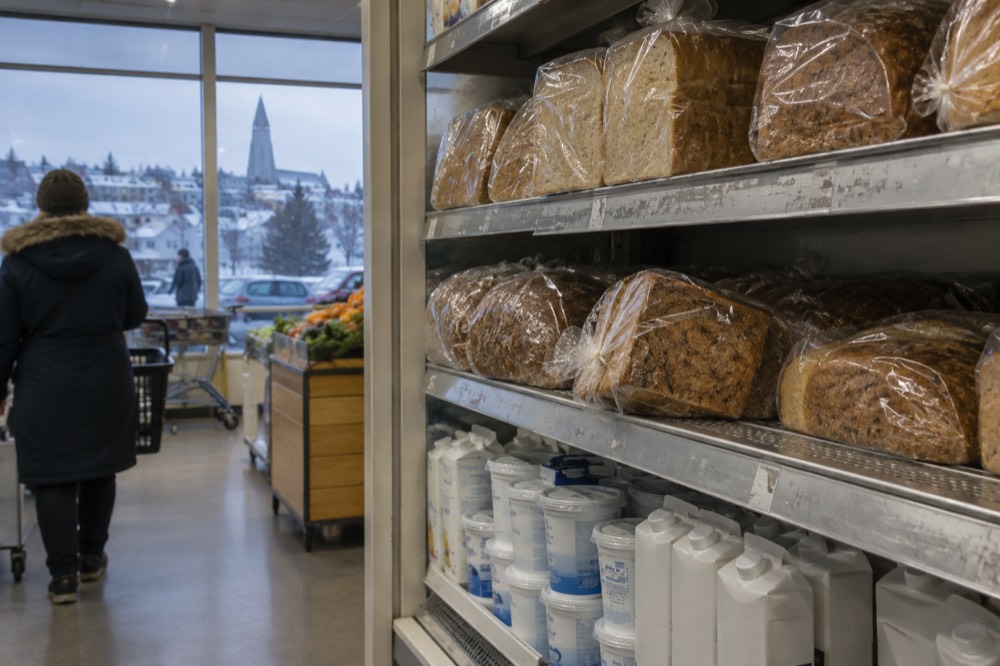
In 2026 terms, a cheap cafe meal runs roughly 3,300 ISK, a supermarket picnic basket costs about 900 to 2,500 ISK per person, a draught beer in a bar is 1,400 to 1,800 ISK, and a public swimming pool entry is 1,500 ISK for an adult. Coffee and hot dogs are the classic budget anchors, at 700 to 900 ISK and 600 to 820 ISK respectively. These are reported ranges, not promises.
The pattern worth knowing is the gap between the cheapest and the mid-tier options. Happy hour beer, at 800 to 1,000 ISK in many bars, costs barely half the evening price. Coffee at a petrol station runs 300 to 400 ISK, against 700 to 900 ISK in the city's specialty cafes. The budget version of Iceland is not a myth, but you have to choose it deliberately, item by item, because the default option is always the expensive one.
| Item | Typical 2026 price | Budget alternative |
|---|---|---|
| Cheap cafe meal | ~3,300 ISK | Supermarket picnic, 900-2,500 ISK |
| Cafe cappuccino | 700-900 ISK | Petrol station coffee, 300-400 ISK |
| Draught beer (0.5L) | 1,400-1,800 ISK | Happy hour, 800-1,000 ISK |
| Hot dog with everything | 600-820 ISK | already the budget option |
| Public pool, adult | 1,500 ISK | free for resident under-18s; visitors pay |
The pool figure deserves a note, because it is the clearest example of prices that look like traps but are honest. Reykjavik's public pools are geothermal, spotless and central to local life, and the city's updated fee schedule, in force since May 5, 2026, sets the adult entry at 1,500 ISK. That is cheap by Icelandic standards and not free by anyone's. The city's own official pool tariff page is the source to check before you go, because the schedule was adjusted in 2026.
One everyday cost that genuinely is zero: tap water. It comes from protected groundwater, meets strict standards and is free everywhere in the city, and the faint sulfur smell from the geothermal system is normal rather than a warning. Refilling a bottle at your hotel or a public fountain saves both money and the 400-plus ISK a small bottled water would cost in a shop.
A free walk slots neatly into this arithmetic, because it replaces a paid activity with a pay-what-you-want one. The long-running option is CityWalk's free tour, listed on freetour.com, rated 9.6 out of 10 across 6,683 freetour.com reviews, meeting daily at 10:30 and 13:30 in front of the Parliament building on Austurvollur. It covers about 2 kilometres in two hours, finishing at City Hall, and you pay the guide in cash or by card at the end.
What Does Getting Around Cost?
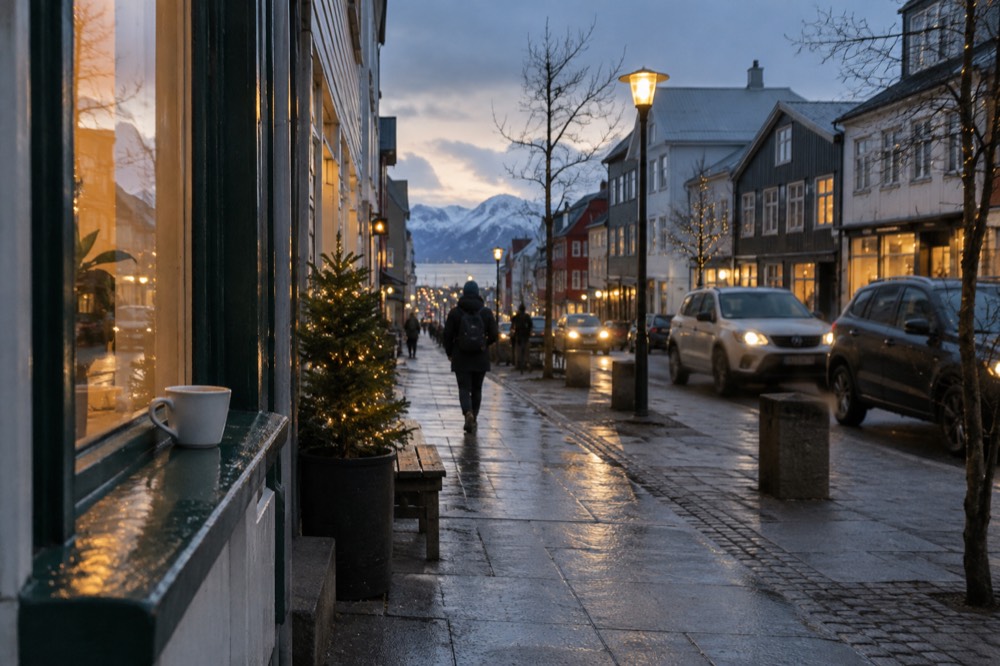
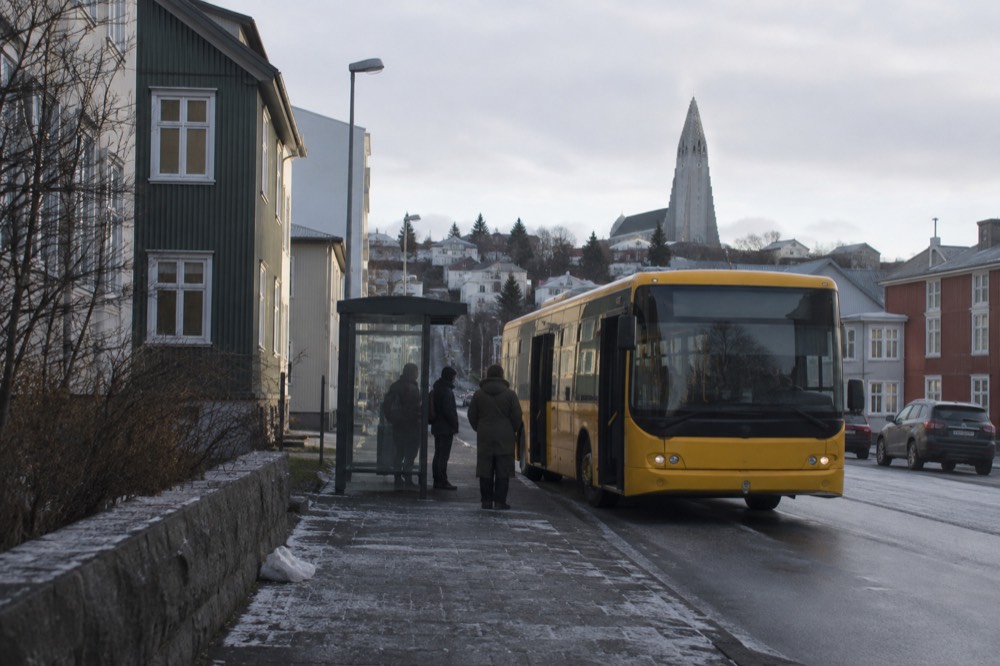
Getting around Iceland's capital costs 690 ISK for a single adult bus fare in the capital area, 2,750 ISK for a 24-hour pass, and 3,999 ISK one way on the Flybus from Keflavik Airport to the BSI terminal, or 5,299 ISK with hotel drop-off. Children 11 and under ride city buses free, the airport's route 55 bus runs around 2,400 ISK, and walking central Reykjavik costs nothing.
The bus system, Straeto, is the budget backbone inside the city. Fares rose about 3 percent with the January 6, 2026 price list, and the day passes were discontinued, so the choice is single fares with transfer validity of 75 minutes, or the 24-hour pass at 2,750 ISK and the 72-hour pass at 6,000 ISK. The official Straeto pricing page carries the current numbers. If you are staying central and only leaving the centre for one or two trips, single fares usually beat the passes.
The airport run is the first big decision of most trips. Flybus charges 3,999 ISK to the BSi terminal and 5,299 ISK with hotel stops, per the operator's own pricing page, while the public route 55 costs around 2,400 ISK and takes longer. Children 1 to 5 ride Flybus free. Two people sharing a Flybus hotel transfer are paying double the single fare, which is worth knowing before you book it reflexively.
Driving carries its own arithmetic. City-centre parking in the P1 zone costs 660 ISK per hour with a three-hour maximum, per the city's official parking rules, and the new per-kilometre road tax adds a per-distance charge to rental cars on top of fuel. Our guide to free parking in Reykjavik maps the zones and the hours when the meters switch off, which is one of the few places where the price genuinely drops to zero for everyone.
Which Famous Sights Are Not Actually Free?
Nautholsvik geothermal beach charges 1,500 ISK year-round with no free summer window, the Hallgrimsrkirkja tower lift costs 1,500 ISK for adults since June 2026, the Perlan observation deck cannot be bought separately at all, and the Reykjavik City Card is a paid product at 6,100 ISK for 24 hours. Anything described as free with the City Card is not free. These are the traps that catch budget travellers most often.
The geothermal beach is the single biggest one. The widely repeated claim that Nautholsvik is free from mid-May to mid-August is contradicted by the operator's own tariff, which is one flat entrance fee in every season, matching the city pool schedule. The official Nautholsvik site is the authority here, and it shows no seasonal split. The beach is lovely and the hot tubs are real, but budget for it like a pool, not a park.
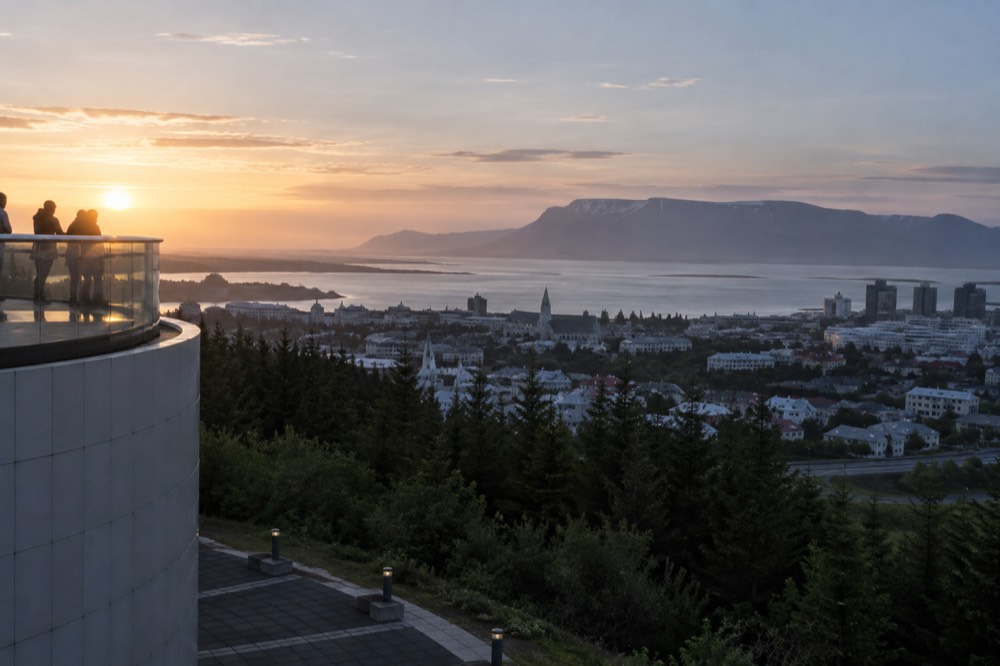
The church and the glass dome are half-free rather than free. Hallgrimsrkirkja's nave costs nothing to enter, while the tower lift, the part with the view, is a paid ticket, and Perlan's deck comes only bundled with a full Perlan ticket. The free alternatives are genuinely good: the Oskjuhlid hill woodland behind Perlan gives an open view of the city for nothing, and the church's sculpture garden at the back is free year-round.
| Sight | Free part | Paid part |
|---|---|---|
| Nautholsvik beach | none | 1,500 ISK adult, year-round |
| Hallgrimsrkirkja | nave | tower lift, 1,500 ISK adult |
| Perlan | nothing purchasable | deck only with full ticket |
| Reykjavik Art Museum | under-18s | 2,550 ISK adult |
| Reykjavik City Card | nothing | 6,100 ISK for 24 hours |
The City Card deserves its own sentence because the marketing around it blurs the line. At 6,100 ISK for 24 hours it is a paid product that can pay for itself if you visit several museums, and it is a fine purchase for a museum-heavy day. But a page that calls a museum "free with the City Card" is describing a discount on a paid card, and this site treats that as paid, full stop. If you want the genuinely free version of the city, our free museums in Reykjavik guide separates the real exceptions, like under-18 admission and Museum Night, from the card marketing.
Where Can You Get Into Nature For Nothing?
Heidmork nature reserve, a 3,200-hectare protected area on the city's edge, is free to everyone, with open trails, lava fields and berry picking in late summer. The reserve's own policy is simply that everyone is welcome. This is the pattern across Icelandic nature: the landscape itself carries no gate, no ticket booth and no season pass, which is the single biggest counterweight to everything else on this page.
The contrast with mainland Europe is stark. Where a popular natural attraction elsewhere tends to grow a car park charge, a visitor centre and a timed-entry system, Icelandic nature has largely stayed open access, funded by the state rather than by gate receipts. Heidmork is the local proof: lava fields, planted forest, ponds and walking trails, all free, a short drive from the centre.
The same logic applies up the coast. Mount Esja, the ridge that dominates Reykjavik's northern skyline, has free hiking trails from the trailhead to the summit plateaus, and the view over the city and the bay costs exactly nothing. The trails are the city's favourite outdoor gym, and on a clear day the panorama stretches from the Snafellsnes peninsula to the Westman Islands. Parking at the trailhead is an unresolved question, with no official page confirming or denying a charge, so bring some coins or check the signs on arrival.
What Free Sights Fill A Day In The City?
The Sun Voyager sculpture, Harpa's free foyer and sound installation, Rainbow Street, the Tjornin pond, the Old Harbour waterfront and the city's 160-plus mapped street-art works are all genuinely free, with no card, no ticket and no condition attached. Harpa's own admission statement is plain: entry to Harpa and the Hljodhimnar sound installation is free. A full day of these costs nothing beyond the coffee you buy on the way. One of the free walking routes passes through here: Morning Walk From Harpa, Cash Tips.
The city centre is small enough that these sights chain together on foot in a couple of hours, which is exactly why the free walks route themselves the way they do. CityWalk's route passes the Parliament, Laugavegur, the pond and Rainbow Street; the smaller Sweet Streets walk, listed on GuruWalk and rated 4.6 out of 5 across 87 GuruWalk reviews, starts from the Harpa building and runs Monday, Thursday, Friday, Saturday and Sunday at 11:00 in English. That is not a daily schedule, so check the GuruWalk listing for the date you want. It is cash only, which matters more than it sounds: on a pay-what-you-want walk, the tip is the whole payment, and a visitor with no cash cannot pay the guide at all.
There is also a third walk, a Spanish-language legends walk by Rainbow Tours, but it runs in Spanish only, with one departure a day, so it is not an option for most English-speaking readers. For Spanish speakers it is a real choice, newly listed on GuruWalk with no reviews yet, and it is the same walk as its freetour.com listing, not a second tour.
What About Evenings And The Aurora?
Northern-lights viewing from public spots in and around Reykjavik is free, with the season running September to April and the best-known dark viewpoints at Grotta, Oskjuhlid, Klambratun and Ellidaardalur. The lights themselves charge nothing; the only costs are transport to a dark spot and patience with the weather. Midnight-sun nights in late June, with over 21 hours of daylight at the solstice, are the free summer counterpart.
The aurora is the great equaliser in Icelandic travel economics. Tour operators charge thousands of krona for bus trips into the dark, and those trips have their place on a cloudy, schedule-limited visit, but the lights do not check whether you paid for a seat. The city's own tourism body names the free public viewpoints, and Grotta on the Seltjarnarnes peninsula is the classic one, with a dark horizon over the open sea. Two caveats travel with it: the causeway to the lighthouse floods at high tide, and the whole area is closed to visitors from May 1 to July 15 for the arctic tern nesting season, viewable from the mainland only.
Winter brings two more genuinely free events worth planning around. The Winter Lights Festival in early February opens museums late and free on Museum Night, and Culture Night in August fills the centre with free performances and fireworks, with free city buses running after the finale. New Year's Eve is the most Icelandic of all: about ten community bonfires across the city, lit in the evening, free to attend, and personal fireworks are banned at the sites. The dates shift each year, so the city's official pages are the place to confirm them.
The overall picture, then, is not that Iceland prices everything out of reach. It prices imported goods, alcohol, restaurant meals and packaged experiences at a level that reflects a small island economy with high wages, and it prices the landscape, the city's public spaces, the events calendar and the walking tours at zero. A realistic budget plan works both sides of that line, and our Iceland on a budget guide does exactly that, alongside the is Iceland expensive comparison with the rest of Europe. The site you are on, Free Things To Do In Reykjavik, exists because the free side of the ledger is longer than most visitors expect.
For the paid side of a trip, a few of the conditionally free or cheap places round out the picture: the hot river at Reykjadalur is free to hike and bathe but charges for parking, Thingvellir National Park is free to enter but charges 1,000 ISK to park a car, and the City Card remains a paid shortcut for a museum-heavy day.
And if one decision from this page survives the trip, make it the free walk: two hours with a local guide, the whole city core on foot, and the price set by you at the end.
Common Questions About Why Iceland Is So Expensive
Why Is Iceland So Expensive?
Import dependence across the North Atlantic, a domestic market of under half a million people, high wages, a small and volatile currency, and a growing layer of tourism taxes together keep the price level high. It is structural arithmetic rather than price gouging, and it applies to food, drink, transport and packaged tours alike.
Is anything in Iceland actually free?
Yes, and more than most visitors expect. The free walking tours, the Sun Voyager, Harpa's foyer, Rainbow Street, the Tjornin pond, the Old Harbour, street art, the botanic garden, Heidmork, Mount Esja's trails and the public northern-lights viewpoints all cost nothing. Nature and public space are the free side of the Icelandic ledger.
How much is a beer and a meal in Reykjavik?
A draught beer in a bar runs about 1,400 to 1,800 ISK, dropping to 800 to 1,000 ISK at happy hour. A cheap cafe meal runs around 3,300 ISK, while a supermarket picnic costs roughly 900 to 2,500 ISK per person. A harbor hot dog with everything costs about 600 to 820 ISK.
Do free walking tours in Reykjavik really cost nothing?
Yes. Both English-language walks are pay-what-you-want, with no upfront fee, and the tip you give at the end is the guide's entire payment. CityWalk runs daily at 10:30 and 13:30 from Austurvollur; Sweet Streets runs Monday, Thursday, Friday, Saturday and Sunday at 11:00 from Harpa, and it is cash only.
Is the Nautholsvik geothermal beach free?
No. It charges 1,500 ISK for adults year-round, with no free summer window despite the widely repeated claim of one. Children 9 and under get in free and ages 10 to 17 pay 400 ISK, matching the city pool tariff in force since May 2026.
What is the cheapest way to get around Reykjavik?
Walking, because the centre is compact and the sights chain together on foot. Beyond that, the bus costs 690 ISK per single adult fare with 75 minutes of transfers, children 11 and under ride free, and the 24-hour pass at 2,750 ISK only pays off with several rides a day.