Grótta Lighthouse: Free Access, Tides And Seasonal Closures
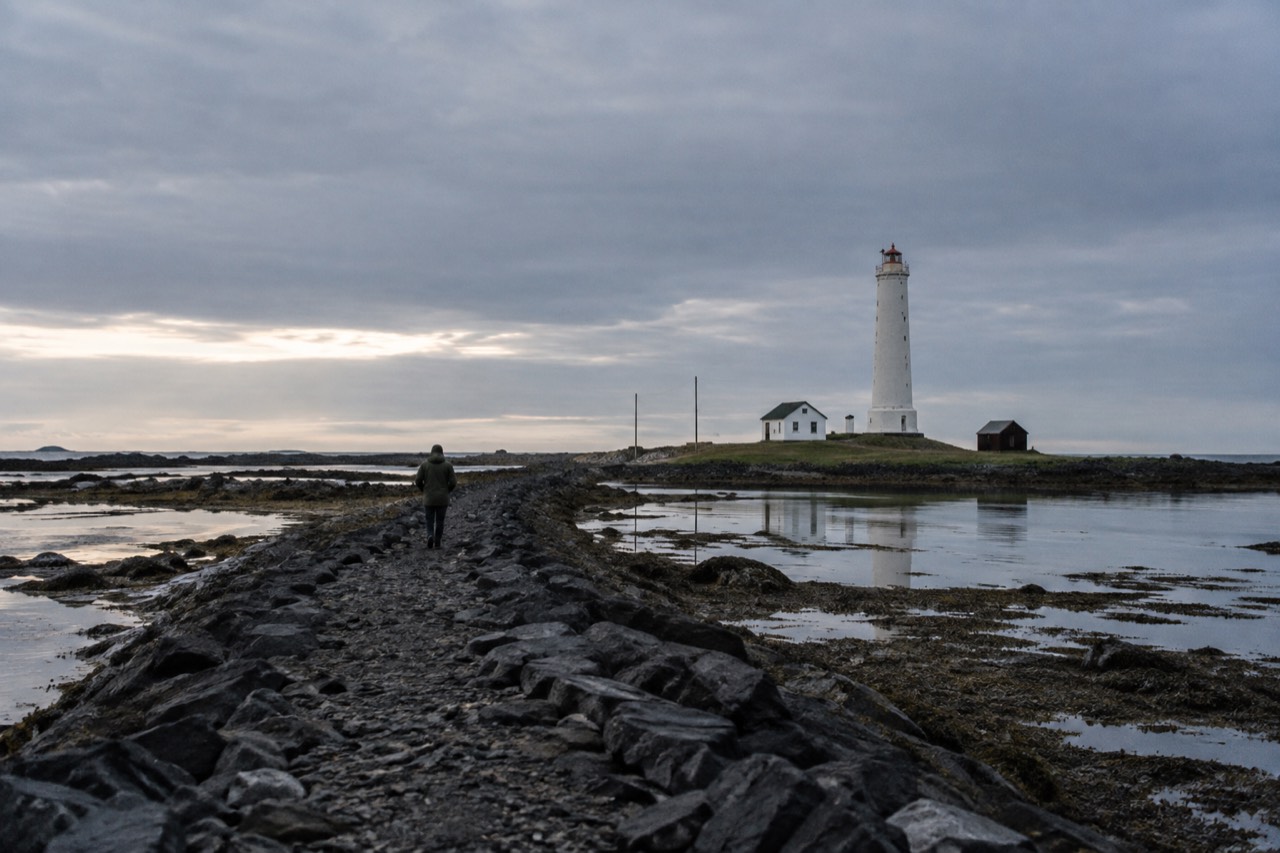
Grótta is the small island and lighthouse at the tip of the Seltjarnarnes peninsula, a free nature reserve on Reykjavik's western edge. The catch is access: a causeway that floods at high tide and a total ban every summer while arctic terns nest.
Short answer
Yes, Grótta is completely free: no entrance fee, no ticket and no charge for the nature reserve around it. Access depends on the tide, and the island is closed to all visitors from May 1 to July 15 for arctic tern nesting. The Kvika foot bath on the mainland side is also free, year-round.
What Is The Grótta Lighthouse?
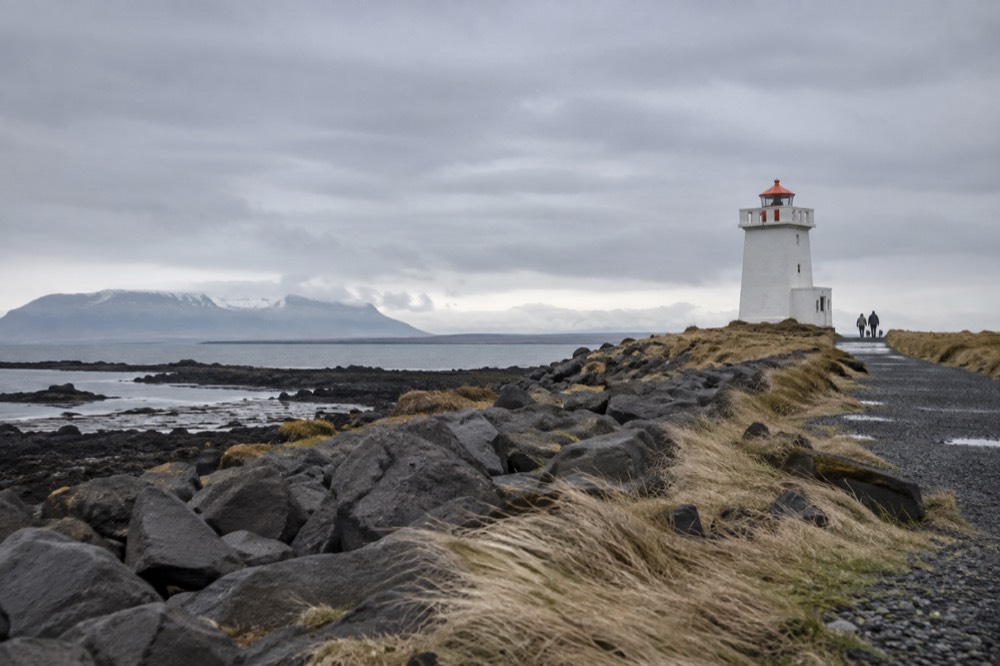
Grótta is a small tidal island at the very tip of the Seltjarnarnes peninsula, about 5 km west of central Reykjavik, crowned by a lighthouse and protected as a nature reserve. There is no admission charge of any kind, but the island is reachable only on foot across a causeway that disappears under the sea at high tide. The lighthouse itself is a working aid to navigation, not a museum, so there is nothing to buy a ticket to and nothing inside to visit. What you come for is the walk, the birds and the horizon.
The name refers to the whole island rather than just the tower. The reserve covers the island, the shoreline and the shallow bay of Seltjörn beside it, and in July 2026 Iceland's Environment Minister confirmed an expansion of the protected area, which reinforces the existing rules rather than changing what a visitor does. That matters more here than at most free attractions, because the protections are the reason for the summer closure described below (see Summer Free Things).
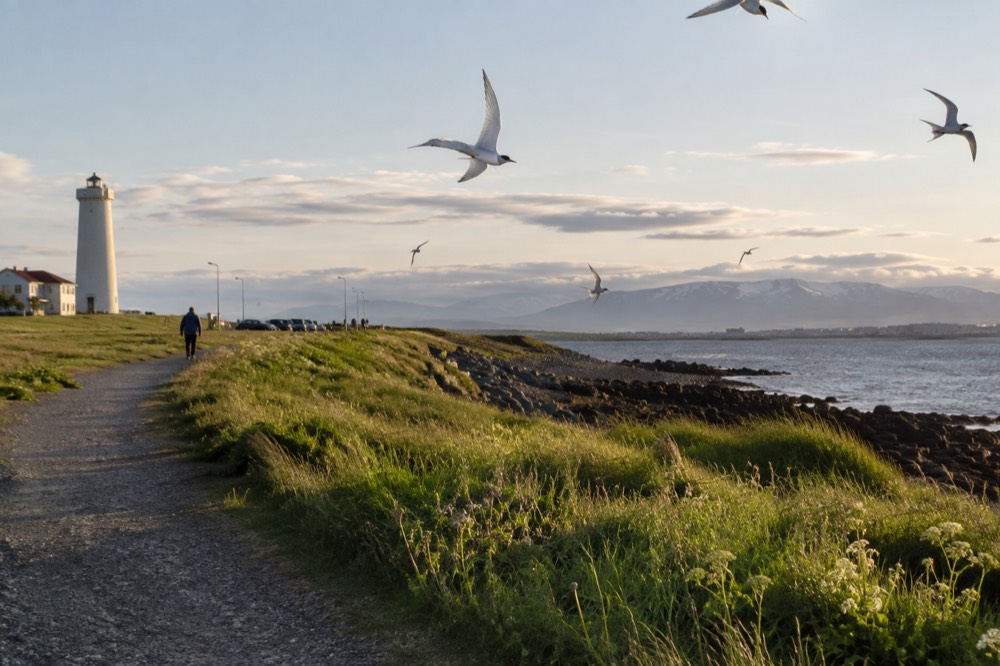
The setting is quieter than anything in the city centre. On one side is the open Faxaflói bay, on the other the calm, shallow water of Seltjörn, which draws eiders and other seabirds. The walk out from the mainland parking area takes only a few minutes, but it feels like leaving town entirely. Locals treat it as an evening ritual, a running route and, in winter, one of the most reliable northern lights spots within reach of a city bus, a point covered in detail further down this page.
Is Grótta Free To Visit?
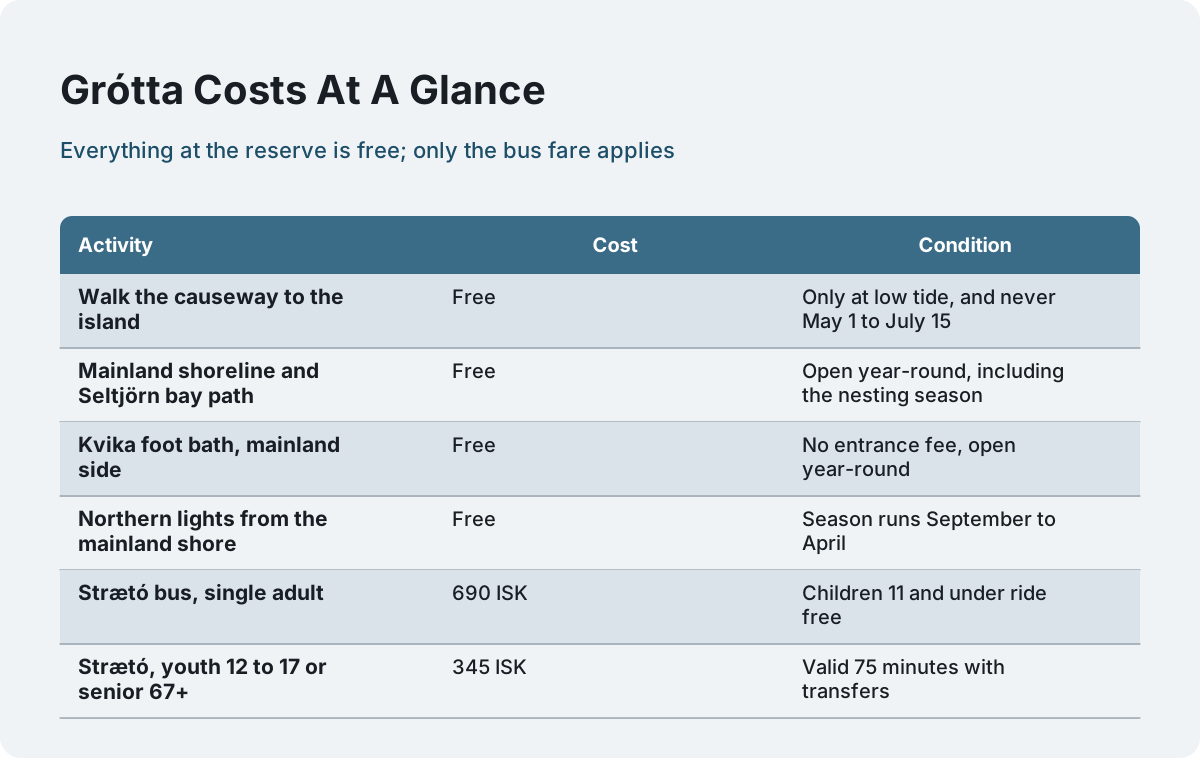
Yes, completely. The nature reserve, the causeway and the view all cost nothing, and there is no ticket desk, no parking fee on the Seltjarnarnes side and no guided-tour requirement. The only money you can spend here is the bus fare to get there, 690 ISK for a single adult fare on Strætó, or nothing at all if you walk or cycle. Free here means genuinely free, not free-with-a-card and not free-with-a-catch.
That is worth spelling out on a site about free things to do, because Iceland has a way of attaching conditions to the word. The nearby Nauthólsvík geothermal beach, often described in older guides as free in summer, is in fact paid year-round under the city tariff in force since May 5, 2026, at 1,500 ISK for adults. Grótta carries no such condition. The Visit Reykjavík record for the island lists it as a free public nature spot, and the municipal page for Seltjarnarnes confirms no fee.
| What you might do at Grótta | Cost | Any condition |
|---|---|---|
| Walk the causeway to the island | Free | Only at low tide, and never May 1 to July 15 |
| Walk the mainland shoreline and Seltjörn bay path | Free | Open year-round, including the nesting season |
| Kvika foot bath, mainland side | Free | No entrance fee, open year-round |
| Northern lights viewing from the mainland shore | Free | Season runs September to April |
| Strætó bus to Seltjarnarnes | 690 ISK adult single | Children 11 and under ride free |
The distinction between the island and the mainland matters throughout the year. Even when the island itself is off limits, the mainland side of the reserve, the bay path and the Kvika foot bath stay open and free, so a summer visit is not a wasted trip. It is simply a different one.
If you are building a free day in the city around the trip, the pay-what-you-want walking tours are the natural companion, since they cost nothing upfront and end downtown in the early afternoon, leaving the long evening light free for the peninsula. Both walks below are real listings run by independent local guides: the long-running CityWalk tour, listed on freetour.com, and the smaller Sweet Streets walk on GuruWalk.
When Can You Actually Walk Out To Grótta?
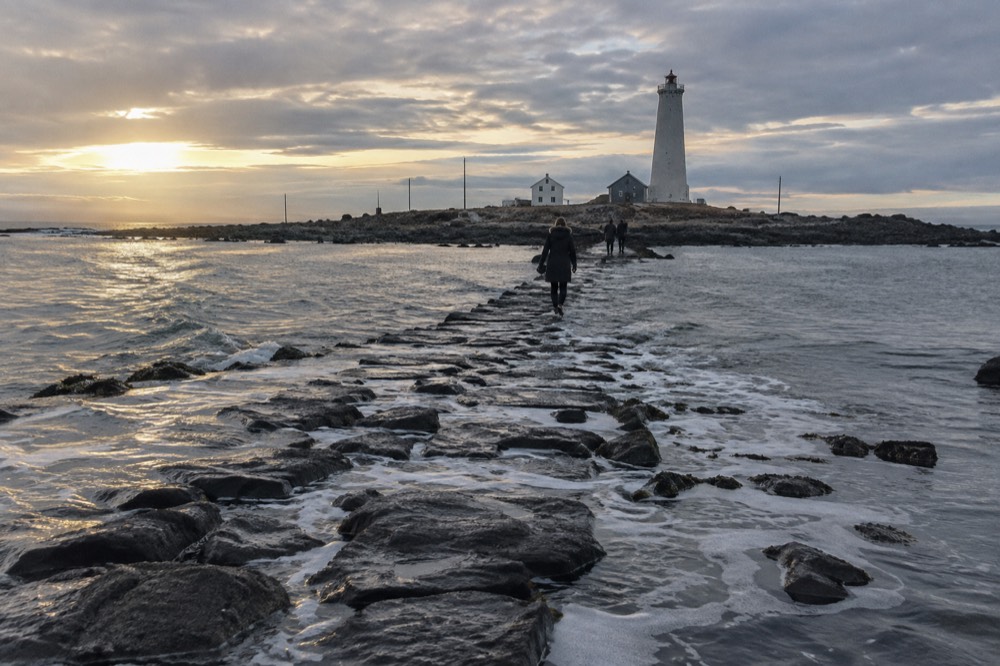
The causeway to the island is passable only around low tide, and it floods completely at high tide, so you must time your visit or you will watch the island from the shore. On top of that, all access to the island is banned from May 1 to July 15 every year because arctic terns nest there, per the municipal page for Seltjarnarnes. In practice that gives you two separate questions to answer before you set out: is the tide low enough, and is the date between mid-July and the end of April.
The tide is the everyday constraint. The crossing is short, a few hundred metres of gravel and stone, but the sea does not need much depth to cover it, and people do get stranded or soaked by misjudging the return trip. Check a tide table for the Reykjavik area before you go, plan to cross on a falling or low tide, and give yourself a comfortable window rather than crossing at the last usable minute. If the water is already lapping the causeway, that is your answer: enjoy the mainland side and come back.
The nesting closure is the seasonal one, and it is taken seriously. Arctic terns nest directly on the ground across the island, and disturbing them is both harmful and against the rules. During the closure the mainland trails, the shoreline and the Kvika foot bath remain open, and the island can still be seen clearly from the shore, but the causeway itself is off limits. The closure dates are fixed and published in advance, so there is no ambiguity about planning around them.
| Time of year | Island access | Mainland side | Notes |
|---|---|---|---|
| May 1 to July 15 | Banned, nesting season | Open, free | Terns nest on the island; view from the shore |
| Mid-July to August | Low tide only | Open, free | Long daylight; check tides late in the evening |
| September to April | Low tide only | Open, free | Aurora season; dark horizons in both directions |
| Any day, high tide | Causeway flooded | Open, free | Wait for the water to drop or stay on the shore |
How Do You Get To Grótta From Central Reykjavik?
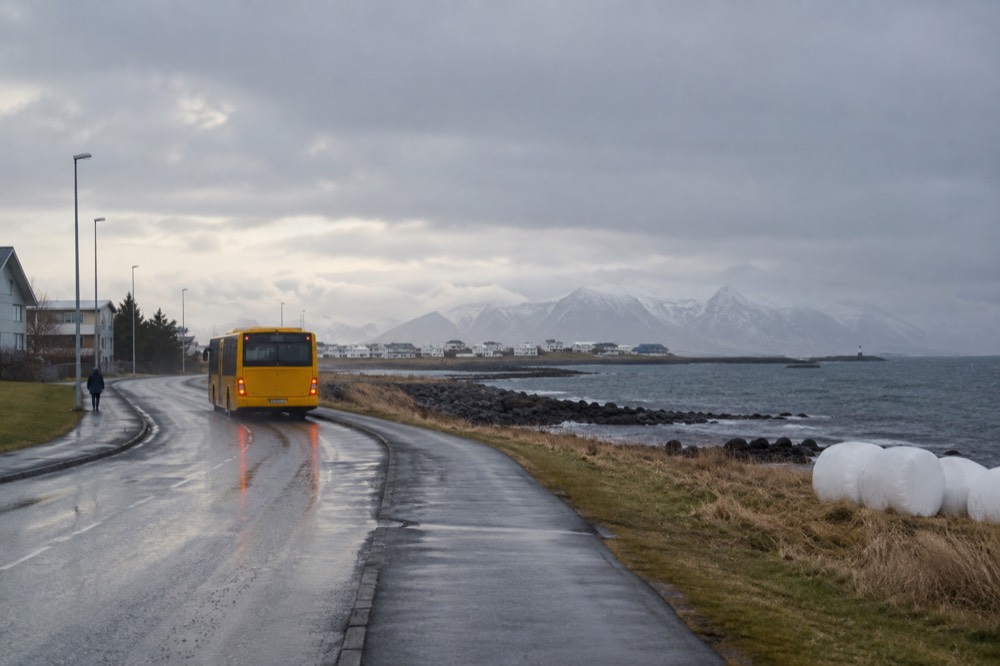
The simplest car-free route is the Strætó bus toward Seltjarnarnes, a single adult fare of 690 ISK valid 75 minutes with transfers, with children 11 and under free; from the stop it is a short walk to the reserve entrance. Driving takes about 15 minutes from the centre, and there is no parking charge on the peninsula. Cyclists and runners cover the flat coastal path from downtown in well under an hour. Whichever way you go, the last stretch is on foot.
The bus is the budget option and a genuinely pleasant one, since the route hugs the north shore for part of the way. Fares rose modestly on January 6, 2026, from 670 ISK to 690 ISK for a single adult fare, with youth aged 12 to 17 and seniors 67 and over at 345 ISK. Pay contactlessly or in the app; the same ticket covers transfers for 75 minutes, so a quick errand on the way does not cost a second fare.
| Way of getting there | Approximate cost | Good for |
|---|---|---|
| Strætó bus, single adult | 690 ISK | Car-free visitors; valid 75 minutes with transfers |
| Strætó, youth 12 to 17 or senior 67+ | 345 ISK | Families with older children |
| Strætó, children 11 and under | Free | Families |
| Car from the centre | Fuel only; no parking fee on the peninsula | Flexibility, aurora nights |
| On foot or by bike along the coast | Free | The long northern shore path |
A popular pattern is to pair the peninsula with a morning or midday free walking tour downtown, then head west as the light turns. The dominant free walk in the city is CityWalk's, which runs daily at 10:30 and 13:30 from Austurvöllur square in front of the Parliament building, lasts about 2 hours, and costs nothing upfront: you pay what you feel at the end, in cash or by card. It is listed on freetour.com, which lists it rated 9.6 out of 10 across 6,683 freetour.com reviews, and it finishes at City Hall, which sits conveniently on the western side of the centre for continuing toward the peninsula.
Booking the walk costs nothing either way, and the tip is entirely up to you at the end, which keeps the whole day's budget honest. If the 10:30 departure suits you better than the 13:30 one, take the earlier slot: it leaves the whole afternoon for the peninsula and the evening light.
Can You See The Northern Lights From Grótta?
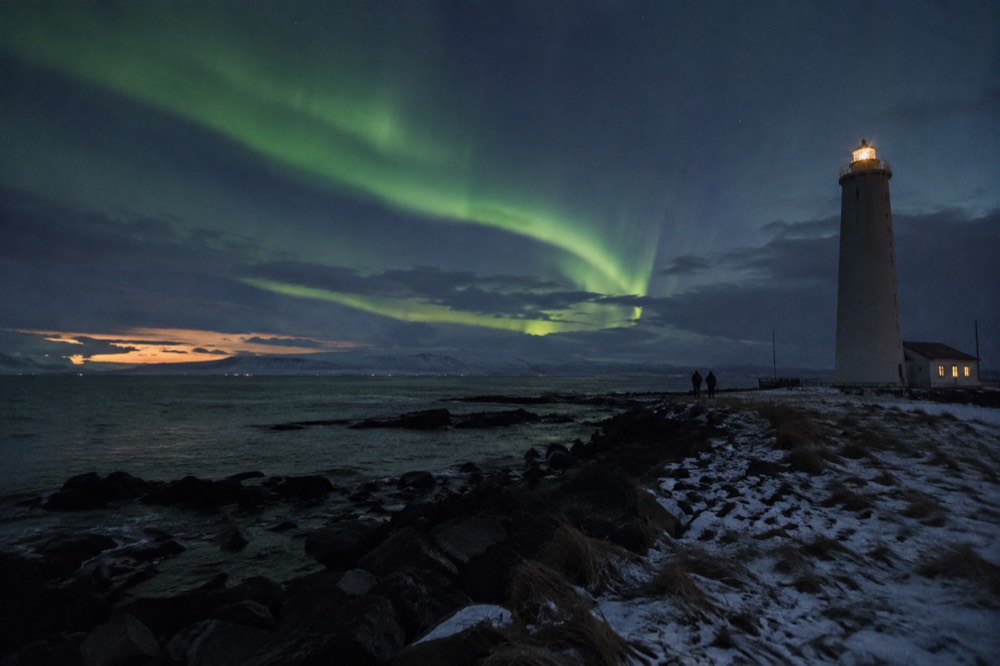
Yes, Grótta is one of the most-used free aurora viewpoints in the Reykjavik area, because the peninsula ends in dark, unobstructed sky over the open sea. The aurora season runs September to April, and no permit, tour or fee is needed, just a clear night and a check of the tide if you want to stand on the island itself. The mainland shore works almost as well when the causeway is under water.
Visit Reykjavík names Grótta and the Seltjarnarnes shoreline among its recommended darker viewing spots, alongside Klambratún, Öskjuhlíð and Elliðaárdalur. What Grótta offers that the city parks do not is horizon in every direction: no street glow to the west at all, just water. On a strong night the reflection on the flat bay doubles the effect. The trade-off is exposure, so dress as if the temperature were ten degrees lower than the forecast, and remember that the last bus back runs early enough that many aurora hunters drive, cycle or accept a long walk.
Timing an evening around the lights leaves the earlier part of the day free, and the smaller GuruWalk option fills that slot well. Sweet Streets of Reykjavík runs Monday, Thursday, Friday, Saturday and Sunday at 11:00 in English, meeting inside the Harpa concert hall, and it is rated 4.6 out of 5 across 87 GuruWalk reviews. It is a pay-what-you-want walk like every tour on this site, but note that it is cash only for the tip, so withdraw something before you meet the guide. A morning walk plus an evening at Grótta is a full free day in Reykjavik, with the afternoon left open for Tjörnin or the Old Harbour, both covered in our guide to northern lights spots around Reykjavik.
How Do You Fit Grótta Into One Day In Reykjavik?
The shape that works is a morning or midday free walking tour downtown, an afternoon of free city sights, and the peninsula for the evening: sunset in summer, aurora in winter. Grótta needs no booking and no fixed time slot, only a tide check, so it slots into the end of any day rather than dictating the whole plan. Budget two to three hours including travel.
Spanish-speaking visitors have a third free option, though it is genuinely new. The Tour of Reykjavík: its History, Culture, and Legends, run by Rainbow Tours, is a Spanish-only pay-what-you-want walk on GuruWalk, created on August 27, 2026 and labelled by GuruWalk as a new tour. It has no reviews yet on GuruWalk, written plainly as no reviews yet, which reflects its age rather than its quality. It runs Monday to Friday at 17:00 and Saturday and Sunday at 11:00, meeting at the Ingólfur Arnarson statue on Arnarhóll where the guide carries a rainbow umbrella. It also appears on freetour.com, but that is the same walk by the same operator, not a second option.
A sample day built entirely from free pieces: a 10:30 CityWalk tour from Austurvöllur, lunch from a supermarket or a hot dog stand, an hour at the Sun Voyager sculpture and the Old Harbour waterfront, a Strætó bus west in the late afternoon, the Kvika foot bath while the light fades, and the causeway if the tide allows. In winter the same skeleton ends under the aurora instead of the midnight sun. Nothing in that list requires a ticket.
What Else Is Free Around Seltjarnarnes?
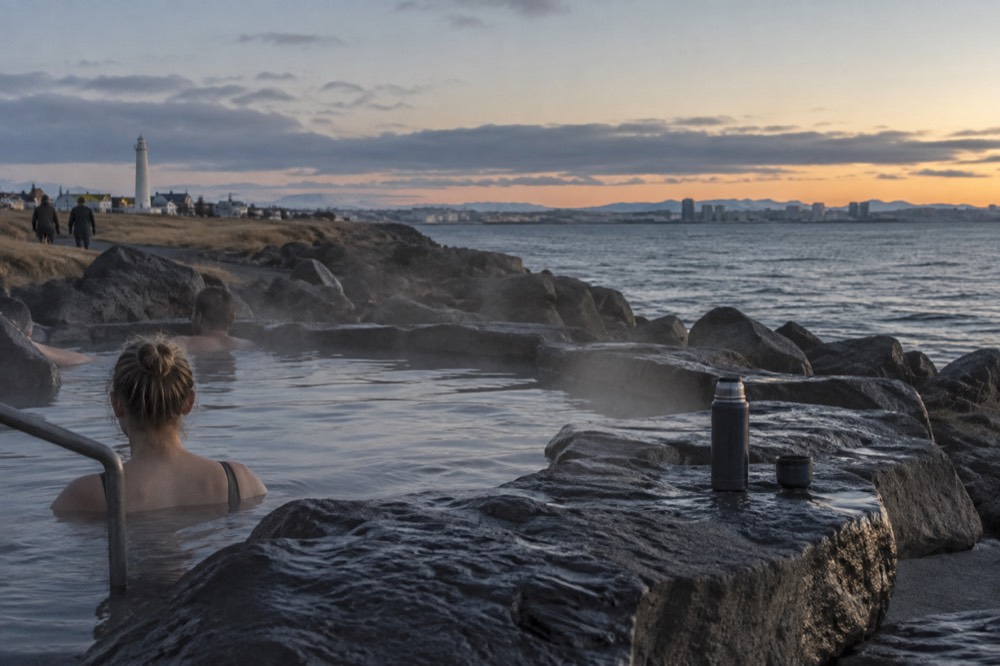
The Kvika foot bath is the best-known free neighbour: a small geothermal pool beside the sea a short walk from the reserve entrance, with no entrance fee and year-round access. Beyond it, the whole shoreline path along Seltjörn bay is free public ground, popular with runners and birdwatchers, and the reserve expansion of July 2026 protects more of it. You can spend a full afternoon here without spending anything.
Kvika is modest, a shallow stone basin warmed by geothermal outflow, and that modesty is the point. Sit on the edge, put your feet in, watch the eiders in the bay. It is the kind of thing a paid spa sells as an experience; here it is a bench and warm water. Bring a towel if you plan to use it, and expect it to be busy on clear evenings.
The bay path itself loops the peninsula's neck and makes an easy walk with the lighthouse always in view. In late summer the heathland around the paths is loud with birds, and the reserve's rules ask visitors to stay on marked routes, which costs nothing and protects the nesting grounds that justify the island closure. For more free green space in the city itself, see our guide to Elliðaárdalur valley, the eastern counterpart to this peninsula walk.
| Free stop near Grótta | What it is | Condition |
|---|---|---|
| Kvika foot bath | Geothermal foot bath by the shore | Free, year-round; bring a towel |
| Seltjörn bay path | Shoreline walking and birdwatching loop | Free; stay on marked paths |
| Grótta island causeway | Walk to the lighthouse | Low tide only; closed May 1 to July 15 |
| Aurora viewing from the shore | Dark-sky viewpoint | September to April, clear nights |
What About Summer: Midnight Sun From The Peninsula?
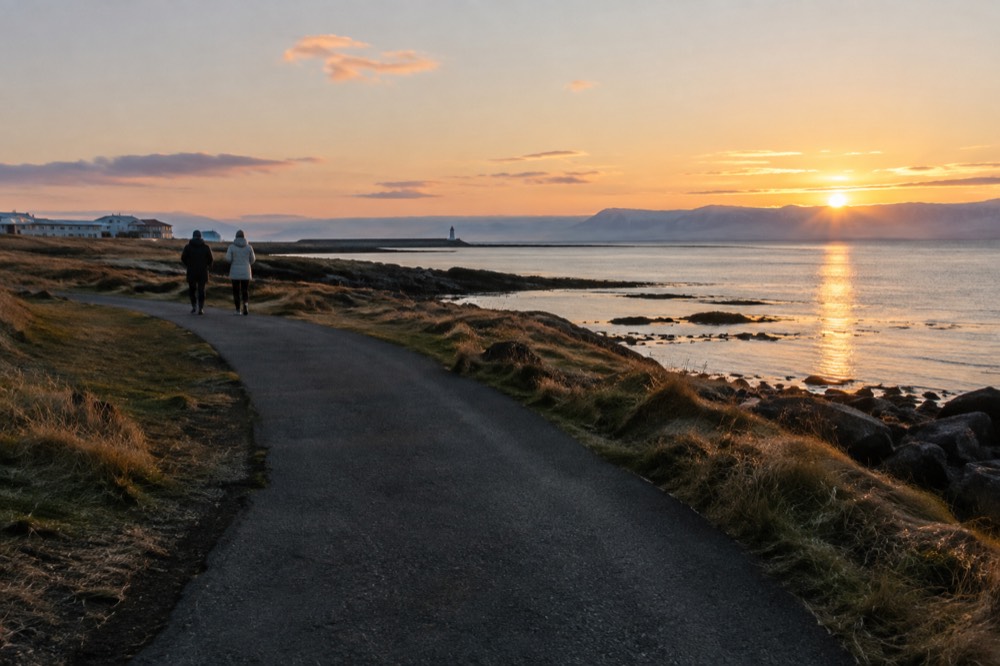
In June the sky over Grótta barely darkens: on June 21, 2026, Reykjavik had 21 hours 23 minutes of daylight, with the sun setting just after midnight and rising again before 3 a.m. That makes the peninsula a free midnight-sun viewpoint, with one catch, the causeway still floods at high tide and the island is still closed until July 15. The mainland shore delivers the same light either way.
The figures come from a NOAA-algorithm daylight calculator rather than an Icelandic almanac, but the effect is unambiguous: in late June you can stand at Kvika at 11 p.m. in full golden light with nobody around. Photographers value the peninsula precisely because the low sun tracks along the northern horizon here, silhouetting the lighthouse against water rather than buildings. No tour, permit or fee is involved; the light is the attraction. The midnight sun period, roughly late May to mid-July, is the one stretch when the evening plan inverts: instead of waiting for darkness, you wait for the lowest, warmest light, which arrives close to midnight.
Practically, summer visits need the same tide discipline as any other season, plus insect awareness near the nesting areas after mid-July once the closure lifts. The wind stays constant, the temperature does not, and the sun does not set enough to warm anything, so pack a layer even for a midnight walk.
Are There Free City Events Worth Timing A Grótta Visit Around?
Yes, and the biggest is Menningarnótt, Culture Night, Reykjavik's free citywide festival, whose next edition falls on Saturday, August 21, 2027, with the official programme free to all and Strætó buses free from 22:00 to 23:00 after the fireworks. A Culture Night day that ends at Grótta, with the fireworks near Arnarhóll and the aurora-dark peninsula an hour later, is about as good as a free itinerary gets.
The city's own page states that all events are free of charge, and the free bus window after the fireworks is a published part of the plan, not a rumour. Museums and galleries open free or late, streets fill with performances, and the road closures in the centre make downtown itself the venue. It is the one date a year when the whole city behaves like Grótta already does: free, outdoors and walking-scale. Culture Night is a genuine free event, no card, no ticket and no catch, and it pairs naturally with the peninsula's dark skies once the fireworks end.
The other free fixed dates are worth the same planning. National Day on June 17 is free throughout: the ceremony at Austurvöllur at 11:00, the parade from Hallgrímskirkja at 13:00, and the family programme that follows, all open to anyone. The winter cluster adds Vetrarhátíð in early February, whose Safnanótt museum night opens participating museums free, and Sundlauganótt, when participating pools open free from 17:00 to 21:00. All of these are genuinely free, with no card and no catch, and all are within a short bus ride of the peninsula.
What Free Islands And Stops Are Near Grótta?
The closest free island trip is Viðey, in the bay east of the city: the island itself charges no admission, but the Elding ferry costs 2,500 ISK for an adult, 1,250 ISK for children 7 to 17, and nothing for children 6 and under. So Viðey is conditionally free, and the condition is the boat. Grótta remains the only truly free island walk in the capital area.
Viðey runs a summer daily ferry and a weekends-only winter service, and the island rewards the crossing with quiet paths, art installations and the same dark horizons that make the whole bay good for aurora. The ferry schedule and prices are published by Elding, and checking them before planning a winter visit is essential, since the off-season crossings are sparse.
Closer to hand, the free staples of the centre all sit on the natural route home from the peninsula. Harpa's free foyer and sound installation, the Sun Voyager on the seafront, Rainbow Street and the Tjörnin pond cost nothing at all, and the city library network, with its main branch at Tryggvagata 15, is free to browse and a warm place to wait out weather. Two more free layers complete the picture: under-18s get free admission at the city's paid museums, and the Sun Voyager is one of the few sculptures in Europe you can photograph at sunrise with nobody in frame. The whole set is mapped in our overview of free things to do in Reykjavik in winter, and none of it needs a booking. This page, like the rest of Free Things To Do In Reykjavik, exists because the free layer of this city is real and large, and Grótta is its best edge. One of the free walking routes passes through here: Morning Walk From Harpa, Cash Tips.
Common Questions About Grótta Lighthouse
Is Grótta lighthouse free to visit?
Yes, completely free. There is no admission fee, no ticket and no parking charge on the Seltjarnarnes side. The only possible cost is the bus fare to get there, 690 ISK for a single adult fare on Strætó, and children 11 and under ride free.
When can you actually walk out to Grótta?
Only around low tide, since the causeway floods completely at high tide, and never between May 1 and July 15, when all access to the island is banned for arctic tern nesting. The mainland shore, the bay path and the Kvika foot bath stay open and free all year.
Can you see the northern lights from Grótta?
Yes. The peninsula is one of the most-used free aurora viewpoints in the Reykjavik area, with dark, unobstructed sky over open sea. The aurora season runs September to April, and no tour or permit is needed, just a clear night and a tide check if you want the island itself.
How do you get to Grótta from central Reykjavik?
Take the Strætó bus toward Seltjarnarnes, a 690 ISK single adult fare valid 75 minutes with transfers, then walk a short distance to the reserve entrance. Driving takes about 15 minutes with no parking fee, and the flat coastal path works for cyclists and runners.
Why is Grótta closed in summer?
Arctic terns nest on the island from May 1 to July 15, and disturbing them is both harmful and against the rules, so all access to the island is banned in that window. The closure dates are fixed and published in advance, and the mainland side remains open throughout.